Key takeaways
- Seat depth versus body length: Deep seats (23″+) let an adult lie fully supine without teetering on the edge, which is the difference between a restorative nap and a stiff neck. Measure your own shoulder-to-knee span before trusting a listing’s “oversized” claim.
- Upholstery thermoregulation: Chenille and linen-like weaves shed heat far better than tight velvet or performance vinyl. If you run warm or nap frequently, prioritize an open, breathable pile — sleep onset depends on a falling core temperature, and a heat-trapping surface works against it.
- Cushion resilience, not initial softness: A pillowy first impression often means low-density foam that bottoms out within a year, leaving your lumbar spine unsupported. Look for high-resilience foam or a foam-wrapped coil core, and treat removable, reversible cushions as a longevity feature.
- Modularity and traffic flow: Modular units let you reconfigure a chaise into a daybed corner or open a walkway as your room changes. Confirm the connectors are mechanical brackets rather than friction alone, or your “bed” will separate under you at 2 a.m.
- Real overnight capability: If guests sleep here more than a few nights a year, a dedicated pull-out mechanism with a supportive mattress beats a wide chaise. Also verify frame material — kiln-dried hardwood handles repeated load cycling that particleboard will not.
What's inside
Most sectional shopping advice treats a sofa as a purely visual decision — scale, silhouette, whether the boucle reads warm or cold against your rug. But if you track how people actually use their living rooms, a different picture emerges: the sectional is the second most important sleep surface in the home. Afternoon naps, that involuntary 9 p.m. drift during a slow episode, the guest who stays an extra night, the parent recovering from a newborn’s schedule. A sofa that photographs beautifully but forces your neck into flexion and traps body heat will quietly degrade the quality of every one of those hours.
This guide evaluates contemporary sectionals through a sleep-wellness lens alongside the usual criteria of build quality, comfort, and design. I’ve weighted seat depth against supine support, looked hard at upholstery breathability and thermoregulation, and paid attention to which frames tolerate being slept on rather than merely sat on. Below are the models that hold up in 2026 — including one genuine sleeper option — with practical notes on who each configuration actually suits.
As an Amazon Associate we earn from qualifying purchases.


How to Choose a Contemporary Sectional Sofa (2026)
- Seat depth versus body length: Deep seats (23″+) let an adult lie fully supine without teetering on the edge, which is the difference between a restorative nap and a stiff neck. Measure your own shoulder-to-knee span before trusting a listing’s “oversized” claim.
- Upholstery thermoregulation: Chenille and linen-like weaves shed heat far better than tight velvet or performance vinyl. If you run warm or nap frequently, prioritize an open, breathable pile — sleep onset depends on a falling core temperature, and a heat-trapping surface works against it.
- Cushion resilience, not initial softness: A pillowy first impression often means low-density foam that bottoms out within a year, leaving your lumbar spine unsupported. Look for high-resilience foam or a foam-wrapped coil core, and treat removable, reversible cushions as a longevity feature.
- Modularity and traffic flow: Modular units let you reconfigure a chaise into a daybed corner or open a walkway as your room changes. Confirm the connectors are mechanical brackets rather than friction alone, or your “bed” will separate under you at 2 a.m.
- Real overnight capability: If guests sleep here more than a few nights a year, a dedicated pull-out mechanism with a supportive mattress beats a wide chaise. Also verify frame material — kiln-dried hardwood handles repeated load cycling that particleboard will not.
The Best Contemporary Sectional Sofas (2026) Reviewed
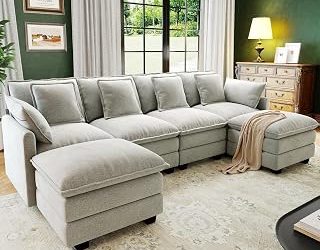
107″ Cloud Couch U-Shaped Modular Sectional (Light Grey)
The U-shape plus two ottomans effectively creates a 4-seat perimeter with multiple lie-flat zones, and the six washable pillows are more than a convenience — being able to launder a nap surface matters for anyone managing dust-mite sensitivity or allergic congestion that fragments sleep. Deep seating and a low, enveloping profile make this the strongest choice for households where the sofa doubles as a rest station.
Curved Boucle Sectional with Chaise, 132″
At 132″ with a left-facing chaise, this is the most generous lounging footprint here, and the curve subtly cradles the shoulders when you’re reclined rather than leaving you unsupported at the seams. Boucle’s looped texture breathes better than it looks like it should, though it rewards a lint roller and a no-shoes policy.
Acanva Mellow Curved-Back Velvet Sectional (Cream)
The tight curved back is the design story, but the hardwood frame is the substance — it resists the racking and creaking that plague softwood builds under repeated weight shifts. Velvet is the warmest upholstery in this lineup, so it suits cooler rooms and lighter sleepers who prefer a firmer, more upright seat over a sink-in nap.
112″ U-Shaped Chenille Sectional with Double Chaise (Warm White)
Double chaise ends mean two people can stretch out simultaneously without negotiating territory, and chenille is arguably the best-ventilating fabric option reviewed here for warm-climate homes. The warm white reads bright without the sterility of true optic white, and it disguises light wear better than expected.
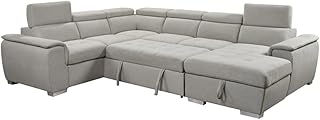
108″ U-Shaped Modular Sleeper Sofa with Pull-Out Bed
This is the pick if genuine overnight sleep is the requirement rather than an afterthought: a real pull-out mechanism, reclining backrests, storage for bedding, and USB charging so a guest isn’t hunting for an outlet at midnight. The seven-seat U configuration demands a large room, but no other model here handles hosting duty as honestly.
Frequently Asked Questions
Is it actually unhealthy to sleep on a sectional?
Occasional nights are fine on a supportive, deep-seated sofa. Chronic sofa sleeping is the problem — narrow surfaces encourage curled, asymmetrical postures that strain the neck and lower back, and arm-as-pillow positions can compress nerves. If it’s becoming a nightly habit, a sleeper model or an addressed sleep issue is the better fix.
What seat depth do I need to lie down comfortably?
Aim for 22–25″ of usable seat depth for an average adult to rest supine without balancing. A chaise adds length rather than depth, so pair a deep seat with a chaise if napping is a priority.
Which fabric is best if I sleep hot?
Chenille and linen-like weaves top the list for airflow, followed by boucle. Velvet and coated performance fabrics retain the most heat and are better suited to cool rooms or short sitting sessions.
Do modular sections shift apart during use?
Quality modular systems use metal brackets or interlocking hardware that hold firmly. Check the connection method before buying — clip-and-bracket designs stay put under sleeping loads, while gravity-only seams tend to drift.
Final Thoughts
For most homes, the 107″ Cloud Couch Sectional delivers the best balance of deep, washable, nap-ready comfort and contemporary form. If you host regularly, the 108″ U-Shaped Modular Sleeper Sofa is the only option here built for genuine overnight rest, while the Curved Boucle Sectional with Chaise wins on sheer lounging space and sculptural presence.