Key takeaways
- Measure your true clearance: Check the manufacturer’s stated wall gap, then add an inch for baseboards, floor vents, and outlet plates. A model advertised at three inches often needs four in a real room, and a recliner that can’t fully extend will leave your legs unsupported — the fastest route to restless, fidgety naps.
- Prioritize head and neck geometry: Adjustable power headrests are the single most valuable upgrade for anyone who actually sleeps on their recliner. A fixed backrest pushes the chin toward the chest at full recline, narrowing the airway and encouraging snoring; an independently tilting headrest keeps the cervical spine neutral.
- Match recline angle to your goal: A 100–110° position suits reading and screen time. Roughly 130–150° is the sweet spot for genuine dozing, and models advertising a 150° range are worth seeking out if reflux, sinus congestion, or lower-back pressure keeps you off a flat mattress.
- Weigh manual versus power carefully: Manual mechanisms are quieter, cheaper, and immune to power loss — ideal for RVs and off-grid use. Power units let you adjust without bracing your core or waking a sleeping partner, which matters enormously for anyone with limited mobility or chronic pain.
- Audit the extras for sleep hygiene: USB-C charging beside the seat means your phone doesn’t migrate to your chest all evening. Conversely, bright LED console lighting should be dimmable or switchable — blue-heavy light within an hour of sleep suppresses melatonin and undercuts the whole point of a comfortable recliner.
What's inside
Most people shopping for a wall hugger recliner loveseat aren’t chasing luxury — they’re chasing rest. The couch has quietly become the second bed in modern homes: it’s where the late-afternoon nap happens, where a partner retreats during a coughing spell, where someone with reflux or back pain ends up at 2 a.m. because lying flat simply doesn’t work. And yet the typical living room requires eight to twelve inches of clearance behind a standard recliner, which forces the seating into the middle of the floor and leaves you reclining into a room instead of a restful nook. In apartments, RVs, finished basements, and bonus rooms, that math rarely works.
Wall hugger designs solve the geometry problem by shifting the mechanism forward, so the seat glides along its own base rather than tipping backward into space — most models need only three to five inches of wall clearance. This guide looks at the 2026 field through a sleep-and-recovery lens: which models actually support the head and neck at a reclined angle, which ones vibrate or hum enough to interrupt a doze, and which combine charging, storage, and console features without turning your rest space into a cockpit. Below are the picks, followed by a buying framework and answers to the questions that come up most.
As an Amazon Associate we earn from qualifying purchases.


How to Choose a Wall Hugger Recliner Loveseat (2026)
- Measure your true clearance: Check the manufacturer’s stated wall gap, then add an inch for baseboards, floor vents, and outlet plates. A model advertised at three inches often needs four in a real room, and a recliner that can’t fully extend will leave your legs unsupported — the fastest route to restless, fidgety naps.
- Prioritize head and neck geometry: Adjustable power headrests are the single most valuable upgrade for anyone who actually sleeps on their recliner. A fixed backrest pushes the chin toward the chest at full recline, narrowing the airway and encouraging snoring; an independently tilting headrest keeps the cervical spine neutral.
- Match recline angle to your goal: A 100–110° position suits reading and screen time. Roughly 130–150° is the sweet spot for genuine dozing, and models advertising a 150° range are worth seeking out if reflux, sinus congestion, or lower-back pressure keeps you off a flat mattress.
- Weigh manual versus power carefully: Manual mechanisms are quieter, cheaper, and immune to power loss — ideal for RVs and off-grid use. Power units let you adjust without bracing your core or waking a sleeping partner, which matters enormously for anyone with limited mobility or chronic pain.
- Audit the extras for sleep hygiene: USB-C charging beside the seat means your phone doesn’t migrate to your chest all evening. Conversely, bright LED console lighting should be dimmable or switchable — blue-heavy light within an hour of sleep suppresses melatonin and undercuts the whole point of a comfortable recliner.
The Best Wall Hugger Recliner Loveseats Reviewed (2026)
Watson & Whitely Genuine Leather Power Recliner Loveseat
The adjustable power headrests are what set this one apart for anyone who genuinely falls asleep sitting up — you can dial in neutral neck alignment independently of the backrest, which no manual model can match. Genuine leather runs warmer than fabric, so it suits cooler rooms and cooler sleepers better than hot ones.
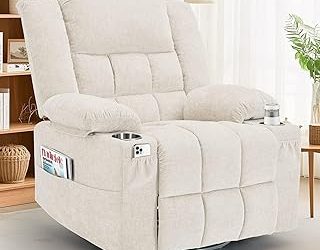
TUNYI Wall Hugger Power Loveseat Recliner
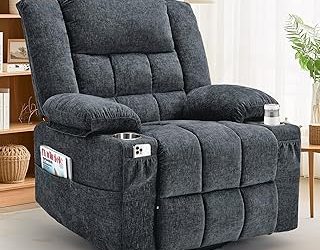
A well-balanced power option with a center console, USB and standard outlet, cup holders, and side pockets, so chargers and remotes stay off the seat cushions. The LED accent lighting is pleasant for evening TV; just be aware it’s an ambience feature, not a reading light, and I’d keep it off in the final wind-down hour.
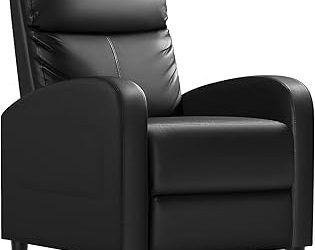
Reclining Loveseat, 55.1″ RV PU Leather Wall Hugger
At 55.1 inches wide, this is the pick for tight footprints — RV slide-outs, narrow bonus rooms, and dorm-style spaces where a full-size loveseat won’t clear the doorway. The manual mechanism is nearly silent and needs no outlet, a real advantage when one person is dozing and the other is adjusting.
RV Loveseat Recliner Sofa with 150° Adjustable Recline
The standout number here is the 150° range, which gets you close to a genuine sleeping angle rather than a steep lounging one. Velvet-style fabric breathes better than PU leather for warm rooms and summer naps, though it demands more diligent vacuuming if pets share the couch.
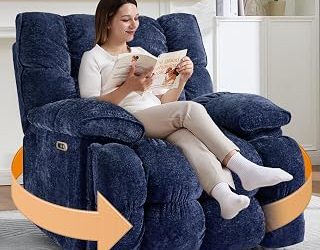
Oversized Massage Reclining Loveseat with USB & Type-C
The oversized cushions and generous seat depth make this the most forgiving choice for larger frames and side-leaning nappers. Treat the massage function as pre-sleep muscle relaxation rather than a sleep aid — the motor noise and vibration are useful for winding down, but run it on a timer and let it shut off before you actually drift.
Frequently Asked Questions
How much space does a wall hugger recliner loveseat really need?
Most require three to five inches from the wall, versus eight to twelve for a conventional recliner. Always verify against the specific listing and add an inch of buffer for trim and outlets rather than trusting a rounded figure.
Is sleeping in a recliner bad for you?
Occasional recliner sleep is fine for most healthy adults, and it’s often recommended after shoulder or abdominal surgery and for reflux or congestion. The risks come from long stretches without moving — reduced circulation and stiffness — so vary your position, keep your legs supported rather than dangling, and treat it as a temporary arrangement unless a clinician advises otherwise.
Do I need power recline, or is manual enough?
Manual is quieter, more affordable, and works without electricity, which makes it the sensible default for RVs. Choose power if you have shoulder, back, or core limitations, or if you want to adjust mid-doze without the jolt of pulling a lever.
Will a wall hugger loveseat work in an RV?
Yes — most models in this category are built with RV dimensions in mind, and several of the picks above are marketed for it directly. Confirm overall width against your slide-out, check the weight against your cargo capacity, and favor manual mechanisms if you spend time boondocking without shore power.
Final Thoughts
If genuine rest is the priority, the Watson & Whitely leather power loveseat earns the top spot on the strength of its adjustable power headrests, which are the difference between dozing comfortably and waking with a stiff neck. The TUNYI power recliner is the better-value all-rounder for living rooms and theater setups, while the 55.1″ PU leather manual model remains the smartest choice for RVs and tight footprints where silence, simplicity, and every spare inch matter most.