Key takeaways
- Recline angle over recline count: A true zero-gravity or near-flat position that raises the knees above the heart reduces circulatory strain and lower-back load far more than a chair with many shallow stops. If you nap on your sofa, prioritize how far it goes back, not how many buttons it has.
- Cervical support at full extension: Sit in the deepest recline and check whether your head rests naturally or gets pushed forward. A headrest that stays vertical when the base tilts is the leading cause of stiff necks and morning headaches after couch sleep.
- Light control, not light features: LED accent strips look striking in photos but emit exactly the kind of ambient glow that suppresses evening melatonin. Insist on independent switching so the lights can be off while heat, massage, or power recline stay on.
- Wall-hugger mechanics for small rooms: Wall-hugger designs recline within a few inches of the wall, which lets you place seating away from bedroom doorways and windows — useful if you’re trying to keep a bright, noisy zone separate from a restful one.
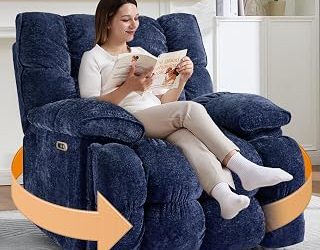
- Breathable upholstery for heated seating: Core body temperature must drop slightly for sleep to begin. Heat functions are excellent for muscle tension but should be paired with fabric that vents; chenille and perforated leather blends outperform sealed faux leather for long sessions.
What's inside
Most people shopping for a reclining loveseat are not really shopping for furniture — they’re shopping for rest. In sleep clinics, one of the most common confessions I hear is that the couch has quietly become the primary place someone dozes off: forty minutes before bed, an hour during a movie, sometimes the whole night. That matters, because a poorly supported recline forces the neck into flexion, compresses the lower back, and leaves the legs dangling below heart level — three conditions that fragment light sleep and leave you groggy rather than restored. Add a center console packed with charging ports, speakers, and LED strips, and you’ve introduced light and stimulation into the exact window when your body is trying to wind down.
This guide approaches the console loveseat category from a sleep-wellness perspective rather than a purely aesthetic one. I’ve evaluated recline geometry, lumbar and cervical support, heat and massage implementation, wall clearance for small rooms, and — critically — how much control you have over the lighting and audio features once the sun goes down. Below you’ll find the models worth considering in 2026, followed by a buying framework and answers to the questions I get asked most often about napping in a recliner.
As an Amazon Associate we earn from qualifying purchases.


How to Choose a Reclining Loveseat With Console (2026)
- Recline angle over recline count: A true zero-gravity or near-flat position that raises the knees above the heart reduces circulatory strain and lower-back load far more than a chair with many shallow stops. If you nap on your sofa, prioritize how far it goes back, not how many buttons it has.
- Cervical support at full extension: Sit in the deepest recline and check whether your head rests naturally or gets pushed forward. A headrest that stays vertical when the base tilts is the leading cause of stiff necks and morning headaches after couch sleep.
- Light control, not light features: LED accent strips look striking in photos but emit exactly the kind of ambient glow that suppresses evening melatonin. Insist on independent switching so the lights can be off while heat, massage, or power recline stay on.
- Wall-hugger mechanics for small rooms: Wall-hugger designs recline within a few inches of the wall, which lets you place seating away from bedroom doorways and windows — useful if you’re trying to keep a bright, noisy zone separate from a restful one.
- Breathable upholstery for heated seating: Core body temperature must drop slightly for sleep to begin. Heat functions are excellent for muscle tension but should be paired with fabric that vents; chenille and perforated leather blends outperform sealed faux leather for long sessions.
The Best Reclining Loveseats With Console (2026) Reviewed
Power Reclining Loveseat with Heating, Massage & Bluetooth Console
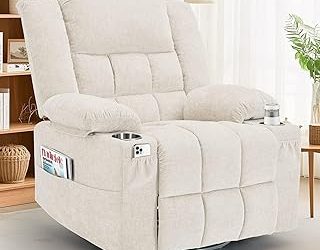
This is the most feature-complete option here, combining heat, massage, Bluetooth audio, USB-A and Type-C charging, and storage armrests in a wall-hugger frame. The reason it earns a top spot from a rest standpoint is separation of controls — you can run gentle lumbar heat during a wind-down routine without the LED lighting or speaker adding stimulation.
Signature Design by Ashley Boyington
Ashley’s Boyington remains the benchmark for build quality in this category, and its zero-gravity power recline is the closest thing to a genuine restorative position you’ll find at this price. The air massage system distributes pressure more evenly than the vibration motors used by most competitors, which makes it far more tolerable for the twenty- to thirty-minute stretch before sleep.
Redlife Power Loveseat Recliner with LED Console
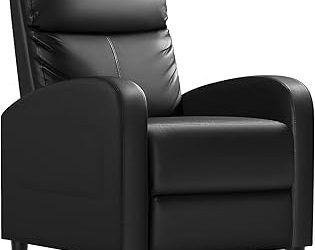
A well-executed PU leather dual recliner with phone holders, USB ports, and a Bluetooth speaker built into the console. The blue LED accent is bright, so plan to leave it off in the evening — but the seat depth and cushion density are genuinely comfortable for extended lounging.
TUNYI Wall Hugger Loveseat Recliner
The strongest small-space pick, with a wall-hugger mechanism plus massage, heat, a standard outlet, and hidden storage. The integrated outlet is quietly the best feature for anyone who reads or uses a sound machine nearby, since it keeps cables off the floor and out of walking paths.
URRED Wall Hugger Power Reclining Loveseat
At 77.3 inches, this is the roomiest option reviewed, and the extra width means neither occupant has to twist to share the console — a small detail that prevents the asymmetrical posture responsible for most one-sided shoulder pain. Faux leather runs warm, so use the heat sparingly in summer.
Frequently Asked Questions
Is it unhealthy to sleep in a reclining loveseat?
Occasional recliner sleep is not harmful, and for people with reflux, sleep apnea, or post-surgical restrictions it can be genuinely beneficial because elevation of the upper body reduces airway collapse and acid regurgitation. The concern is habitual, unsupported sleep in a shallow recline, which encourages neck flexion and prolonged leg dependency. Aim for a deep, near-flat position with a supported head.
Should I use the heat and massage functions before bed?
Yes, but front-load them. Gentle heat and low-intensity massage roughly sixty to ninety minutes before bedtime can ease muscle tension and support the natural drop in core temperature that follows warming. Avoid running heat right up to the moment you intend to sleep.
Do the LED lights and Bluetooth speakers interfere with sleep?
They can. Even modest ambient light in the blue spectrum delays melatonin release, and audio that continues after sleep onset fragments deeper stages. Choose a model where lighting and audio switch off independently, and use a timer if the speaker has one.
How much clearance do I need behind a reclining loveseat?
Traditional models need roughly twelve to eighteen inches. Wall-hugger designs typically need three to six, making them far easier to position in bedrooms, nurseries, and RVs without blocking airflow or pathways.
Final Thoughts
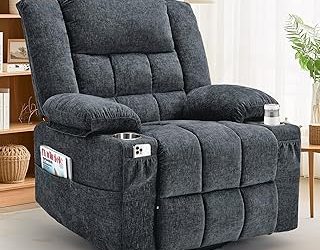
If restorative comfort is your priority, the Signature Design by Ashley Boyington is the pick — its zero-gravity recline and air massage are the most physiologically sound combination in this lineup. For tight rooms, the TUNYI wall hugger delivers nearly the same feature set in a fraction of the footprint, while the GUEAPY 55″ chenille manual recliner is the smart choice for anyone who wants breathable fabric and no electronics competing with their wind-down routine.