Key takeaways
- Rated capacity with headroom: Pick a chair rated at least 75–100 lb above your body weight. Published ratings usually describe static load; the forces generated when you drop into a seat or push back into a recline are considerably higher, and that margin is what keeps welds and mechanisms intact over years of daily use.
- Seat width and depth, measured: Add four inches to your hip width seated, then compare against the interior seat measurement — not the overall exterior dimension. Depth should let you sit back fully with two fingers of clearance behind the knee, otherwise the front rail compresses the popliteal region and restricts circulation during long rests.
- Recline geometry over recline count: For sleeping, look for a true lay-flat or near-flat position around 165–180 degrees. For reflux, a fixed 30–45 degree wedge position is what you actually want, so infinite-position power mechanisms outperform two-position manual levers if nighttime rest is the goal.
- Footrest extension and heel support: Tall men frequently find their heels hanging past the ottoman, which loads the Achilles and disturbs sleep. Extended or dual-panel footrests solve this; check total extended length against your height rather than trusting “big and tall” labeling alone.
- Frame and motor architecture: Reinforced steel beats hardwood at higher capacities, and tri-motor lift chairs separate backrest, footrest, and lift into independent controls — essential if you need to stand from the chair without twisting your spine. Single-motor lift chairs force a fixed movement pattern.
What's inside
Most recliner shopping advice treats the chair as furniture. From a sleep-wellness perspective, an oversized recliner is closer to a second bed — and for larger-framed men, it’s often the only surface in the house that permits a genuinely supported semi-upright rest. That matters more than the upholstery swatch. Weight-rated frames flex less, which means less micro-shifting through the night; wider seat pans distribute pressure across the glutes and thighs instead of concentrating it at the ischial tuberosities; and a footrest that actually reaches the heels prevents the calf dangle that wakes people at 3 a.m. with pins and needles. When a chair fails on any of these points, the result isn’t discomfort so much as fragmented, shallow, unrefreshing sleep.
This guide evaluates heavy-duty recliners through that lens: static and dynamic weight capacity, seat width and depth, lay-flat geometry, footrest extension, and whether the reclining mechanism holds a stable angle instead of creeping. I’ve flagged which models suit occasional evening rest versus nightly sleeping — a distinction that matters if you’re managing sleep apnea, acid reflux, post-surgical recovery, or chronic low-back pain, all of which respond differently to incline. Below you’ll find the strongest current options for men in the 250–500 lb range, followed by a buyer’s checklist and answers to the questions I’m asked most often.
As an Amazon Associate we earn from qualifying purchases.
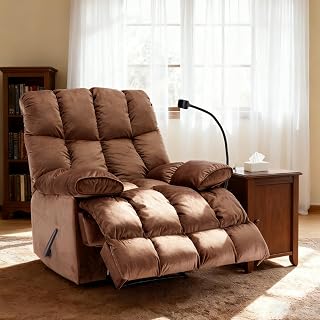


How to Choose a Recliner For Heavy Men (2026)
- Rated capacity with headroom: Pick a chair rated at least 75–100 lb above your body weight. Published ratings usually describe static load; the forces generated when you drop into a seat or push back into a recline are considerably higher, and that margin is what keeps welds and mechanisms intact over years of daily use.
- Seat width and depth, measured: Add four inches to your hip width seated, then compare against the interior seat measurement — not the overall exterior dimension. Depth should let you sit back fully with two fingers of clearance behind the knee, otherwise the front rail compresses the popliteal region and restricts circulation during long rests.
- Recline geometry over recline count: For sleeping, look for a true lay-flat or near-flat position around 165–180 degrees. For reflux, a fixed 30–45 degree wedge position is what you actually want, so infinite-position power mechanisms outperform two-position manual levers if nighttime rest is the goal.
- Footrest extension and heel support: Tall men frequently find their heels hanging past the ottoman, which loads the Achilles and disturbs sleep. Extended or dual-panel footrests solve this; check total extended length against your height rather than trusting “big and tall” labeling alone.
- Frame and motor architecture: Reinforced steel beats hardwood at higher capacities, and tri-motor lift chairs separate backrest, footrest, and lift into independent controls — essential if you need to stand from the chair without twisting your spine. Single-motor lift chairs force a fixed movement pattern.
The Best Recliner For Heavy Men (2026)s Reviewed
JIKFRIMA Big Man Power Lift Recliner (500 lbs)
The most sleep-capable chair here: a 500 lb rating, genuine lay-flat travel, and an extended footrest that accommodates men past 6’3″ without heel overhang. Heat and massage are pleasant extras, but the real value is the independent lift function, which lets you rise without loading the lumbar spine after several hours in one position.
DYNOX Heavy Duty Tri-Motor Lift Recliner (9398L)
The tri-motor system and reinforced steel frame make this the most precise chair on the list for medical-adjacent needs — you can dial in a shallow anti-reflux incline or a deeper zero-gravity angle and hold it exactly. Faux leather wipes clean easily, which is a practical advantage for anyone using the chair through recovery.
Watson & Whitely Oversized Genuine Leather Power Recliner
The best-looking option and the only one wrapped in genuine leather, with an extra-wide lay-flat seat and a power headrest that lets you adjust cervical angle independently — genuinely useful for reducing neck strain when dozing upright. It’s a living-room chair first, a nightly sleeper second.
Euthymia Oversized Chenille Recliner (400 lbs)
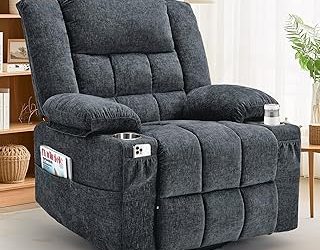
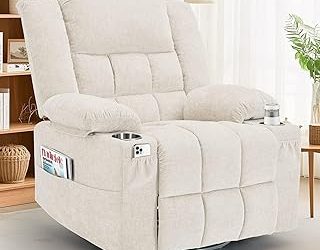
Chenille breathes noticeably better than vinyl or bonded leather, which matters if you run warm or sweat during sleep. The 400 lb rating and generous seat width make it a comfortable, well-cushioned choice for evening rest, though the manual mechanism limits fine angle control.
Manual Adjustable Oversized Recliner with Phone Holder (400 lbs)
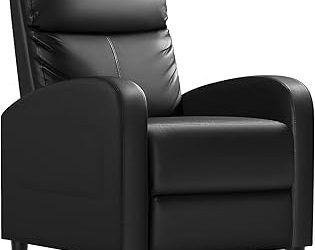
A sensible budget entry with a 400 lb capacity, extra-wide seat, and no motors to fail — ideal for RVs, nurseries, or secondary rooms where power access is awkward. Expect fixed recline stops rather than infinite positioning.
Frequently Asked Questions
Is sleeping in a recliner every night bad for you?
Not inherently. For people with sleep apnea, reflux, COPD, or certain back conditions, an elevated torso can measurably improve sleep quality. The risks are circulatory — prolonged hip and knee flexion raises DVT concern — so choose a chair that goes near-flat, change positions, and mention nightly recliner sleeping to your physician.
What recline angle is best for sleep?
For reflux, roughly 30–45 degrees of torso elevation. For general sleep comfort, most people do best between 135 and 180 degrees with the legs raised close to heart level. Infinite-position power mechanisms let you experiment; two-position manual chairs don’t.
Do I need a lift recliner?
Only if standing from a seated position is difficult or painful. Lift chairs tilt the entire base forward to bring you to your feet, which is valuable after knee or hip surgery and for reduced lower-body strength. Otherwise the mechanism adds cost and depth requirements without benefit.
How much wall clearance do these chairs need?
Most oversized recliners need 6–18 inches behind them to fully recline; wall-hugger designs cut that to about 4 inches but usually recline less deeply. Measure before ordering, since these chairs are heavy and returns are cumbersome.
Final Thoughts
If the chair will be used for genuine nightly sleep, the JIKFRIMA 500 lb power lift recliner is the strongest pick — capacity, lay-flat travel, and heel support all line up. For medically driven angle precision, the DYNOX tri-motor lift chair gives you the finest control over incline. And if the chair lives in a main living space where appearance carries weight, the Watson & Whitely genuine leather power recliner delivers big-and-tall support without looking like medical equipment.