Key takeaways
- Rated capacity with headroom: Choose a chair rated at least 50–75 lbs above your body weight. Manufacturer ratings are static-load figures measured on a level surface; sitting down quickly, shifting, or leaning to one side multiplies the force on the mechanism far beyond your bodyweight, and a 400 lb or 450 lb rating gives you that margin.
- Seat width and depth, not overall width: Overall dimensions include arm bulk and side padding. Look for 22 inches of usable seat width minimum, and 25 inches or more if you want room to shift positions during a long nap. Depth matters too — if your thighs aren’t supported to within three inches of the knee, pressure concentrates behind your seat bones.
- Foam density and seat-deck construction: High-resilience foam at 2.0 lb density or above resists the compression set that creates a “hammock” over time. Under the cushion, a sinuous-spring or webbed deck over a hardwood or reinforced steel frame outperforms a plain plywood platform, which transmits every hard edge.
- Recline range for actual sleep: For reflux, sleep apnea, or breathing comfort, you want the back to stop somewhere in the 30–45 degree range and hold there without creeping. Infinite-position power recliners let you dial in that angle; two- or three-position manual chairs may jump straight past it into a near-flat position that undoes the benefit.
- Lift function and mechanism type: If standing up is difficult, a power lift base is worth the premium — dual-motor models move back and footrest independently, which matters for finding a neutral sleeping posture. Wall-hugger mechanisms recline forward instead of back, saving 8–12 inches of clearance in tighter rooms.
What's inside
If you carry more weight than the average recliner was engineered for, you already know the pattern: the chair feels wonderful in the showroom, tolerable for a month, and then the seat foam pancakes, the reclining mechanism starts to groan, and one side of the frame begins to sag. Most mass-market recliners are built around a 250 lb assumption, with 1.8-density foam and stapled softwood rails. Sitting is one thing — but for the millions of people who nap, read, or sleep upright in a recliner because of sleep apnea, acid reflux, COPD, lymphedema, or post-surgical recovery, an undersized chair stops being a comfort issue and becomes a sleep-quality issue. A frame that flexes under load changes your spinal angle by degrees you can’t see but your body registers all night.
I evaluate seating the way I evaluate mattresses: by load capacity, support geometry, and how well the surface holds its shape after hundreds of hours of pressure. This guide focuses on recliners rated for 350–450 lbs with genuinely wide seats, honest reclining hardware, and the positioning range needed for restorative rest — not just TV watching. Below you’ll find the criteria that actually predict longevity, five chairs worth your money in 2026, and answers to the questions readers send me most.
As an Amazon Associate we earn from qualifying purchases.




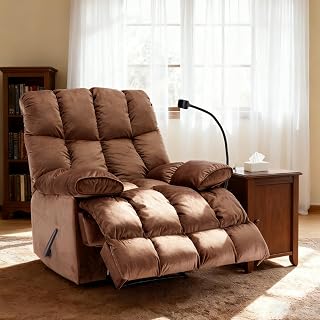
How to Choose a Recliner For a Heavy Person (2026)
- Rated capacity with headroom: Choose a chair rated at least 50–75 lbs above your body weight. Manufacturer ratings are static-load figures measured on a level surface; sitting down quickly, shifting, or leaning to one side multiplies the force on the mechanism far beyond your bodyweight, and a 400 lb or 450 lb rating gives you that margin.
- Seat width and depth, not overall width: Overall dimensions include arm bulk and side padding. Look for 22 inches of usable seat width minimum, and 25 inches or more if you want room to shift positions during a long nap. Depth matters too — if your thighs aren’t supported to within three inches of the knee, pressure concentrates behind your seat bones.
- Foam density and seat-deck construction: High-resilience foam at 2.0 lb density or above resists the compression set that creates a “hammock” over time. Under the cushion, a sinuous-spring or webbed deck over a hardwood or reinforced steel frame outperforms a plain plywood platform, which transmits every hard edge.
- Recline range for actual sleep: For reflux, sleep apnea, or breathing comfort, you want the back to stop somewhere in the 30–45 degree range and hold there without creeping. Infinite-position power recliners let you dial in that angle; two- or three-position manual chairs may jump straight past it into a near-flat position that undoes the benefit.
- Lift function and mechanism type: If standing up is difficult, a power lift base is worth the premium — dual-motor models move back and footrest independently, which matters for finding a neutral sleeping posture. Wall-hugger mechanisms recline forward instead of back, saving 8–12 inches of clearance in tighter rooms.
The Best Recliners For Heavy People, Reviewed
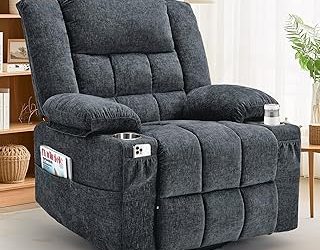
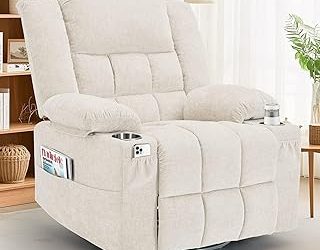
Large Power Lift Recliner with Massage and Heat
This is the most complete package for anyone who sleeps or rests in their chair for hours: overstuffed cushioning, powered lift assist, and lumbar heat that genuinely helps stiff lower backs settle before sleep. The dual cup holders, side pocket, and USB port mean you can stay put through the night without reaching across the room.
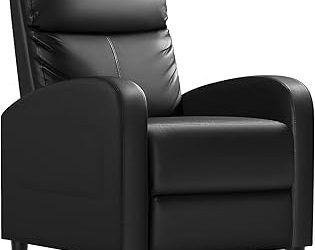
Euthymia Oversized Chenille Recliner
Rated to 400 lbs with a broad, deep seat and a chenille cover that breathes better than most bonded-leather alternatives — a real advantage if you run warm at night. It’s manual, so you’ll want the physical mobility to work the mechanism, but the trade-off is fewer parts to fail.
Watson & Whitely Genuine Leather Power Recliner
The most refined build here: real leather, a power headrest for fine-tuning neck angle, and a wall-hugger design that fits within a few inches of the wall. The independent headrest adjustment is the feature most upright sleepers underestimate, since it prevents the chin-to-chest slump that restricts airways.
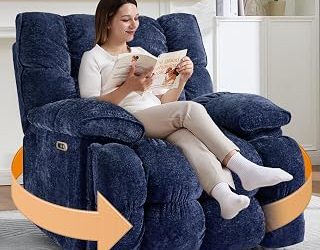
450 lb Oversized Power Recliner, 52″ Wide
At 52 inches across with a 450 lb rating, this is the highest-capacity option on the list and the one I’d point toward for taller, broader frames or anyone who wants room to curl slightly to one side. USB-C charging is a small but welcome modern touch.
Large Power Lift Recliner with Anti-Skid Fabric
The anti-skid upholstery is genuinely functional, keeping you from sliding forward as the backrest opens — a common frustration for heavier sitters on slick fabrics. Heat, massage, concealed cup holders, and a heavy-duty motion mechanism round it out as a strong value pick.
Frequently Asked Questions
Is sleeping in a recliner every night bad for you?
For many people it’s medically beneficial — clinicians routinely recommend elevated sleeping for reflux, sleep apnea, and cardiopulmonary conditions. The risks come from poor positioning: unsupported legs raise the chance of stiffness and circulation issues, so keep the footrest extended and change position when you wake.
What recline angle is best for upright sleeping?
Roughly 30 to 45 degrees from vertical is the range most people find restful while still gaining the airway and reflux benefits of elevation. Anything shallower tends to strain the neck; anything near flat gives up the advantage entirely.
Are power recliners more reliable than manual ones for heavy users?
Generally yes, because a motor removes the sudden shock loads that a manual lever-and-spring assembly absorbs each time you push back. The trade-off is dependence on electronics — check that replacement motors and hand controls are available.
How much clearance do I need behind the chair?
Standard oversized recliners want 12 to 18 inches behind them. Wall-hugger models like the Watson & Whitely need only a few inches, which is often the difference between a chair fitting your room and not.
Final Thoughts
If rest quality is your priority, the Large Power Lift Recliner with Massage and Heat delivers the best combination of support, positioning control, and therapeutic warmth for long hours in the chair. Choose the Watson & Whitely leather power recliner if you want premium materials, independent headrest control, and a small footprint, or the 450 lb 52-inch power recliner if maximum width and capacity are the deciding factors.