Key takeaways
- Seat depth over 21 inches: Anything shallower forces your knees to bend or your spine to twist when you lie down. Deep seats let an adult rest on their side with hips and shoulders both supported, which is the difference between a nap and a neck ache.
- Arm height and shape: A rolled or low square arm around 22–25 inches works as a natural head rest with a single cushion. Tall, hard-edged arms create a pressure point right under the cervical spine — the most common cause of that stiff-necked feeling after dozing off.
- Real leather breathes, faux leather insulates: Top-grain leather wicks a small amount of moisture and settles toward skin temperature. Polyurethane faux leather traps heat, which matters if you run warm or share the sofa with a pet. Neither is wrong — just know which one you’re buying.
- Cushion resilience, not softness: Look for high-density foam with a stated resilience rating or a foam-over-spring build. Soft-on-arrival cushions almost always mean early sagging, and a sagging seat pushes your lumbar curve into a slump that will wake you up.
- Recline mechanism quality: A manual recliner with a smooth lever and a full leg-rest extension beats a motorized one that only tilts 15 degrees. If rest is your priority, test whether the back can reach roughly 130 degrees — the angle at which spinal load drops sharply.
What's inside
Most people shop for a leather sofa the way they shop for a rug — by color, by silhouette, by whether it fits the wall. Then they spend the next four years falling asleep on it. As someone who spends most of my working life studying where and how people actually rest, I can tell you the couch is the second most important sleep surface in the average home, and almost nobody evaluates it that way. Cushions that feel plush in a showroom collapse into a hammock by month six. Arms that look sculptural turn out to be six inches too high to serve as a pillow. Bonded leather that seemed like a bargain starts flaking against warm skin.
This guide looks at the current crop of leather and faux-leather three-seaters through a different lens: seat depth, arm geometry, temperature behavior, and how well the frame holds up to horizontal use. I’ve flagged which models genuinely support a long Sunday nap, which ones recline into something close to a proper rest position, and which are better suited to upright evenings than to actual sleep. Prices on these move constantly, so the live cards below reflect what’s available right now.
As an Amazon Associate we earn from qualifying purchases.


How to Choose a/an Deal On Leather Sofa (2026)
- Seat depth over 21 inches: Anything shallower forces your knees to bend or your spine to twist when you lie down. Deep seats let an adult rest on their side with hips and shoulders both supported, which is the difference between a nap and a neck ache.
- Arm height and shape: A rolled or low square arm around 22–25 inches works as a natural head rest with a single cushion. Tall, hard-edged arms create a pressure point right under the cervical spine — the most common cause of that stiff-necked feeling after dozing off.
- Real leather breathes, faux leather insulates: Top-grain leather wicks a small amount of moisture and settles toward skin temperature. Polyurethane faux leather traps heat, which matters if you run warm or share the sofa with a pet. Neither is wrong — just know which one you’re buying.
- Cushion resilience, not softness: Look for high-density foam with a stated resilience rating or a foam-over-spring build. Soft-on-arrival cushions almost always mean early sagging, and a sagging seat pushes your lumbar curve into a slump that will wake you up.
- Recline mechanism quality: A manual recliner with a smooth lever and a full leg-rest extension beats a motorized one that only tilts 15 degrees. If rest is your priority, test whether the back can reach roughly 130 degrees — the angle at which spinal load drops sharply.
The Best Deal On Leather Sofa (2026)s Reviewed
AMERLIFE Genuine Top Grain Leather Sofa
Top-grain hide is the single biggest upgrade you can make for warm sleepers, and this mid-century three-seater delivers it without the boutique markup. The seat is firm enough to hold its shape under repeated horizontal use, though the clean-lined arms are lower than average — pair it with a proper bolster if you nap here often.
Genuine Leather Manual 3-Seat Recliner
This is the pick for anyone who wants their sofa to double as a recovery chair: integrated headrests plus a full manual recline get you into a genuinely restorative position rather than a slouch. Real leather keeps the reclined surface from turning clammy over a long stretch, which is where most faux recliners fail.
HULALA HOME 84″ Faux Leather Sofa, Camel
At 84 inches with square armrests and supportive cushions, this one measures out well for adult-length stretching — the flat arms take a pillow cleanly. The button-tufted camel upholstery is the most design-forward option here, with the usual faux-leather caveat that it holds body heat.
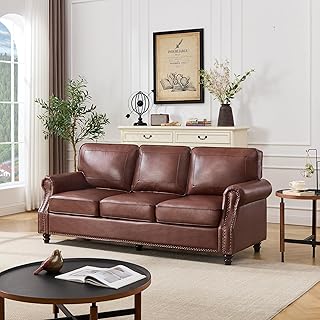
Mid-Century Faux Leather Sofa, Dark Coffee
The rolled arms are the quiet standout: they create a gently sloped headrest that most modern sofas simply don’t offer. Nailhead trim and dark coffee upholstery make it the safest choice for a mixed-use room, and the firm seating suits people who find deep sofas hard to get out of.
STHOUYN 85″ Black Faux Leather Couch with USB
Built-in USB ports and side pockets sound like gimmicks until you’re charging a phone and stashing a sleep mask without leaving the cushion. Generous length and a compact footprint make this the strongest apartment option, best suited to cooler rooms given the black PU surface.
Frequently Asked Questions
Is it actually bad to sleep on a leather sofa?
Occasionally, no. Habitually, yes — most sofas lack the width and edge support to let you change position freely, and restricted movement fragments sleep. If you’re sleeping on the couch more than a few nights a month, prioritize depth and arm height accordingly.
Does leather feel too cold or too hot for napping?
Genuine leather equalizes to your body temperature within a few minutes and then stays fairly neutral. Faux leather has no breathability at all, so it holds heat and can feel damp after twenty minutes. A cotton or linen throw solves this cheaply.
Are faux leather sofas worth it?
For light use, tight budgets, and homes with kids or spills, absolutely. Expect three to five years of good service rather than fifteen, and keep it away from direct sun and radiators, which accelerate cracking.
How firm should the cushions be?
Firmer than feels ideal in the first five minutes. Foam softens 15–20% in its first year, so a sofa that feels perfectly plush on day one will be too soft by next winter — and soft seats are what produce that slumped, achy posture.
Final Thoughts
If breathability and longevity matter most, the AMERLIFE top-grain leather sofa is the one I’d keep for a decade. For genuine rest — actual reclined, supported, doze-off-for-an-hour rest — the Genuine Leather Manual 3-Seat Recliner is unmatched here. And if you’re furnishing a smaller space on a tighter budget, the HULALA HOME 84″ camel sofa gives you the length and arm geometry that make a couch nap worth taking.