Key takeaways
- Recline angle over recline count: For genuine rest you want a back that opens past roughly 135 degrees with the legs elevated near heart height. Chairs that stop at a shallow “TV lean” keep your hip flexors loaded and rarely let you drift off. Ask about maximum angle, not the number of positions.
- Lumbar structure, not lumbar padding: Soft foam in the lower back feels supportive in the showroom and disappears under load. Look for a shaped, sewn, or bolstered lumbar section that holds its curve — that is what keeps your pelvis neutral and your ribcage open enough to breathe deeply.
- Breathability of the upholstery: Core body temperature has to drop for sleep to begin. Bonded and PU leather trap heat against the skin; woven fabric and top-grain leather with an open finish dissipate it. If you run warm or nap regularly, weight this heavily.
- Seat depth against your leg length: Measure from the back of your knee to your buttock and subtract about two inches. Too deep and the front edge compresses the back of your thigh; too shallow and your lower back loses contact. Mismatched depth is the single most common cause of “comfortable chair, sore morning.”
- Extras that earn their keep: Gentle heat genuinely helps muscular downshifting before bed. Vibration massage is pleasant but stimulating — use it earlier in the evening. Skip LED lighting near your wind-down window entirely, or at least keep it warm and dim; blue-toned accent light suppresses melatonin.
What's inside
Most people shopping for a budget recliner are not really shopping for furniture — they are shopping for rest. In my work with clients on sleep hygiene, the recliner comes up constantly: it is where the 8 p.m. wind-down happens, where a person with reflux finally sleeps through the night at a 30-degree incline, where a new parent naps in twenty-minute fragments. The problem is that the sub-$500 market is crowded with chairs engineered to look plush in a photograph and collapse into a hammock of foam within six months. A chair that sags pushes your lumbar spine into flexion, tips your head forward, and quietly narrows your airway — the opposite of what you want in a seat you intend to doze in.
This guide evaluates inexpensive recliners the way I evaluate a mattress: by what the surface does to your spine and breathing after forty minutes, not four. I looked at recline geometry, seat depth, lumbar structure, upholstery breathability (a real factor in night sweats and sleep-onset temperature), and whether the extras — heat, massage, USB ports — actually support relaxation or just add failure points. Below are six chairs worth your attention in 2026, followed by a buyer’s framework and answers to the questions I hear most often.
As an Amazon Associate we earn from qualifying purchases.




How to Choose an Inexpensive Recliner (2026)
- Recline angle over recline count: For genuine rest you want a back that opens past roughly 135 degrees with the legs elevated near heart height. Chairs that stop at a shallow “TV lean” keep your hip flexors loaded and rarely let you drift off. Ask about maximum angle, not the number of positions.
- Lumbar structure, not lumbar padding: Soft foam in the lower back feels supportive in the showroom and disappears under load. Look for a shaped, sewn, or bolstered lumbar section that holds its curve — that is what keeps your pelvis neutral and your ribcage open enough to breathe deeply.
- Breathability of the upholstery: Core body temperature has to drop for sleep to begin. Bonded and PU leather trap heat against the skin; woven fabric and top-grain leather with an open finish dissipate it. If you run warm or nap regularly, weight this heavily.
- Seat depth against your leg length: Measure from the back of your knee to your buttock and subtract about two inches. Too deep and the front edge compresses the back of your thigh; too shallow and your lower back loses contact. Mismatched depth is the single most common cause of “comfortable chair, sore morning.”
- Extras that earn their keep: Gentle heat genuinely helps muscular downshifting before bed. Vibration massage is pleasant but stimulating — use it earlier in the evening. Skip LED lighting near your wind-down window entirely, or at least keep it warm and dim; blue-toned accent light suppresses melatonin.
The Best Inexpensive Recliners of 2026, Reviewed
Classic Manual Leather Recliner (Brown)
A straightforward manual chair with generously padded arms and a back that holds its shape, this is the safest bet for anyone who simply wants a reliable evening seat without motors to fail. The traditional silhouette also means a deeper seat — excellent for taller bodies, slightly overwhelming for anyone under about 5’4″.
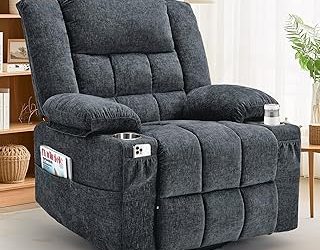
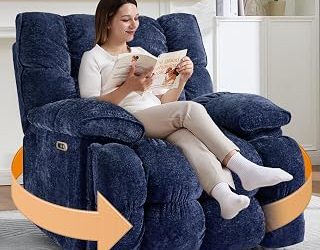
Power Swivel Rocker Recliner with Heat and Massage
The rocking motion here is legitimately useful: slow, rhythmic movement lowers arousal and is why nursing chairs have been recommended for generations. Set the heat low, leave the LEDs off after sunset, and treat the cup holder and USB-C port as the genuine conveniences they are.
AIRSKY Genuine Leather Recliner (Beige)
Top-grain leather with a water-washed finish breathes noticeably better than the bonded material at this price, which matters if you tend to overheat in the first hour of sleep. The overstuffed arms and back are firmer than they appear, and that firmness is exactly what keeps the chair usable in year three.
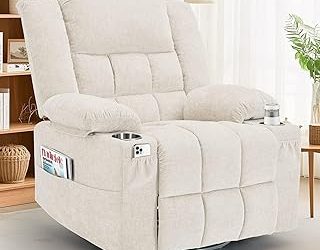
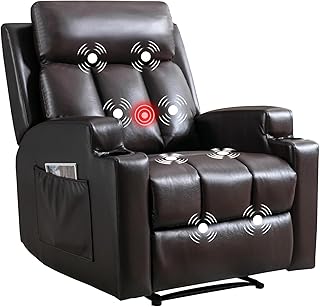
Manual Recliner with Massage and Heat (Dark Brown)
This one earns its place on ergonomics: a defined backrest and supportive armrests keep the shoulders from rolling forward, and manual operation means fewer components to break. The dual cup holders and side pocket make it practical for anyone who parks in the chair with water, a book, and a heating pad.
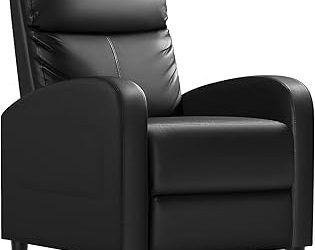
Homall PU Leather Recliner (Black)
The best value for a small living room or home theater setup, with real lumbar shaping and a compact footprint. PU leather runs warm, so pair it with a breathable throw if you plan to nap rather than just watch.
Frequently Asked Questions
Is sleeping in a recliner actually bad for you?
Not inherently. For people with reflux, sleep apnea, post-surgical recovery, or chronic sinus congestion, an inclined position often improves sleep quality measurably. The risks are positional — prolonged immobility raises circulation concerns — so shift positions, keep knees unlocked, and avoid making it your only sleep surface for months on end without talking to a clinician.
What incline is best for rest?
Roughly 30 to 45 degrees from horizontal suits most sleepers, with the legs raised to about heart level. That combination reduces reflux, encourages venous return, and keeps the airway more open than sitting upright.
Does the massage function help me fall asleep?
Indirectly. Vibration can release muscular tension, but it is also sensory input that keeps the nervous system engaged. Use it for fifteen minutes early in the evening, then switch it off well before you intend to drift.
Fabric or leather for a warm sleeper?
Woven fabric or genuine top-grain leather. Both move heat and moisture away from the skin far better than bonded or PU surfaces, which behave like a thin plastic layer against your back.
Final Thoughts
If your priority is genuine restorative rest, the AIRSKY genuine leather recliner offers the best combination of breathable upholstery and structure that survives daily use, while the power swivel rocker with heat and massage is the strongest pick for anyone who wants motion and gentle warmth in their wind-down routine. For small rooms and tight budgets, the Sweetcrispy fabric massage recliner delivers real lumbar support and cool-sleeping fabric at a price that is hard to argue with.