Key takeaways
- Dual motor over single motor: A single-motor chair moves the back and footrest together on one fixed arc, so you get whatever lumbar angle the manufacturer chose. Dual motors let you recline the back deeply while keeping the legs lower — or lift the legs while sitting fairly upright — which is how you find the one position that stops the ache.
- True lumbar contact, not just a pillow: Press your hand into the small of the back when seated. You want firm, continuous support around the belt line. Removable lumbar cushions help, but they compress and migrate; built-in shaping lasts longer.
- Zero-gravity or lay-flat capability: Raising the knees above the heart reduces compressive load on the lumbar discs and often eases sciatic tension. Infinite-position chairs reach this; standard two-position recliners do not.
- Seat depth and height matched to your body: Feet flat, knees at roughly hip height, two fingers of clearance behind the knee. Too deep and you slump into a rounded lower back; too shallow and your thighs go unsupported. Check the size chart against your inseam, not your overall height.
- Heat placement, then massage: Lumbar-targeted heat is genuinely useful for muscle guarding and stiffness. Vibration massage is pleasant and can help you unwind, but treat it as a comfort feature rather than therapy — and never fall asleep with heat running.
What's inside
Back pain rarely stays in the back. It follows you into the evening, sabotages the wind-down hour, and turns what should be restorative rest into a night of repositioning. As a sleep-wellness practitioner, I spend a surprising amount of time talking about chairs rather than mattresses — because for people with lumbar disc issues, sciatic irritation, post-surgical recovery, or plain age-related stiffness, the recliner is where the body either decompresses or accumulates tension before bed. A chair that shoves your pelvis forward and leaves a two-inch gap behind your lower spine will quietly undo an otherwise decent sleep routine.
This guide looks at power lift recliners through that lens: pressure distribution, spinal alignment, and whether the chair can actually reach the positions that take load off the lumbar spine. A quick note on the title — “Consumer Reports” here reflects the phrase shoppers search, not an endorsement or testing data from that organization. What follows are my own recommendations based on mechanism design, ergonomics, and the features that matter for pain relief. Below you’ll find current picks, followed by a buying framework and answers to the questions I hear most in consultations.
As an Amazon Associate we earn from qualifying purchases.


How to Choose a Recliner For Back Pain Consumer Reports (2026)
- Dual motor over single motor: A single-motor chair moves the back and footrest together on one fixed arc, so you get whatever lumbar angle the manufacturer chose. Dual motors let you recline the back deeply while keeping the legs lower — or lift the legs while sitting fairly upright — which is how you find the one position that stops the ache.
- True lumbar contact, not just a pillow: Press your hand into the small of the back when seated. You want firm, continuous support around the belt line. Removable lumbar cushions help, but they compress and migrate; built-in shaping lasts longer.
- Zero-gravity or lay-flat capability: Raising the knees above the heart reduces compressive load on the lumbar discs and often eases sciatic tension. Infinite-position chairs reach this; standard two-position recliners do not.
- Seat depth and height matched to your body: Feet flat, knees at roughly hip height, two fingers of clearance behind the knee. Too deep and you slump into a rounded lower back; too shallow and your thighs go unsupported. Check the size chart against your inseam, not your overall height.
- Heat placement, then massage: Lumbar-targeted heat is genuinely useful for muscle guarding and stiffness. Vibration massage is pleasant and can help you unwind, but treat it as a comfort feature rather than therapy — and never fall asleep with heat running.
The Best Recliner For Back Pain Consumer Reports (2026)s Reviewed
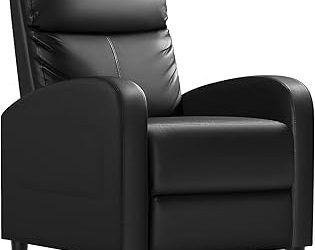
Dual Motor Infinite Position Lift Recliner (Brown Leather)
This is the configuration I point people toward first: independent back and leg control means you can dial in a genuine zero-gravity posture instead of settling for a preset. The lumbar pillow plus targeted heat makes it a strong choice for chronic low-back stiffness, and the wireless charger is a small but real convenience if you want your phone off your lap.
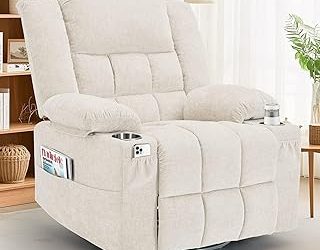
Tami Tami Dual Motor Power Lift Chair (T6015)
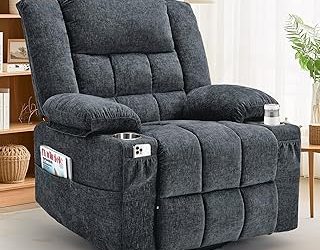
The adjustable headrest is the standout here — cervical support is the piece most recliners forget, and craning your neck forward for hours creates its own referred pain. The plush fabric breathes better than faux leather, which matters if you tend to run warm in the evening.
Dual Motor Oversized Lift Recliner for Big & Tall
Wider seat, taller back, and a higher weight rating make this the sensible pick for larger frames, where standard chairs force the shoulders inward and the pelvis into a tuck. Lay-flat capability plus arm storage makes it viable for people who genuinely sleep in the chair during recovery.
MCombo Power Lift Recliner 7040
A well-executed single-motor chair with a firmer seat than most in this range, which suits people who find plush cushions worsen their pain. Multiple size options are the real advantage — being able to match seat depth to your inseam solves more problems than any massage motor.
MAHOMICO Power Lift Recliner with Lumbar Heating
The lumbar heating element sits where it should, low enough to reach the muscles that actually spasm, and the lift mechanism is smooth enough for users with hip or knee limitations. A practical, no-drama option for a bedroom or den.
Frequently Asked Questions
Is sleeping in a recliner bad for my back?
Not inherently, and for some conditions — spinal stenosis, acute disc flare-ups, post-op recovery, reflux — a reclined position is more comfortable than lying flat. The risks are circulatory: prolonged nights in a chair increase pressure on the calves and hips. If you’re doing it for more than a couple of weeks, get your clinician’s input.
What recline angle is best for back pain?
Research on spinal loading generally favors roughly 120 to 135 degrees between torso and thighs, with lumbar support filling the curve. That’s noticeably more open than the 90-degree “good posture” angle most of us were taught.
Do I need heat and massage, or is it marketing?
Heat has legitimate value for muscle tension and is worth paying for. Vibration massage is largely a comfort feature — enjoyable, mildly relaxing, not a substitute for treatment. Never sleep with either engaged.
Will a lift recliner help me get up without straining my back?
Yes, and this is often the most underrated benefit. Standing from a low seat loads the lumbar spine hard; a lift mechanism removes that repeated strain several times a day.
Final Thoughts
If you want maximum adjustability for chronic lumbar pain, start with the Dual Motor Infinite Position Lift Recliner — independent controls and lay-flat positioning give you the widest range of pressure-relieving postures. The Tami Tami T6015 is my pick for anyone whose pain includes the neck and upper back, thanks to the adjustable headrest, while larger users will be far better served by the Dual Motor Oversized Big & Tall Lift Recliner. Whichever you choose, measure your inseam and seat height before ordering; fit does more for your back than any feature list.