Key takeaways
- Powered lumbar vs. fixed foam: A dedicated power lumbar motor lets you dial the support to your own spinal curve, which matters enormously if you’re tall, short, or have a pronounced arch. Fixed lumbar padding works, but only if it happens to land at your L3–L5 region — sit in it, or check the seat-back height before ordering.
- Zero-gravity recline: Positions that lift the knees above the heart reduce spinal compression and ease venous return. If you nap on your sofa regularly or deal with swelling in the legs, treat this as a priority feature rather than a gimmick.
- Adjustable headrest travel: Cervical alignment is where most reclining sofas quietly fail. Look for a headrest that articulates independently so your neck stays neutral instead of pitching forward — the difference between waking up refreshed and waking up with a stiff trapezius.
- Seat depth and firmness: Overly deep, overly soft seats force a posterior pelvic tilt, which flattens the lumbar curve no matter how good the backrest is. Aim for medium-firm foam with enough resilience to hold its shape after a year of nightly use.
- Wall clearance and mechanism quality: Wall-hugger frames recline in inches rather than feet, which keeps a sofa usable in a small room. Whatever the layout, steel mechanisms and reputable motors are what determine whether the lumbar function still works in year five.
What's inside
Most people shop for a reclining sofa the way they shop for a television: they think about the room, the finish, the footprint. Then six months later they’re waking up at 2 a.m. with a low-back ache after dozing off during the third quarter. As someone who spends most of my working hours on sleep architecture and recovery posture, I can tell you that the living room sofa is the most underrated piece of sleep equipment in the average house. Americans log an enormous amount of unplanned, unstructured rest on it — and if the lumbar curve isn’t supported while you drift off, that rest is doing half the work it should.
The fix isn’t exotic. It’s a seat back that keeps your lumbar spine in gentle lordosis instead of letting it collapse into a C-shape, a recline angle that opens the hip and takes load off the discs, and a headrest that doesn’t shove your chin toward your chest. This guide covers the reclining sofas I’d actually recommend for restorative lounging in 2026 — what to look for, how the leading models compare, and which one fits your body and your budget.
As an Amazon Associate we earn from qualifying purchases.



How to Choose a Reclining Sofa With Lumbar Support (2026)
- Powered lumbar vs. fixed foam: A dedicated power lumbar motor lets you dial the support to your own spinal curve, which matters enormously if you’re tall, short, or have a pronounced arch. Fixed lumbar padding works, but only if it happens to land at your L3–L5 region — sit in it, or check the seat-back height before ordering.
- Zero-gravity recline: Positions that lift the knees above the heart reduce spinal compression and ease venous return. If you nap on your sofa regularly or deal with swelling in the legs, treat this as a priority feature rather than a gimmick.
- Adjustable headrest travel: Cervical alignment is where most reclining sofas quietly fail. Look for a headrest that articulates independently so your neck stays neutral instead of pitching forward — the difference between waking up refreshed and waking up with a stiff trapezius.
- Seat depth and firmness: Overly deep, overly soft seats force a posterior pelvic tilt, which flattens the lumbar curve no matter how good the backrest is. Aim for medium-firm foam with enough resilience to hold its shape after a year of nightly use.
- Wall clearance and mechanism quality: Wall-hugger frames recline in inches rather than feet, which keeps a sofa usable in a small room. Whatever the layout, steel mechanisms and reputable motors are what determine whether the lumbar function still works in year five.
The Best Reclining Sofas With Lumbar Support (2026), Reviewed
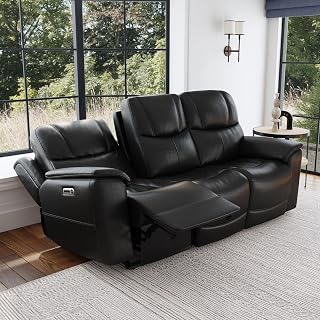
Flexsteel Crew Black Leather Power Reclining Sofa
This is the one I’d point a chronic-back-pain client toward first: independent power headrest and power lumbar on each seat, genuine leather, and a zero-gravity position that meaningfully unloads the spine. The USB-A and USB-C ports are a small thing, but they keep your phone off the floor and your neck from craning sideways to reach it.
Watson & Whitely Genuine Leather Wall Hugger Power Recliner
The wall-hugger mechanism makes this the smartest pick for apartments and dens where you can’t sacrifice two feet behind the sofa. Adjustable power headrests and genuine top-grain leather in navy give it a longevity advantage over bonded and faux alternatives, which tend to lose their supportive structure fastest at the lumbar contact point.
Signature Design by Ashley Boyington Power Reclining Sofa
Heated seats plus air massage plus zero gravity is an unusually well-matched trio for evening wind-down — gentle warmth over the lumbar region raises local tissue temperature and helps paraspinal muscles let go before bed. The drop-down table is genuinely useful, though I’d keep screens off it if you’re using this sofa to transition toward sleep.
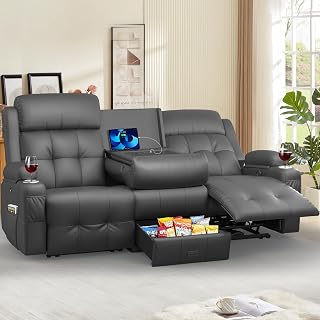
78.2″ PU Leather Reclining Loveseat with Flip Middle Backrest
A strong value option with real lumbar shaping in the seat backs and integrated massage, plus drawers and a flip-down middle console that converts the center seat into a work surface. At this width it’s ideal for RVs, bonus rooms, and second living spaces where a full theater sofa won’t fit.
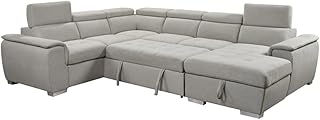
Power Reclining Sectional with LED Lighting and Storage Console
The sectional layout gives you a full-length chaise for legs-elevated recovery, which is the single most spine-friendly resting position in this roundup. Ambient LED lighting is a nice touch for late-night viewing — dim, indirect light disrupts melatonin far less than an overhead fixture.
Frequently Asked Questions
Is sleeping on a reclining sofa bad for your back?
Not inherently — a reclined position with supported lumbar and elevated legs is often gentler on the spine than a flat mattress, and it’s a standard recommendation after certain back surgeries. Problems arise when the sofa lets your pelvis roll back and your lumbar curve flatten for hours at a time.
What recline angle is best for reducing back pain?
Research on seated spinal loading consistently favors a backrest angle around 120–135 degrees over upright sitting. Most power recliners pass through this range, so find it once, note the position, and use it as your default rather than always going fully flat.
Do heated and massage features actually help?
Modestly, and mostly as a relaxation tool. Warmth and vibration increase local blood flow and reduce perceived muscle tension, which can help you unwind before bed — but they don’t correct posture, so don’t let them substitute for genuine lumbar support.
Leather or faux leather for long-term support?
Genuine leather ages better and keeps its structure over the seat’s contact points, while PU and bonded finishes can crack or soften within a few years. If budget points you toward faux, prioritize models with a steel mechanism and high-density foam — the frame matters more than the surface.
Final Thoughts
If you want the most spine-aware reclining sofa available this year, the Flexsteel Crew is the clear choice — dual power lumbar and headrests plus zero gravity is the complete package. The Watson & Whitely wall hugger delivers similar support quality in tighter rooms, and the Ashley Boyington is the one I’d pick for anyone who wants heat and massage folded into a genuine evening wind-down routine.