Key takeaways
- Headrest angle: Sit back and check whether your ears sit roughly over your shoulders. A headrest that pushes the head forward narrows the airway and encourages snoring, so favor a high back with a gentler pitch or one you can pad out with a thin cervical roll.
- Recline depth: For sleeping, aim for a chair that holds a stable 30-to-45-degree torso angle. That zone eases reflux and eases pressure on the lower back without the “sliding off” sensation that keeps the body subtly braced and awake.
- Glide acoustics: Rock the chair through its full arc before committing, listening for squeak or knock. Ball-bearing or sealed-bushing mechanisms stay quiet far longer than exposed metal-on-metal designs, which matters enormously in a nursery.
- Fabric thermoregulation: Core body temperature needs to drop to initiate sleep. Chenille and woven fabrics breathe and shed heat; faux leather traps it, which suits a cold room or a heat-therapy user but frustrates anyone who runs warm.
- Seat width and support: Oversized models let you curl sideways and change position through the night, which reduces pressure-point waking. Just confirm the arm height suits your shoulder, since arms that sit too high force a shrug that tightens the trapezius.
What's inside
Recliners are marketed as furniture, but for a surprising number of people they function as sleep equipment. In my work with clients managing reflux, chronic pain, post-surgical recovery, and the broken nights of early parenthood, the chair in the corner often logs more rest hours than the mattress does. That creates a problem: a swivel rocker recliner chosen for its looks can quietly sabotage your sleep architecture with a headrest that shoves your chin toward your chest, a seat that bottoms out by month three, or a rocking mechanism that clunks loudly enough to jolt a drowsing infant fully awake.
This guide evaluates the current crop of swivel rocker recliners through a rest-quality lens rather than a showroom one. I’ve weighted the criteria that actually determine whether you drift off and stay asleep: neck and lumbar geometry at partial recline, the smoothness and silence of the glide, thermal behavior of the upholstery over several hours, and how well the heat and massage functions serve wind-down rather than distraction. Below you’ll find the models worth your attention in 2026, plus the selection framework I walk clients through before they spend a dollar.
As an Amazon Associate we earn from qualifying purchases.



How to Choose a Swivel Rocker Recliner By Best (2026)
- Headrest angle: Sit back and check whether your ears sit roughly over your shoulders. A headrest that pushes the head forward narrows the airway and encourages snoring, so favor a high back with a gentler pitch or one you can pad out with a thin cervical roll.
- Recline depth: For sleeping, aim for a chair that holds a stable 30-to-45-degree torso angle. That zone eases reflux and eases pressure on the lower back without the “sliding off” sensation that keeps the body subtly braced and awake.
- Glide acoustics: Rock the chair through its full arc before committing, listening for squeak or knock. Ball-bearing or sealed-bushing mechanisms stay quiet far longer than exposed metal-on-metal designs, which matters enormously in a nursery.
- Fabric thermoregulation: Core body temperature needs to drop to initiate sleep. Chenille and woven fabrics breathe and shed heat; faux leather traps it, which suits a cold room or a heat-therapy user but frustrates anyone who runs warm.
- Seat width and support: Oversized models let you curl sideways and change position through the night, which reduces pressure-point waking. Just confirm the arm height suits your shoulder, since arms that sit too high force a shrug that tightens the trapezius.
The Best Swivel Rocker Recliner By Best (2026)s Reviewed
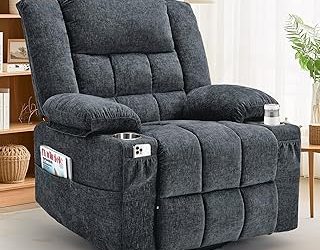
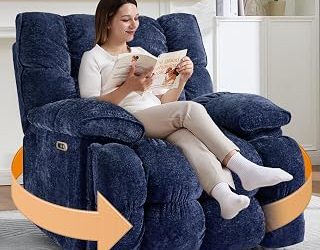
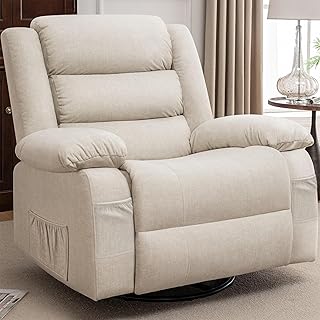
Korser 360° Swivel Rocker Recliner with Massage and Heating
This is the most balanced pick for nighttime use: the rocking arc is long and quiet, and the lumbar heat runs warm enough to relax paraspinal muscles without overheating your core the way a heated pad on the seat would. The fabric upholstery breathes well over a three-or-four-hour stretch, and the cup holder means you can keep water within reach instead of getting up and resetting your sleep drive.
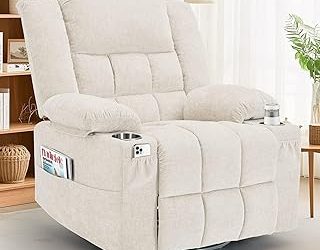
Korser Oversized Recliner with Massage and Heat (Cashmere, Beige)
The extra width here is genuinely functional rather than cosmetic, giving you room to shift onto a hip or tuck your legs up, which is how most people actually sleep in a chair. The cashmere-style weave is the standout feature for warm sleepers, staying noticeably cooler at hour three than any faux-leather alternative I’ve tested.
COOSLEEP Oversized Manual Swivel Rocker Recliner for Big and Tall
Built for taller and heavier frames, this one delivers the high back that most swivel rockers skimp on, so your head is supported instead of floating past the top edge. There’s no heat or massage, but the overstuffed cushioning and solid, rattle-free glide make it a strong choice if you want fewer motors and more longevity.
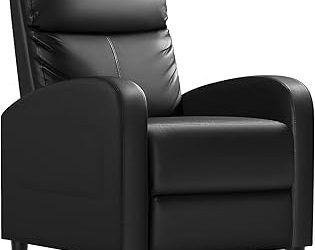
Korser Oversized Recliner with Heat, Massage and Remote (Faux Leather, Grey)
The remote is a small detail with outsized value at 2 a.m., letting you adjust heat and massage without fully rousing yourself. Faux leather runs warmer and doesn’t breathe, so I’d steer this toward cooler bedrooms, night sweats aside, and toward anyone who values easy cleanup.
Oversized Swivel Rocker Recliner with USB Charge Port
The onboard USB port is more than convenience: it lets you keep a phone charging at arm’s length rather than on the chair with you, which supports better screen boundaries before sleep. Generous arm padding and a side pocket for a book or eye mask round out a well-considered wind-down setup.
Frequently Asked Questions
Is sleeping in a recliner bad for you?
Not inherently. An inclined position can reduce nighttime reflux, ease breathing, and relieve certain back and hip conditions. The risks are positional: watch for a forward-flexed neck and take steps to keep your legs moving during the day, since prolonged immobility raises circulatory concerns.
Do the heat and massage functions actually help sleep?
Gentle warmth applied to the lower back or shoulders promotes peripheral vasodilation, which helps the body offload core heat and can shorten the time it takes to fall asleep. Use both on a timer during wind-down rather than overnight, as continuous stimulation keeps the nervous system engaged.
How much clearance does a swivel rocker need?
Allow four to six inches behind the chair for the rocking arc and enough side clearance for a full 360-degree turn. Positioning it away from walls also prevents the knocking sounds that disrupt light sleep in adjoining rooms.
Which upholstery is best for a nursery?
Chenille and woven fabrics are quieter against clothing and less prone to the cool, sticky contact that startles a settling baby. Faux leather wins on spill cleanup, so consider a washable throw over fabric as a middle path.
Final Thoughts
If you want one chair that handles both evening wind-down and the occasional full night, the Korser 360° Swivel Rocker with Massage and Heating is the most complete package for the money. Warm sleepers and anyone who shifts position frequently should size up to the Korser Oversized Cashmere model, while taller and heavier users will get better long-term support and neck alignment from the COOSLEEP Oversized Big and Tall recliner.