Key takeaways
- Recline angle and headrest control: A seat that only opens to about 130 degrees keeps your neck flexed forward, which is the fastest route to a sore morning. Look for a deep recline paired with an adjustable headrest so the cervical spine stays neutral rather than propped.
- Cushion resilience over initial plushness: High-density foam or a foam-over-pocket-coil build holds its shape through years of the same person sitting in the same spot. Ultra-soft fiber fill feels wonderful in week one and creates a hip-dropping trough by month eight, which pulls the lumbar spine out of alignment.
- Chaise or corner depth for full-body rest: If naps are part of the plan, you need somewhere to extend your legs completely. A chaise, a flip-down middle backrest, or a corner wedge that lets you lie supine beats a footrest that supports only your calves.
- Lighting and charging placement: Ambient LED strips are fine at low warmth, but bright cool-white light near eye level suppresses melatonin right when you want it rising. Position USB ports so devices charge away from your head, not beside your pillow.
- Motor noise and clearance: Power mechanisms vary widely in volume — worth noting if someone else in the room is already asleep. Also confirm wall-hugger clearance, since a sectional that needs 12 inches of runway behind it will end up floating awkwardly in the room.
What's inside
Most people shop for a reclining sectional the way they shop for a rug: they measure the wall, pick a color, and hope for the best. Then six months later they’re falling asleep on it four nights a week — head cocked at an angle, hips sunken into a cushion that has given up, waking at 2 a.m. with a stiff neck and no memory of drifting off. As someone who spends their working life on sleep architecture and daytime recovery, I can tell you that the furniture where you nap is doing real work on your body, and most of it is doing that work badly.
This guide looks at reclining sectionals through a slightly unusual lens: how well they support a body at rest. That means seat depth and back angle, headrest geometry, how the frame handles a 200-pound person going horizontal, and whether the built-in extras (USB ports, consoles, LED strips) help or quietly sabotage your evening wind-down. Below you’ll find current standouts, followed by the criteria I’d apply before spending anything.
As an Amazon Associate we earn from qualifying purchases.



How to Choose a Sectional Recliner Sofa (2026)
- Recline angle and headrest control: A seat that only opens to about 130 degrees keeps your neck flexed forward, which is the fastest route to a sore morning. Look for a deep recline paired with an adjustable headrest so the cervical spine stays neutral rather than propped.
- Cushion resilience over initial plushness: High-density foam or a foam-over-pocket-coil build holds its shape through years of the same person sitting in the same spot. Ultra-soft fiber fill feels wonderful in week one and creates a hip-dropping trough by month eight, which pulls the lumbar spine out of alignment.
- Chaise or corner depth for full-body rest: If naps are part of the plan, you need somewhere to extend your legs completely. A chaise, a flip-down middle backrest, or a corner wedge that lets you lie supine beats a footrest that supports only your calves.
- Lighting and charging placement: Ambient LED strips are fine at low warmth, but bright cool-white light near eye level suppresses melatonin right when you want it rising. Position USB ports so devices charge away from your head, not beside your pillow.
- Motor noise and clearance: Power mechanisms vary widely in volume — worth noting if someone else in the room is already asleep. Also confirm wall-hugger clearance, since a sectional that needs 12 inches of runway behind it will end up floating awkwardly in the room.
The Best Sectional Recliner Sofas (2026) Reviewed
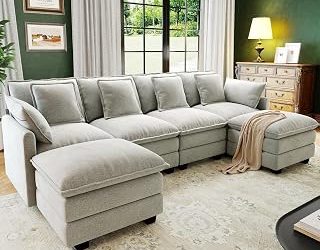
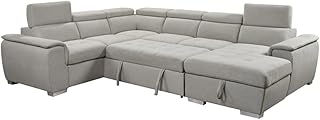
134″ Modular Power Reclining Sectional (Chenille, Oversized Cloud)
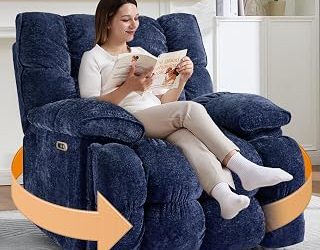
This is the pick if daytime recovery is the priority: the oversized cloud proportions and adjustable headrests let a full-grown adult lie flat with the cervical spine properly supported, and the wall-hugger mechanism means you don’t have to strand it mid-room to get a deep recline. Washable covers are a genuinely underrated feature for anyone who naps regularly on their sofa.
FUOROLA Power Recliner Living Room Set with LED
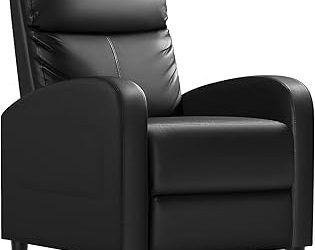
The breathing leather is the standout detail here — perforated upholstery moves heat away from your back, which matters because a rising core temperature is one of the most common reasons people surface from a nap feeling unrested. Keep the LED accent lighting dim in the evening and this becomes a capable wind-down space.
Dresegmt Manual Recliner Sectional with Flip Middle Backrest
The flip-down middle backrest is the clever bit: it converts the corner run into a genuine lie-flat surface without buying a separate chaise. Manual mechanisms also mean no motor hum, which is a real advantage in a shared living room where someone is already dozing.
Power Reclining Sectional with LED Lights (Black Leather, Net Design)
A strong home-theater option with smooth powered recline and a well-placed storage console, so the remote-and-water-bottle clutter stays off the floor. The cool-toned LED work is more cinematic than restful, so I’d wire it to a dimmer if evenings are for winding down rather than watching.
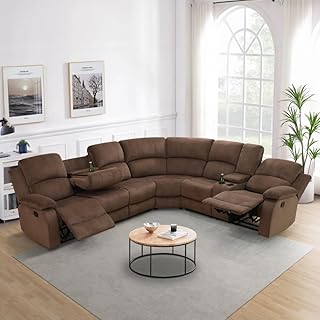
Recliner Sectional with 2 Recliner Seats (Light Brown)
Two independent reclining seats plus a corner make this an efficient choice for households where two people want different back angles at the same time. Seat support is firm enough to resist the sagging that usually ends a budget sectional’s useful life.
Frequently Asked Questions
Is sleeping on a reclining sectional actually bad for you?
An occasional nap on a well-supported recliner is fine, and a slight incline can even help people with reflux or nasal congestion. The problem is habitual nights on a surface that lets your hips sink and your neck twist — that’s what produces chronic stiffness and fragmented sleep.
Manual or power recline for napping?
Power wins on precision, since you can dial in a small angle change without disturbing your position. Manual wins on silence and on never failing because of a dead motor. If you nap in a room where others are sleeping, manual is the quieter neighbor.
Do I need the LED lighting?
Only if you can control it. Warm, low-level light under the seat frame is harmless and pleasant; bright white light at eye level in the hour before bed will delay your natural melatonin rise and push your sleep onset later.
How much clearance should I plan behind the sofa?
Assume 3 to 6 inches for a wall-hugger design and closer to 12 inches for a conventional mechanism. Measure before ordering, because a sectional that can’t fully recline is just a large, expensive couch.
Final Thoughts
If your sectional doubles as a nap zone, the 134″ Modular Power Reclining Sectional is the most body-friendly option here thanks to its lie-flat depth, adjustable headrests, and washable covers. The FUOROLA power set is the better call in warm rooms where breathable leather keeps your core temperature down, while the Dresegmt manual sectional with its flip middle backrest delivers most of the same rest benefits with no motor noise at all.