Key takeaways
- Recline angle over recline count: The sweet spot for passive recovery sits somewhere between 120 and 135 degrees, with the knees slightly above hip level. A sofa with three settings that hit that range beats one with infinite adjustment that never gets there.
- Seat depth versus your leg length: Deep “cloud” seats are wonderful if you can tuck your legs up, but if your feet can’t reach the floor while seated upright, you’ll unconsciously brace your hips all evening. Measure from the back of your knee to your heel before falling for a 40-inch seat.
- Breathability of the cover: Thermoregulation drives sleep onset. Chenille and corduroy move air far better than bonded or air leather, which traps heat against the skin — a real consideration if you tend to run warm in the evening.
- Light discipline: Integrated LED strips and USB charging are convenient, but blue-heavy light in the last hour before bed suppresses melatonin. Look for warm-toned, dimmable lighting, or plan to switch it off as part of your wind-down.
- Support layers that hold shape: High-resilience foam over a sinuous spring base keeps your pelvis level. Feather-heavy or boneless designs feel luxurious on day one, but if they compress unevenly they’ll twist your spine into a slow curve over the months.
What's inside
Most people budget carefully for a mattress and then spend four or five hours a night on a sofa that was never designed to support a resting body. As someone who spends most of my working life studying how humans recover, I find that gap fascinating — and fixable. The evening “wind-down” window is when your core temperature starts to drop and melatonin production begins, and where you spend that window matters. A sofa that forces your neck forward, compresses the backs of your thighs, or leaves your feet dangling keeps low-grade muscular tension switched on, which is precisely the opposite of what a nervous system needs before bed.
A reclining sectional, chosen well, is one of the few furniture purchases that can genuinely improve your sleep architecture — it lets you elevate the legs, neutralize the spine, and drift toward drowsiness without the postural strain that keeps you artificially alert. Chosen badly, it becomes a very expensive nap trap that wrecks your sleep schedule and your lumbar spine at the same time. Below, I’ve assessed the leading 2026 reclining and cloud-style sectionals through a recovery lens: seat depth, recline geometry, temperature regulation, and whether the design encourages restorative rest or accidental all-nighters.
As an Amazon Associate we earn from qualifying purchases.


How to Choose a Sectional Sofa Recliner (2026)
- Recline angle over recline count: The sweet spot for passive recovery sits somewhere between 120 and 135 degrees, with the knees slightly above hip level. A sofa with three settings that hit that range beats one with infinite adjustment that never gets there.
- Seat depth versus your leg length: Deep “cloud” seats are wonderful if you can tuck your legs up, but if your feet can’t reach the floor while seated upright, you’ll unconsciously brace your hips all evening. Measure from the back of your knee to your heel before falling for a 40-inch seat.
- Breathability of the cover: Thermoregulation drives sleep onset. Chenille and corduroy move air far better than bonded or air leather, which traps heat against the skin — a real consideration if you tend to run warm in the evening.
- Light discipline: Integrated LED strips and USB charging are convenient, but blue-heavy light in the last hour before bed suppresses melatonin. Look for warm-toned, dimmable lighting, or plan to switch it off as part of your wind-down.
- Support layers that hold shape: High-resilience foam over a sinuous spring base keeps your pelvis level. Feather-heavy or boneless designs feel luxurious on day one, but if they compress unevenly they’ll twist your spine into a slow curve over the months.
The Best Sectional Sofa Recliners (2026), Reviewed
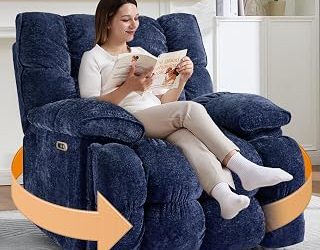
Dresegmt Manual Recliner Sectional
The flip-down middle backrest is quietly clever for recovery: it converts the centre seat into a chaise so you can elevate your legs without hogging the whole sofa. Manual mechanisms also mean no motor noise, which matters more than people expect when someone else in the room is dozing off.
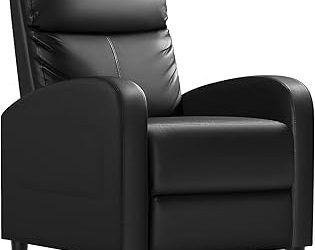
Power Recliner Sectional with LED Light
Power recline gives you fine control over that critical 120-to-135-degree window, and the storage console keeps water, glasses, and a book within reach so you’re not repeatedly standing up and re-activating your system. Set the LED strip to its warmest level in the evening — or leave it off entirely — and treat the air leather with the knowledge that it holds heat.
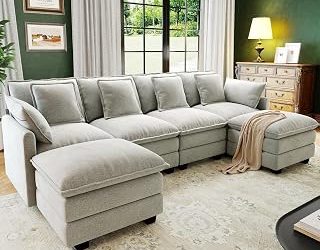
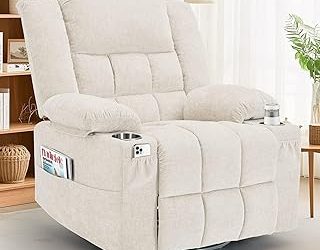
Ihanherry 111.4″ U-Shaped Cloud Couch
Chenille over a deep modular frame is about as breathable as upholstered seating gets, and the twin ottomans let shorter users create genuine leg support rather than perching. This is the pick for people who nap intentionally and want temperature-neutral fabric against the skin.
133″ U-Shaped Modular Corduroy Sectional
Corduroy’s ribbed pile creates micro-channels for airflow, which keeps the surface cooler than smooth synthetics during longer rests. At 133 inches with no assembly required, it’s a commitment — measure your room and your doorways before committing.
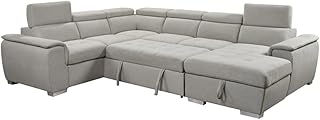
134″ Modular Sectional Sleeper
The only pick here that converts to a genuine sleeping surface, which makes it the honest choice for studio apartments and guest-heavy households. Add a thin mattress topper if it will be used for full nights; boneless cushions alone won’t deliver the pressure distribution a spine needs over seven hours.
Frequently Asked Questions
Is sleeping on a reclining sectional bad for you?
Occasionally, no — some people with reflux or sleep apnoea actually breathe better at a slight incline. Nightly, it’s a problem: sofa cushions don’t distribute pressure evenly across a full sleep cycle, and habitual couch sleeping tends to fragment sleep and blur your bed’s association with rest.
Does recliner position affect snoring?
It can. A modest upright incline reduces the tendency of soft tissue to collapse into the airway, which is why some snorers report improvement. It’s a comfort measure, not a treatment — persistent loud snoring with daytime fatigue warrants a proper sleep assessment.
Power or manual recline for a bedroom or media room?
Manual, generally. It’s quieter, needs no cabling, and eliminates the motor hum that can pull a light sleeper back toward wakefulness. Choose power if reaching a side lever is difficult or if you want precise incremental control.
How firm should the cushions be?
Firm enough that your hips don’t sink below your knees when seated upright. Test by sitting normally for two minutes: if you have to shift your weight to stay comfortable, the support layer is too soft for extended evening use.
Final Thoughts
If your priority is temperature-regulated rest, the Ihanherry 111.4″ cloud sectional in chenille is the most sleep-friendly option here. For adjustable recline geometry with everything within arm’s reach, the Power Recliner Sectional earns its place — just tame the LEDs after dark. And if the sofa doubles as a guest bed, the 134″ Modular Sleeper is the sensible pick, paired with a topper. Whichever you choose, keep it for winding down rather than sleeping through, and let your bed do the job it was built for.