Key takeaways
- Motor count determines rest quality: A single- or dual-motor chair links the back and footrest together, which forces a compromise between leg elevation and torso angle. A three-motor design separates back, footrest, and headrest so you can raise the legs for circulation while keeping the chest slightly upright — the position most people actually fall asleep in comfortably.
- Match the seat to the body, not the room: Measure from the back of the knee to the heel and from hip to shoulder before buying. A taller user in a medium chair loses calf support at the footrest and lumbar contact at the back; a smaller user in an oversized chair dangles, which strains the lower back and makes standing harder, not easier.
- Look for lay-flat or infinite position if the chair is a bed: If overnight rest is the plan, you need a frame that opens past the standard 140° into a near-horizontal or infinitely adjustable range. Sleeping night after night in a partially reclined chair with fixed angles tends to produce neck flexion and morning stiffness.
- Verify the lift arc feels controlled: A good lift mechanism tips forward slowly and stops at a height where the feet are flat and the knees are just above the hips. Fast or abrupt lifts feel unsafe and encourage people to grab furniture instead of using the chair. Test the remote for large, tactile, well-separated buttons.
- Treat heat and massage as recovery tools, not gimmicks: Lumbar heat and low-frequency vibration can genuinely reduce muscle guarding before sleep, but they should be on a timer and easy to switch off. Look for zone control and a battery backup port so the chair still returns upright during a power outage.
What's inside
As a sleep-wellness practitioner, I spend a surprising amount of my day talking about chairs rather than beds. The reason is simple: for many older adults, the recliner has quietly become the primary place of rest. Hip stiffness, shortness of breath when lying flat, reflux, chronic pain, or the plain fear of not being able to get back up all push people out of the bedroom and into the living room. The trouble is that most chairs were never designed to carry that load, so the result is shallow, fragmented rest and a daily struggle to stand.
A power lift recliner solves both halves of that problem when it’s chosen carefully. This guide walks through what actually matters for restorative rest and safe transfers — motor count, recline geometry, seat dimensions, and the small ergonomic details that determine whether a chair supports the body or fights it — and then reviews the models currently worth your attention for 2026.
As an Amazon Associate we earn from qualifying purchases.




How to Choose a/an Power Lift Recliner For Elderly (2026)
- Motor count determines rest quality: A single- or dual-motor chair links the back and footrest together, which forces a compromise between leg elevation and torso angle. A three-motor design separates back, footrest, and headrest so you can raise the legs for circulation while keeping the chest slightly upright — the position most people actually fall asleep in comfortably.
- Match the seat to the body, not the room: Measure from the back of the knee to the heel and from hip to shoulder before buying. A taller user in a medium chair loses calf support at the footrest and lumbar contact at the back; a smaller user in an oversized chair dangles, which strains the lower back and makes standing harder, not easier.
- Look for lay-flat or infinite position if the chair is a bed: If overnight rest is the plan, you need a frame that opens past the standard 140° into a near-horizontal or infinitely adjustable range. Sleeping night after night in a partially reclined chair with fixed angles tends to produce neck flexion and morning stiffness.
- Verify the lift arc feels controlled: A good lift mechanism tips forward slowly and stops at a height where the feet are flat and the knees are just above the hips. Fast or abrupt lifts feel unsafe and encourage people to grab furniture instead of using the chair. Test the remote for large, tactile, well-separated buttons.
- Treat heat and massage as recovery tools, not gimmicks: Lumbar heat and low-frequency vibration can genuinely reduce muscle guarding before sleep, but they should be on a timer and easy to switch off. Look for zone control and a battery backup port so the chair still returns upright during a power outage.
The Best Power Lift Recliner For Elderly (2026)s Reviewed
MCombo 3 Motor Large Lift Recliner 7634 (Faux Leather, Dark Brown)
This is the model I point to first when a client is sleeping in their chair most nights, because the independent power headrest lets you elevate the legs without collapsing the neck forward — the single biggest fix for chair-sleeping discomfort. The lay-flat infinite-position range and generous frame suit taller users who normally run out of chair at the shoulders and calves.
MCombo 3 Motor Large Lift Recliner 7634 (Fabric, Grey)
Mechanically identical to its faux-leather sibling, but the breathable fabric makes a real difference for anyone who runs warm or uses the lumbar heat regularly, since it doesn’t trap perspiration against the skin. Side pockets keep a remote, inhaler, or glasses within reach so there’s no unnecessary reason to get up mid-nap.
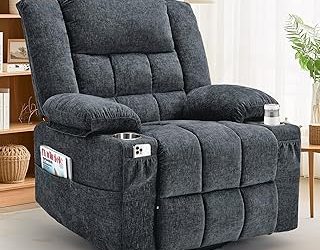
MCombo Power Lift Recliner, Fabric 7287 (Dark Gray, Medium)
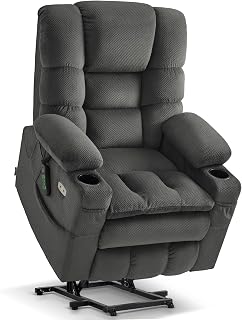
The most sensible starting point for an independent older adult of average build who mainly wants reliable stand assist and an afternoon rest rather than a nightly bed. The 140° recline plus the extra 4.7″ of footrest extension covers the legs properly, and the USB/Type-C ports and cup holder keep essentials at hand.
MCombo Power Lift Recliner, Leather 7287 (Dark Brown, Medium)
Same well-judged medium frame and stand-assist geometry, finished in easy-clean leather — the practical choice where spills, incontinence concerns, or caregiver cleaning routines are part of daily life. Wipe-down surfaces meaningfully extend the usable life of a chair in a care setting.
Dual Motor Lift Recliner with Massage and Heat (Brown, Oversized)
An oversized, big-and-tall option with infinite positioning, lay-flat capability, and arm storage that keeps clutter off the floor around the chair. Dual motors mean back and footrest adjust independently, so you still get real control over your rest angle without stepping up to a three-motor price.
Frequently Asked Questions
Is it safe to sleep in a lift recliner every night?
It can be, and for people with reflux, heart failure, or COPD it is sometimes more restful than a flat bed. The keys are proper neck support, legs elevated near heart level, a pressure-relieving cushion if you sit for long stretches, and a plan to change position — prolonged immobility raises skin and clot risks, so discuss long-term chair sleeping with a clinician.
What’s the practical difference between two and three motors?
Two motors let you set back and footrest separately. A third motor adds a powered headrest, which is what allows a deeply reclined position without the chin tipping toward the chest. If the chair will host sleep, the third motor earns its cost.
How much clearance does the chair need from the wall?
Lift recliners tilt forward to rise and travel backward to recline, so plan for space on both ends. Allow roughly a foot and a half behind a lay-flat model unless it is specified as wall-hugging, and keep a clear, unobstructed path in front for safe standing.
Do heat and massage actually help with sleep?
Modestly, and indirectly. Warmth applied to the lower back before rest reduces muscle tension and encourages the slight drop in core temperature that precedes sleep onset. Use it for fifteen to twenty minutes and let it switch off rather than running it all night.
Final Thoughts
If the recliner is doubling as a bed, the MCombo 3 Motor 7634 is the clear pick — grey fabric for warm sleepers, dark brown faux leather for easier cleaning — because the independent headrest is what makes a chair genuinely restful rather than merely tolerable. For an active older adult who mostly needs a confident stand assist and a comfortable place to read or nap, the MCombo 7287 in fabric or easy-clean leather delivers the essentials without overspending, while the oversized Dual Motor model with massage and heat is the better fit for larger and taller users.