Key takeaways
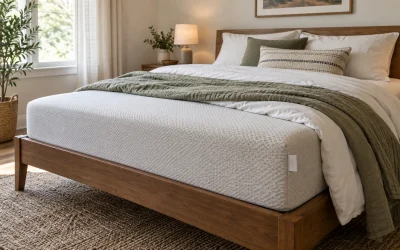
- Profile over firmness ratings: Depth does more for side sleepers than a firmness label. Aim for 10 inches minimum so there’s enough material for your shoulder to sink into without hitting the platform beneath. An 8-inch model can work for lighter sleepers under roughly 130 pounds, but it’s a tighter margin.
- A medium feel, honestly measured: The sweet spot for most side sleepers sits at medium to medium-firm. Too plush and your hips drop below your ribcage, torquing the lumbar spine; too firm and pressure concentrates at the shoulder joint. Look for descriptions that pair a yielding comfort layer with a denser base.
- Thermal management is not optional: RVs swing hot, insulation is thin, and memory foam traps heat. Gel infusions, bamboo charcoal, open-cell structures, and pocketed coils that allow vertical airflow all measurably reduce surface temperature over a night.
- Certifications and fiberglass: CertiPUR-US covers foam emissions and content; OEKO-TEX addresses the cover textiles. Explicitly fiberglass-free construction matters more in a vehicle, where vibration and movement can work particles loose from a sock liner over time.
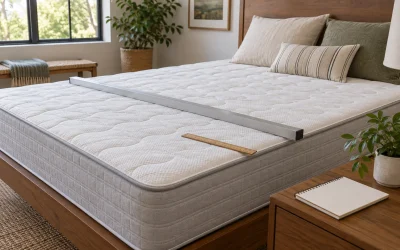
- Measure twice, then measure the doorway: RV sizes are non-standard — short queen is 60×74 or 60×75, full XL is 53×80, short king runs 72×75. Confirm your platform dimensions and check that a compressed roll can physically make the turn into your bedroom.
What's inside
Side sleeping loads your shoulder and hip with almost your entire body weight across just a few square inches of contact area. On a home mattress that’s manageable; in an RV it’s a genuine problem. Factory camper mattresses are typically thin slabs of low-density foam laid over a plywood platform, which means your shoulder bottoms out before the surface ever contours. The result is the classic road-trip complaint: waking every ninety minutes to flip sides, a numb arm, and a lower back that protests by the third morning of a trip.
The fix isn’t simply “softer.” Side sleepers need a surface that yields at the shoulder and hip while still holding the waist and lumbar curve in line — pressure relief on top, support underneath. This guide looks at RV-specific mattresses in the odd sizes campers actually use (short queen, full XL, short king), evaluates them through the lens of side-sleeping biomechanics, and covers heat retention, off-gassing, weight, and the compressed-shipping question that matters when your bedroom is behind a narrow door.
As an Amazon Associate we earn from qualifying purchases.


🛒 Best Price Today on Amazon
Prime members get fast, free shipping on everything above, plus member-only deals. New members get a 30-day free trial — cancel anytime.
How to Choose a/an Rv Mattress For Side Sleepers (2026)
- Profile over firmness ratings: Depth does more for side sleepers than a firmness label. Aim for 10 inches minimum so there’s enough material for your shoulder to sink into without hitting the platform beneath. An 8-inch model can work for lighter sleepers under roughly 130 pounds, but it’s a tighter margin.
- A medium feel, honestly measured: The sweet spot for most side sleepers sits at medium to medium-firm. Too plush and your hips drop below your ribcage, torquing the lumbar spine; too firm and pressure concentrates at the shoulder joint. Look for descriptions that pair a yielding comfort layer with a denser base.
- Thermal management is not optional: RVs swing hot, insulation is thin, and memory foam traps heat. Gel infusions, bamboo charcoal, open-cell structures, and pocketed coils that allow vertical airflow all measurably reduce surface temperature over a night.
- Certifications and fiberglass: CertiPUR-US covers foam emissions and content; OEKO-TEX addresses the cover textiles. Explicitly fiberglass-free construction matters more in a vehicle, where vibration and movement can work particles loose from a sock liner over time.
- Measure twice, then measure the doorway: RV sizes are non-standard — short queen is 60×74 or 60×75, full XL is 53×80, short king runs 72×75. Confirm your platform dimensions and check that a compressed roll can physically make the turn into your bedroom.
The Best Rv Mattress For Side Sleepers (2026)s Reviewed
Lucid 10 Inch Bamboo Charcoal Memory Foam, Short Queen
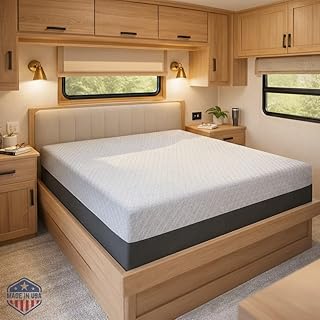
This is the most reliable all-rounder here for side sleepers: ten inches of medium-feel foam gives the shoulder somewhere to go, while the bamboo charcoal and gel infusion keep the surface from turning into a heat trap on summer nights. It’s a slow-response foam, so expect a hugging feel rather than a springy one — ideal if you settle into one position and stay there.
Zinus 10 Inch Ultima RV Memory Foam, Short Queen
Zinus runs slightly firmer than the Lucid, which suits heavier side sleepers or couples who want less sink at the hip. The breathable airflow foam layers are the standout feature, and the fiberglass-free build with dual CertiPUR-US and OEKO-TEX certification makes it an easy recommendation for anyone sensitive to new-mattress odors.
Aquasoft 8 Inch Memory Foam, Short Queen 60×74
The best pick when height is constrained — think overhead bunks, low-clearance sliders, or platforms with storage beneath. At eight inches it asks more of the foam’s quality, and the medium-firm Aquasoft layer handles it well for lighter and mid-weight side sleepers, though larger builds will want the extra two inches elsewhere in this list.
WanderRest Cool Hybrid 10″, Full XL 53×80
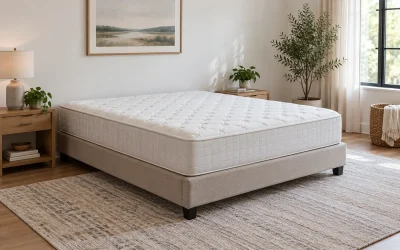
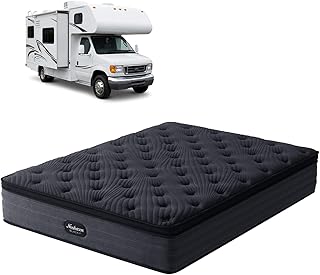
The pocketed coils underneath are what set this apart: they respond point-by-point at the shoulder and hip while resisting the trench-forming that pure foam develops over a season of use. Coils also ventilate vertically, so paired with the cooling gel layer, this is the coolest-running option here — and the Full XL footprint fits the long, narrow bedrooms in many travel trailers.
Celestial Sleep 10 Inch RV Short Queen
A well-executed medium cooling foam made in the USA, with the full certification stack including explicit fiberglass-free verification. The comfort layer contours quickly rather than requiring a long warm-up, which is a real advantage on cool mountain nights when traditional memory foam stiffens up.
Frequently Asked Questions
Is memory foam or hybrid better for side sleeping in an RV?
Both work, but they solve different problems. Memory foam contours more deeply and is lighter to maneuver; hybrids with pocketed coils offer better edge support, run cooler, and resist body impressions longer. If your rig runs hot or you share the bed, lean hybrid.
How thick should an RV mattress be for a side sleeper?
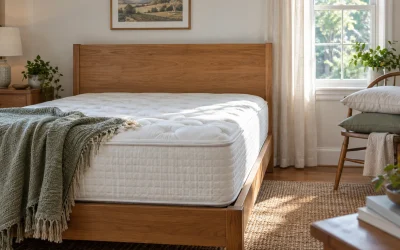
Ten inches is the practical baseline, and twelve is better if your platform and headroom allow — the 12-inch short king hybrid is a good example. Under ten inches, foam compresses fully at the shoulder and the support layer starts acting like the plywood underneath it.
Will a compressed mattress expand properly in a camper?
Yes, but cold slows it down considerably. Unbox in a warm space if you can and allow 48 to 72 hours before judging the feel. Expanding it in a 45-degree trailer and sleeping on it that night is how people conclude a good mattress is too firm.
Do I need a mattress topper as well?
Usually not with a properly specified mattress. If you’re keeping a thin factory mattress for now, a two- to three-inch topper is a reasonable interim measure, but it can’t substitute for a supportive base layer.
Final Thoughts
For most side sleepers replacing a factory camper mattress, the Lucid 10 Inch Bamboo Charcoal Short Queen is the straightforward choice — correct depth, genuinely medium feel, and sensible cooling for the price. If heat is your primary complaint or you want longer-term durability, the WanderRest Cool Hybrid and its pocketed-coil support answer that better than any all-foam option here. And when overhead clearance rules out a thicker build, the Aquasoft 8 Inch delivers the most contouring available in a low profile.