Key takeaways
- Foam or hybrid: All-foam beds contour closely and quiet movement better than almost anything else, which suits light sleepers and couples on different schedules. Hybrids add pocketed coils for lift, airflow, and easier repositioning — the better bet if you’re heavier, sleep hot, or dislike the sensation of sinking.
- Firmness matched to sleep position: Side sleepers need enough give at the shoulder and hip to keep the spine level, so medium to medium-plush usually wins. Back and stomach sleepers do better on medium-firm, where the pelvis stays supported instead of dropping out of alignment.
- Heat management: “Cooling” covers a wide range of engineering. Gel infusions and open-cell foams slow heat buildup; coil units and breathable covers actively move air. If you run warm, weight the airflow features more heavily than the surface-level gel claims.
- Zoned support: Five- and seven-zone designs vary firmness along the length of the bed — softer at the shoulders, firmer under the lumbar and hips. For anyone with recurring lower-back complaints, this targeted approach tends to outperform a single uniform feel.
- Certifications and trial length: CertiPUR-US indicates the foam has been tested for emissions and content, and fiberglass-free construction avoids a messy failure point. Then read the trial window: bodies need roughly two to four weeks to adapt, so anything under 100 nights is barely a test.
A king mattress is the largest purchase most people ever make while lying down, and that changes the stakes. At 76 inches wide, a king amplifies whatever the mattress does well — and whatever it does badly. If it traps heat, it traps heat across a huge surface. If it transmits movement, every roll from the far side arrives like a small tremor. And because a king is heavy and awkward, returning one is genuinely inconvenient, which means guessing wrong is expensive in time as well as money.
What follows is a sleep-focused look at the king mattresses currently worth attention on Amazon: what the specs actually mean for your body, which construction suits which sleeper, and how to read the shorthand manufacturers use. I’ve prioritized the factors that show up in sleep quality rather than the ones that photograph well — thermal regulation, spinal support at the hips and shoulders, motion isolation, and edge stability.
Our top picks




As an Amazon Associate we earn from qualifying purchases at no extra cost to you. Ratings are shown as listed on Amazon.
🛒 Best Price Today on Amazon
Prime members get fast, free shipping on everything above, plus member-only deals. New members get a 30-day free trial — cancel anytime.
How to Choose a King Mattress On Amazon (2026)
- Foam or hybrid: All-foam beds contour closely and quiet movement better than almost anything else, which suits light sleepers and couples on different schedules. Hybrids add pocketed coils for lift, airflow, and easier repositioning — the better bet if you’re heavier, sleep hot, or dislike the sensation of sinking.
- Firmness matched to sleep position: Side sleepers need enough give at the shoulder and hip to keep the spine level, so medium to medium-plush usually wins. Back and stomach sleepers do better on medium-firm, where the pelvis stays supported instead of dropping out of alignment.
- Heat management: “Cooling” covers a wide range of engineering. Gel infusions and open-cell foams slow heat buildup; coil units and breathable covers actively move air. If you run warm, weight the airflow features more heavily than the surface-level gel claims.
- Zoned support: Five- and seven-zone designs vary firmness along the length of the bed — softer at the shoulders, firmer under the lumbar and hips. For anyone with recurring lower-back complaints, this targeted approach tends to outperform a single uniform feel.
- Certifications and trial length: CertiPUR-US indicates the foam has been tested for emissions and content, and fiberglass-free construction avoids a messy failure point. Then read the trial window: bodies need roughly two to four weeks to adapt, so anything under 100 nights is barely a test.
The Best King Mattresses On Amazon (2026), Reviewed
16 Inch Luxury Hybrid King with 7-Zone Support
The tallest option here, and the extra height translates into a genuinely layered feel — cushioning depth at the surface over a coil system that keeps the hips from settling too far. The seven-zone configuration and medium-firm tuning make it a strong all-rounder for couples with mismatched builds, and the 365-night trial removes most of the risk from a large-format purchase.
Sweetnight CoolNest 14 Inch Memory Foam
A dedicated foam bed for people who want close contouring without the buoyancy of coils, using five-zone ergonomic shaping to firm up through the midsection while staying yielding at the shoulders. The medium feel and emphasis on breathability make it a sensible pick for side sleepers who’ve historically found memory foam too warm.
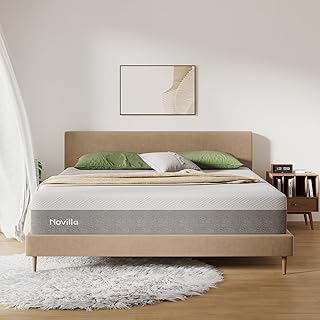
Novilla 14 Inch Gel Memory Foam
Fourteen inches gives this one more compliance than the brand’s slimmer models, and the gel-infused comfort layer handles the first few hours of heat buildup competently. Motion isolation is the standout: this is the sort of surface where a partner’s 2 a.m. trip to the kitchen simply doesn’t register.
Novilla Bliss 12 Inch Gel Memory Foam
Medium-plush and noticeably softer at the surface, with a firmer support core beneath to hold spinal alignment rather than letting you bottom out. Best suited to lighter side sleepers and anyone who finds most mattresses unforgiving at the shoulder and hip.
Novilla 12 Inch Hybrid with Smart Coils
A leaner hybrid that pairs pocketed coils with hypoallergenic, fiberglass-free foam — a practical combination if back discomfort and airflow are both priorities. The pocketed coil unit also gives better edge support than most 12-inch beds, which matters when you’re sitting on the side to dress.
Frequently Asked Questions
How long does a boxed king mattress take to expand?
Most reach usable shape within a few hours and full loft in 24 to 72 hours. Unbox it in the room where it will live — moving an expanded king through a doorway is a two-person job at best.
Do I need a box spring?
No. These beds are built for platform frames, slatted bases, or adjustable foundations. If you use slats, keep gaps under about three inches, or the foam will sag between them over time.
Is a hybrid always better for back pain?
Not automatically. What relieves back pain is neutral spinal alignment, which depends on firmness and zoning more than on materials. Hybrids often help heavier sleepers because coils resist compression, but a well-zoned foam bed can be just as effective for lighter frames.
How long should a king mattress last?
Expect seven to ten years from quality foam or hybrid construction. Rotate it head-to-foot every three to six months to distribute wear evenly across that wide surface.
Final Thoughts
For most households, the 16 Inch Luxury Hybrid with 7-Zone Support is the safest investment — the deepest profile, the most sophisticated zoning, and a full year to decide. Dedicated foam fans and warm sleepers should look first at the Sweetnight CoolNest 14 Inch, while the Novilla 12 Inch Hybrid with Smart Coils delivers coil support and fiberglass-free construction at the most approachable point in this group.