Key takeaways
- Recline angle over recline count: A seat that opens past roughly 135 degrees puts your torso and thighs at the angle associated with easier drift-off and less lower-back load. Anything that stops near 110 degrees is a TV chair, not a rest position.
- Independent headrest adjustment: This is the single most valuable feature for anyone who naps. Without it, your head either falls forward or hyperextends backward, both of which cause the morning neck ache people blame on their pillow.
- Power versus manual: Power motors let you change position without bracing and pulling, which matters when you’re half-asleep or managing hip and shoulder pain. Manual mechanisms are cheaper and never fail electrically, but they demand a shove.
- Light temperature of built-in features: LED strips and reading lamps are genuinely useful, but cool blue-white light late at night suppresses melatonin. Look for warm or dimmable output, or plan to swap in a warm bulb for the reading lamp.
- Seat depth and heel support: Sit down and check that the extended footrest reaches past your heels. Dangling feet create pressure at the Achilles and lead to the fidgeting that keeps you from settling.
What's inside
Most people who shop for a reclining sectional think they’re buying furniture. In practice, they’re buying somewhere to fall asleep. Survey data on where Americans actually doze off keeps pointing at the same culprit — the living room couch — and the average evening nap on an unsupportive seat is where a lot of otherwise decent sleep schedules quietly come apart. A cushion that lets your head tip forward strains the neck; a footrest that stops short of your heels leaves the calves working all evening; a seat back locked at 100 degrees keeps your nervous system in “sitting up” mode when you’re trying to wind down. The result is a 40-minute couch sleep that leaves you groggier than before, followed by a bedtime you can no longer reach.
I’ve spent years advising clients on sleep environments, and I now treat the recliner sectional as part of that environment rather than an afterthought. This guide looks at six current models through that lens: how far each one reclines, whether the headrest supports the cervical spine independently, how the lighting and charging features affect your evening light exposure, and whether the frame will still hold its shape after two years of nightly use. Below, you’ll find the picks, then a short buying framework and answers to the questions I get asked most.
As an Amazon Associate we earn from qualifying purchases.



How to Choose a Reclining Sectional (2026)
- Recline angle over recline count: A seat that opens past roughly 135 degrees puts your torso and thighs at the angle associated with easier drift-off and less lower-back load. Anything that stops near 110 degrees is a TV chair, not a rest position.
- Independent headrest adjustment: This is the single most valuable feature for anyone who naps. Without it, your head either falls forward or hyperextends backward, both of which cause the morning neck ache people blame on their pillow.
- Power versus manual: Power motors let you change position without bracing and pulling, which matters when you’re half-asleep or managing hip and shoulder pain. Manual mechanisms are cheaper and never fail electrically, but they demand a shove.
- Light temperature of built-in features: LED strips and reading lamps are genuinely useful, but cool blue-white light late at night suppresses melatonin. Look for warm or dimmable output, or plan to swap in a warm bulb for the reading lamp.
- Seat depth and heel support: Sit down and check that the extended footrest reaches past your heels. Dangling feet create pressure at the Achilles and lead to the fidgeting that keeps you from settling.
The Best Reclining Sectionals of 2026, Reviewed
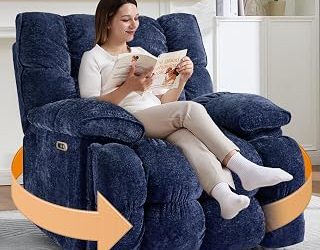
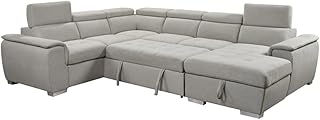
Oversized Power Recliner Sectional with Bluetooth Speakers
The deepest, most genuinely restful seat in this group, with an adjustable headrest that holds the neck neutral through a long recline and six charging ports so nobody hunts for an outlet at 11 p.m. The three Bluetooth speakers are a real asset if you use white noise or sleep audio; just keep the volume low enough that it fades rather than intrudes.
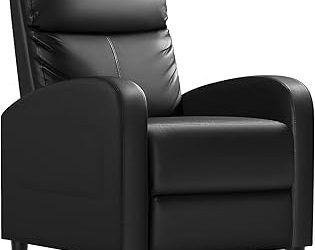
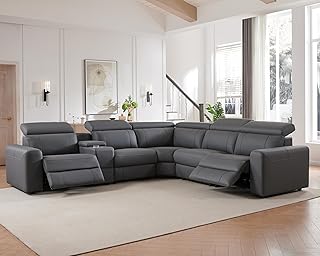
Power Reclining Sectional with Adjustable Headrest, 5-Seater Gray
My pick for anyone whose main complaint is waking up with a stiff neck, because the headrest articulates far enough forward to support the cervical curve without pushing the chin to the chest. The console storage and USB placement are sensible, and the gray leather reads calm rather than clinical.
Power Recliner Sectional with LED, USB and Reading Lamp
The most thoughtfully equipped option for evening reading, which is one of the few screen-free wind-down habits that reliably works. The LED accent lighting is bright out of the box, so dim it or reserve it for earlier in the evening if you’re protecting your melatonin window.
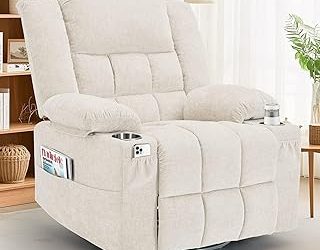
Power Recliner Sectional Sofa Set in Light Brown Leather
A straightforward, well-proportioned set that gets the fundamentals right: smooth motor travel, a storage console that keeps clutter off the floor, and cup holders positioned where a glass of water won’t get knocked over in the dark. A sound choice if you want rest-friendly geometry without the tech.
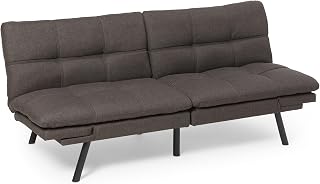
Dresegmt Manual Recliner Sectional with Flip Middle Backrest
The value pick, and the flip-down middle backrest is more useful than it sounds — it converts the corner into a flat surface that works for a short daytime rest. Reclining takes some effort, so it suits younger households more than anyone with shoulder or grip limitations.
Frequently Asked Questions
Is sleeping on a reclining sectional bad for you?
Occasional reclined sleep is fine and can even help people with reflux or mild sleep apnea, since elevating the torso reduces airway collapse. The problem is unsupported sleep — head tipped sideways, legs unsupported — and the habit of letting couch naps replace a consistent bedtime.
What recline angle is best for falling asleep?
Somewhere between 130 and 145 degrees suits most people. It’s shallow enough to keep the airway open and deep enough that your muscles stop stabilizing you, which is the cue your body needs to let go.
Do power recliners keep working long-term?
Good ones do, and most failures are the transformer or a wiring harness rather than the motor. Check that replacement parts are available for your model before buying, and never run the cord underneath the mechanism.
How much clearance do these need behind them?
Wall-hugger designs need roughly four to six inches; traditional mechanisms want a foot or more. Measure before you commit, because a sectional pushed too close to the wall will never open to a genuinely restful angle.
Final Thoughts
If rest is your priority, the Oversized Power Recliner Sectional is the most complete choice here, with the depth, headrest control and charging capacity to serve as a legitimate wind-down space. The 5-Seater Gray Power Reclining Sectional is the smarter buy for neck-pain sufferers specifically, while the Dresegmt manual model delivers surprising versatility for the money. Whichever you choose, treat it as a place to relax before bed — not instead of it.