Key takeaways
- Wall clearance, not just width: A wall-hugger mechanism reclines by sliding the seat forward rather than tipping the frame back, so you often need only 3–5 inches behind the unit. Measure that gap before you fall in love with anything, and remember baseboards and outlet covers steal an inch you didn’t budget for.
- Headrest height and neck angle: This is the detail that separates refreshing rest from a morning headache. Your head should be supported in line with your spine, not pushed forward at a chin-to-chest angle. Extended or high-back headrests are worth prioritising if you drift off in the chair.
- Lumbar support that persists: Foam collapses long before upholstery wears out. Look for a defined lumbar curve or included lumbar pillows, and treat overly plush “sink-in” seating with suspicion — it feels wonderful for ten minutes and leaves your lower back unsupported for two hours.
- Manual versus power: Power recline gives you infinite intermediate positions, which is genuinely useful for finding a shallow 30–40 degree angle that supports reading or relaxed breathing. Manual mechanisms are cheaper, need no outlet, and won’t fail electronically — but they tend to snap between two or three fixed positions.
- Breathability of the cover: Core body temperature has to drop for sleep to begin. Woven fabrics and chenille shed heat far better than faux leather, which traps it. If you nap in this seat regularly and run warm, choose fabric.
What's inside
Most people shopping for a reclining loveseat in a tight apartment or RV aren’t chasing luxury — they’re chasing rest. As someone who spends their days talking to people about why their sleep is falling apart, I can tell you that the evening recliner has quietly become one of the most important pieces of furniture in the modern home. It’s where the nap happens, where the pre-bed wind-down happens, and, more often than anyone admits, where the whole night happens. The problem is that a standard reclining loveseat needs a foot or more of clearance behind it, swallows a small living room whole, and often puts your neck in a position that guarantees you wake up stiff.
This guide is built around that specific tension: how do you get genuine, restorative recline in a room that measures in inches rather than feet? Below you’ll find wall-hugger mechanisms that recline within a few inches of the wall, compact 55″ to 65″ footprints that still seat two adults, and headrest and lumbar designs that support the cervical spine instead of folding it forward. I’ve weighed each option on posture, footprint, and how well it handles the honest reality of falling asleep mid-episode.
As an Amazon Associate we earn from qualifying purchases.


How to Choose a Reclining Loveseat For Small Spaces (2026)
- Wall clearance, not just width: A wall-hugger mechanism reclines by sliding the seat forward rather than tipping the frame back, so you often need only 3–5 inches behind the unit. Measure that gap before you fall in love with anything, and remember baseboards and outlet covers steal an inch you didn’t budget for.
- Headrest height and neck angle: This is the detail that separates refreshing rest from a morning headache. Your head should be supported in line with your spine, not pushed forward at a chin-to-chest angle. Extended or high-back headrests are worth prioritising if you drift off in the chair.
- Lumbar support that persists: Foam collapses long before upholstery wears out. Look for a defined lumbar curve or included lumbar pillows, and treat overly plush “sink-in” seating with suspicion — it feels wonderful for ten minutes and leaves your lower back unsupported for two hours.
- Manual versus power: Power recline gives you infinite intermediate positions, which is genuinely useful for finding a shallow 30–40 degree angle that supports reading or relaxed breathing. Manual mechanisms are cheaper, need no outlet, and won’t fail electronically — but they tend to snap between two or three fixed positions.
- Breathability of the cover: Core body temperature has to drop for sleep to begin. Woven fabrics and chenille shed heat far better than faux leather, which traps it. If you nap in this seat regularly and run warm, choose fabric.
The Best Reclining Loveseat For Small Spaces (2026)s Reviewed
MCombo 64.6″ Wall Hugger Power Loveseat Recliner (PR635M1)
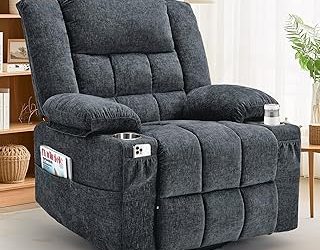
This is my pick for anyone who genuinely rests in their recliner, because power actuation lets you dial in a shallow, spine-neutral angle instead of committing to a fully flat position. The wall-hugger geometry and USB ports also mean you can park it inches from a wall and charge a device without a cable snaking across the floor.
Fabric Manual Reclining Loveseat with Metal Base (Grey)
The robust metal base here matters more than it sounds: frame flex is the usual first failure point on budget reclining loveseats, and a rigid substructure keeps the seat deck level over years of use. A sensible, no-nonsense choice for a bedroom reading corner or a compact second living space.
56″ RV Wall Hugger Recliner with Lumbar Pillows
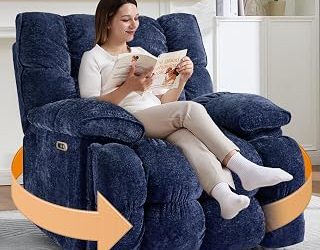
At 56 inches, this is the option I’d point toward for genuinely narrow rooms and RV slide-outs, and the included lumbar pillows let you correct the seat’s lower-back curve to your own build. That adjustability is a real advantage over fixed-foam backs, which either fit your spine or don’t.
GUEAPY 55″ Chenille Reclining Loveseat
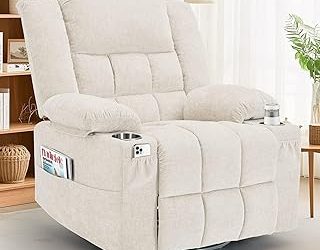
Chenille is one of the better upholstery choices for anyone who sleeps warm, since the woven pile moves air rather than sealing it in. The 55-inch footprint and wide armrests make it a smart fit for apartments where you want a proper armrest to rest a book or forearm on without adding overall width.
Faux Leather Manual Loveseat Recliner with Center Console
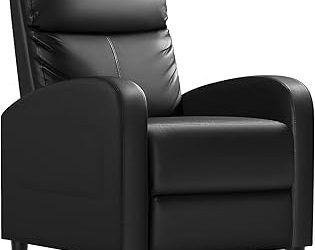
The centre console with hidden storage is quietly the best sleep-hygiene feature in this roundup — it gives you somewhere to stow your phone that isn’t your hand. Just be aware that faux leather runs warmer than woven fabric, so it suits cooler rooms better than hot ones.
Frequently Asked Questions
How much space do I really need behind a wall-hugger recliner?
Most wall-hugger designs need roughly 3–6 inches, but that figure is measured to the frame, not the wall. Add clearance for baseboards, radiators, and plug prongs, then leave a little margin so the mechanism isn’t fighting an obstruction every time it opens.
Is sleeping in a reclining loveseat bad for you?
Occasional reclined sleep is generally fine, and for some people with reflux or certain breathing issues, a modest incline is actually more comfortable than lying flat. The risks come from unsupported neck positions and from constant nights in a chair, which tend to fragment sleep and stiffen the hips.
Should I choose power or manual recline?
Choose power if you want fine control over the angle, have limited upper-body strength, or plan to spend long stretches reclined. Choose manual if you want lower cost, fewer components that can fail, and freedom from needing an outlet nearby.
What recline angle is best for winding down?
A shallow recline of roughly 30 to 40 degrees from vertical, with feet supported, tends to be the sweet spot for relaxed breathing and reading without triggering full sleep. Save the near-flat positions for when you’ve actually decided to nap.
Final Thoughts
If your priority is restorative comfort in a genuinely tight room, the MCombo 64.6″ Power Loveseat is the strongest all-round choice thanks to its adjustable angle and minimal wall clearance. For the narrowest spaces and RVs, the 56″ wall hugger with lumbar pillows delivers proper back support in a remarkably small footprint, while the GUEAPY 55″ Chenille model is the one I’d recommend to anyone who sleeps warm and wants breathable upholstery without sacrificing armrest comfort.