Key takeaways
- True zero-gravity geometry: Ask whether the footrest rises above hip level at full extension. Genuine zero-gravity reduces spinal compression and eases venous return from the legs; a “deep recline” that merely tilts you backward does neither. Manufacturers use the term loosely, so check the maximum recline angle — 155 degrees or more is a reasonable threshold.
- Independent power headrests: A fixed headrest forces forward head posture, which strains the neck and can narrow the airway enough to worsen snoring. Motorized, separately adjustable headrests let each person dial in a neutral cervical angle, and they matter more for comfort than any other single feature.
- Thermal behavior of the upholstery: Core body temperature needs to drop slightly for sleep to initiate. Top-grain and breathable perforated leathers shed heat well; dense velvet and thick bonded vinyl insulate. Choose based on your room’s climate, not the showroom photo.
- Seat depth and cushion resilience: Look for 21 to 23 inches of usable depth with high-resiliency foam over a sinuous-spring or steel base. Shallow seats leave the thighs unsupported; overly soft foam collapses within a year and tilts the pelvis backward.
- Power delivery and cable discipline: USB-C, standard outlets, and wireless charging pads are genuinely useful — but only if they let you dock a phone away from your face. Screens at arm’s length in the final hour before bed are a bigger obstacle to sleep than most people realize.
What's inside
Most people shopping for a power recliner are not really shopping for furniture — they are shopping for rest. In my work with clients on sleep hygiene, the living room sofa comes up constantly: the chronic back sleeper who dozes off during the ten o’clock news, the shift worker who needs a mid-afternoon reset, the recovering knee-surgery patient who cannot get comfortable lying flat. The problem is that most reclining sofas are engineered for television viewing, not for physiological rest. Seats sag, headrests push the chin toward the chest, and the recline stops at a half-hearted angle that leaves the lower back unsupported and the legs dangling below heart level.
This guide approaches the category through that lens. I have prioritized models with true zero-gravity positioning (legs elevated above the pelvis, torso open at roughly 120 to 130 degrees), independent power headrests that let you set cervical alignment instead of accepting a fixed curve, and upholstery that manages heat rather than trapping it — because thermal regulation is one of the most overlooked variables in whether a nap actually restores you. Below you will find the six sofas worth considering in 2026, followed by a buyer’s framework, honest notes on each pick, and answers to the questions I hear most often.
As an Amazon Associate we earn from qualifying purchases.



How to Choose a/an Electric Reclining Sofa (2026)
- True zero-gravity geometry: Ask whether the footrest rises above hip level at full extension. Genuine zero-gravity reduces spinal compression and eases venous return from the legs; a “deep recline” that merely tilts you backward does neither. Manufacturers use the term loosely, so check the maximum recline angle — 155 degrees or more is a reasonable threshold.
- Independent power headrests: A fixed headrest forces forward head posture, which strains the neck and can narrow the airway enough to worsen snoring. Motorized, separately adjustable headrests let each person dial in a neutral cervical angle, and they matter more for comfort than any other single feature.
- Thermal behavior of the upholstery: Core body temperature needs to drop slightly for sleep to initiate. Top-grain and breathable perforated leathers shed heat well; dense velvet and thick bonded vinyl insulate. Choose based on your room’s climate, not the showroom photo.
- Seat depth and cushion resilience: Look for 21 to 23 inches of usable depth with high-resiliency foam over a sinuous-spring or steel base. Shallow seats leave the thighs unsupported; overly soft foam collapses within a year and tilts the pelvis backward.
- Power delivery and cable discipline: USB-C, standard outlets, and wireless charging pads are genuinely useful — but only if they let you dock a phone away from your face. Screens at arm’s length in the final hour before bed are a bigger obstacle to sleep than most people realize.
The Best Electric Reclining Sofas of 2026, Reviewed
Zero Gravity Power Recliner Sofa Couch (Velvet, Brown)
The most complete rest-focused package here: full zero-gravity travel, adjustable headrests on all three seats, a drop-down table, and integrated wireless charging. The velvet is plush and visually warm but runs hot, so I would steer warm sleepers and anyone in an unairconditioned room toward a leather option instead.
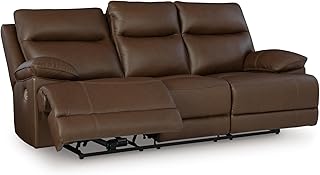
Ashley VonRyan Power Reclining Sofa
My pick for durability and thermal comfort. Top-grain leather seating breathes far better than faux alternatives, the 92-inch frame gives a tall adult room to fully extend, and Ashley’s motor and frame quality control is the most consistent in this price band. The tobacco brown is forgiving of daily wear.
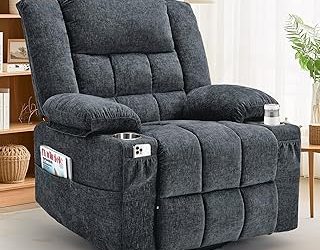
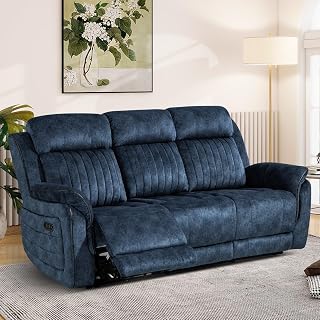
Power Reclining Sofa with Zero Gravity (Blue)
A strong value entry that does not compromise on the fundamentals — real zero-gravity range, powered headrests, plus USB-A, USB-C, and wireless charging. The fabric is more casual than refined, but the ergonomics are legitimate and the blue reads far less generic in person than online.
Power Reclining Sofa with Fold Down Table (Grey)
Best suited to shared use: the breathable leather stays cool over long sittings, and the fold-down console keeps drinks, remotes, and chargers within reach without twisting your torso. Cup holders and outlets are well placed, though the overall styling is squarely utilitarian.
Power Reclining Loveseat with Center Console
The right answer for apartments, dens, and bedrooms where a full three-seater would crowd the walkway. Mid-century rivet detailing keeps it from looking like a home-theater fixture, and the hidden storage is genuinely useful for sleep-adjacent items — eye mask, reading light, blanket.
Frequently Asked Questions
Is it healthy to sleep on a reclining sofa regularly?
Occasional recliner sleep is fine, and for some conditions — acid reflux, certain post-surgical recoveries, congestion — an inclined position is actively more comfortable than lying flat. It is not a substitute for a supportive mattress, though. If you are choosing the sofa over your bed several nights a week, that is usually a signal to address the mattress or an underlying sleep issue.
Does zero gravity actually do anything, or is it marketing?
The geometry is real and measurable: elevating the legs above the heart and opening the hip angle reduces pressure on the lumbar discs and assists circulation back from the lower limbs. What is oversold is the specific NASA framing. Judge the sofa by its recline angle and footrest height, not the label on the box.
How much clearance do I need behind the sofa?
Wall-hugger mechanisms need roughly four to six inches; conventional power frames often need twelve or more. Measure before you buy, because a sofa pushed too close to the wall will never reach its full recline — which quietly eliminates the exact position you paid for.
Fabric or leather for comfort?
Leather, especially top-grain or perforated, dissipates body heat and cleans easily, making it the better choice if you nap on the sofa. Fabric and velvet feel cozier immediately and suit cool rooms, but they retain warmth and moisture over longer sessions.
Final Thoughts
If you want one sofa that does the job for years, the Ashley VonRyan is the soundest investment — breathable top-grain leather, a genuinely restful recline, and frame quality that holds up to daily cycling. For the best combination of features and price, the Zero Gravity Power Recliner Sofa Couch delivers full zero-gravity travel and adjustable headrests across all three seats. And in smaller rooms, the Power Reclining Loveseat gives you the same ergonomic benefits without dominating the floor plan.