Key takeaways
- Recline angle over recline count: A seat that stops at 130° keeps your torso flexed and your airway compressed. Look for models advertising 155°–170°, which is close enough to horizontal for genuine sleep architecture rather than fitful dozing.
- Head and neck geometry: Overstuffed backrests feel luxurious in a showroom but can push your head forward. Check whether the crown of the cushion supports the base of your skull or bulges against it — independently adjustable headrests solve this outright.
- Thermal behavior of the upholstery: Core body temperature has to fall about 1–2°F for you to fall asleep. Dense faux leather traps that heat; plush woven fabric and perforated or “breathable” leather alternatives let it escape. Choose fabric if you nap often, leather if spills and pets are the bigger concern.
- Motor noise and clearance: Sudden mechanical noise fragments light sleep for everyone in the room. Test for a smooth, low hum, and if your sofa sits against a wall, prioritize a wall-hugger mechanism that reclines forward instead of backward.
- Heat and massage — used correctly: Lumbar heat and gentle vibration are genuinely useful for downregulating the nervous system before bed, but they’re wake-promoting if left running all night. Only buy these features if the unit has an auto shut-off timer.
What's inside
Most people shop for a reclining sofa the way they shop for a coffee table — by color, by size, by whether it fits through the door. Then, six months later, they realize they’ve been sleeping on it four nights a week. As someone who spends most of my working hours talking to people about their sleep, I can tell you that the living room recliner has quietly become the second bed in millions of American homes. It’s where the shift worker naps before a night rotation, where the person with reflux ends up at 2 a.m., where the new parent dozes with a baby on their chest. The problem is that a sofa designed purely for TV-watching is rarely designed for restorative rest, and the difference shows up in your neck, your lower back, and your morning grogginess.
This guide looks at electric recliner sofas through that lens. I’ve weighed the things that actually matter when a seat doubles as a sleep surface: how far the backrest travels, whether the headrest supports your cervical spine or pushes your chin toward your chest, how breathable the upholstery is once your body temperature drops during sleep onset, and how quietly the motor runs when someone else in the room is already out. Below you’ll find current standout models, followed by a buying framework and answers to the questions I hear most often.
As an Amazon Associate we earn from qualifying purchases.


How to Choose a/an Electric Recliner Sofa (2026)
- Recline angle over recline count: A seat that stops at 130° keeps your torso flexed and your airway compressed. Look for models advertising 155°–170°, which is close enough to horizontal for genuine sleep architecture rather than fitful dozing.
- Head and neck geometry: Overstuffed backrests feel luxurious in a showroom but can push your head forward. Check whether the crown of the cushion supports the base of your skull or bulges against it — independently adjustable headrests solve this outright.
- Thermal behavior of the upholstery: Core body temperature has to fall about 1–2°F for you to fall asleep. Dense faux leather traps that heat; plush woven fabric and perforated or “breathable” leather alternatives let it escape. Choose fabric if you nap often, leather if spills and pets are the bigger concern.
- Motor noise and clearance: Sudden mechanical noise fragments light sleep for everyone in the room. Test for a smooth, low hum, and if your sofa sits against a wall, prioritize a wall-hugger mechanism that reclines forward instead of backward.
- Heat and massage — used correctly: Lumbar heat and gentle vibration are genuinely useful for downregulating the nervous system before bed, but they’re wake-promoting if left running all night. Only buy these features if the unit has an auto shut-off timer.
The Best Electric Recliner Sofas (2026) Reviewed
Breathable Faux Leather Power Recliner Sofa with USB
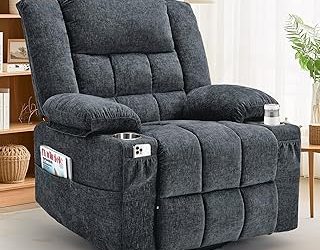
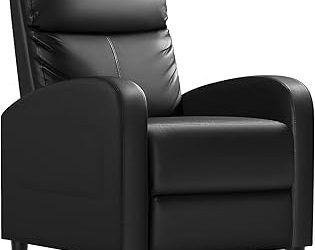
This is the most sensible pick for households where the sofa is a nap station rather than a nightly bed: the breathable faux leather runs noticeably cooler than standard bonded vinyl, and the USB port means your phone charges without a cable snaking across the floor. The overstuffed armrests are generous enough to serve as a side-sleeping prop.
HAOMARKETS 85″ Power Reclining Sofa
At 85 inches, this is the model to choose if someone in the household actually stretches out full-length — the extra width lets a shorter adult lie diagonally without dangling limbs. The rivet detailing is decorative, but the side pockets earn their keep by holding a sleep mask, reading glasses, and remote within arm’s reach.
Jocisland 78″ Power Reclining Sofa
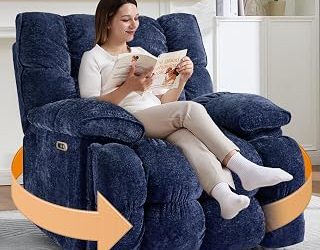
The standout here is the 160° recline paired with dual wingbacks, which together create something close to a true zero-gravity position with lateral head support — the single best combination on this list for people who fall asleep sitting up. Plush fabric upholstery also breathes far better than leather for extended rest.
Power Reclining Sofa with Heat and Massage (RV Wall Hugger)
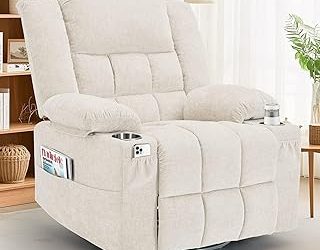
Built for tight footprints, this wall-hugger reclines without needing clearance behind it, making it the practical choice for apartments, dens, and actual RVs. The lumbar heat is a legitimate pre-sleep tool for anyone whose back pain delays sleep onset.
Power Recliner with Heat & Massage for Elderly
I recommend this category often for older adults and anyone recovering from surgery, because a powered rise-and-recline motion removes the strain of standing from a low seat. Simple remote controls and accessible side pockets matter enormously when someone is orienting themselves at night.
Frequently Asked Questions
Is sleeping in a recliner bad for you?
Not inherently, and for some conditions — reflux, sleep apnea, post-surgical recovery, congestion — an inclined position is genuinely better tolerated than lying flat. The risks come from poor positioning: a sharply flexed neck, unsupported lumbar spine, or dependent legs that encourage swelling. If you sleep in a recliner regularly, recline fully, support your calves, and mention it to your physician.
Does the massage function actually help sleep?
Gentle vibration can shift you toward parasympathetic dominance and ease muscle tension, which lowers the barrier to sleep onset. It works as a wind-down ritual for 10–20 minutes before you settle, not as something to run continuously through the night.
Fabric or faux leather for a sofa I nap on?
Fabric, if the choice is purely about rest. Woven upholstery wicks moisture and dissipates the heat your body needs to shed to fall asleep, whereas leather-look surfaces tend to hold it and can feel clammy after 30 minutes.
Do I need a wall-hugger mechanism?
Only if your sofa sits within about six inches of a wall. Standard mechanisms need meaningful rear clearance to reach full recline, and a sofa that can’t fully open is a sofa you won’t rest well in.
Final Thoughts
If sleep quality is your priority, the Jocisland 78″ is the clearest choice on this list — the 160° recline and dual wingback head support come closest to a true rest position. Households that need length for stretching out should look at the HAOMARKETS 85″, while anyone in a small room or with pre-sleep back pain will get the most from the RV wall-hugger with heat and massage. Whichever you choose, set it up where you can fully recline it, and treat it as a sleep surface rather than an afterthought.