Key takeaways
- Recline geometry over recline angle: The number that matters isn’t degrees, it’s whether your hips stay level with or slightly above your knees at rest. A seat pan that dumps you backward pulls the pelvis into a tuck and flattens the lumbar curve, which is why some people stand up from a “comfortable” sofa feeling worse than when they sat down.
- Independent headrest adjustment: A fixed headrest sets one neck angle for every body in the house. Adjustable power headrests let a 5’2″ and a 6’3″ occupant both find neutral, and they’re the single biggest upgrade for anyone who dozes off on the couch and wakes with a stiff neck.
- Leather grade and breathability: Full-grain and top-grain hides wick body heat and soften over years; bonded and faux options run warmer and can feel clammy during long evening sits. If you sleep hot, you likely sit hot too — factor that in.
- Wall-hugger mechanisms for small rooms: Standard recliners need 12 to 18 inches of clearance behind them. Wall-hugger designs recline within a few inches, which keeps a modest living room from becoming an obstacle course and preserves a clear, calm walking path at night.
- Motor noise and charging placement: Test for a low hum rather than a grind, and note where the USB ports sit. Ports at the outer armrest invite bedtime phone use; a drop-down console or cup holder placement makes it easier to park the device and stop.
What's inside
Most people shop for a leather recliner the way they shop for a rug — by color, by price, by whether it fits the wall. But as someone who spends their days talking with people about why they wake up unrefreshed, I’d argue a reclining sofa is closer to a mattress than a rug. It’s where the second half of your evening happens: the stretch between dinner and bed when your nervous system is supposed to be downshifting. Get that hour wrong — craned neck, knees higher than hips, lumbar unsupported — and you carry the tension into the bedroom with you. Get it right, and the couch becomes a genuine on-ramp to sleep.
The catch is that the market is loud and the specs are vague. “Genuine leather” can mean anything from full-grain to a thin split hide bonded to a backing. Power headrests are worth real money on one sofa and a gimmick on another. Below, I’ve evaluated the leading three-seat leather recliners of 2026 through a sleep-and-recovery lens: how well they support a neutral spine, how quietly and smoothly they move, how the upholstery handles body heat, and whether the built-in charging ports help you wind down or tempt you into another hour of scrolling.
As an Amazon Associate we earn from qualifying purchases.


How to Choose a Leather Recliner Couch (2026)
- Recline geometry over recline angle: The number that matters isn’t degrees, it’s whether your hips stay level with or slightly above your knees at rest. A seat pan that dumps you backward pulls the pelvis into a tuck and flattens the lumbar curve, which is why some people stand up from a “comfortable” sofa feeling worse than when they sat down.
- Independent headrest adjustment: A fixed headrest sets one neck angle for every body in the house. Adjustable power headrests let a 5’2″ and a 6’3″ occupant both find neutral, and they’re the single biggest upgrade for anyone who dozes off on the couch and wakes with a stiff neck.
- Leather grade and breathability: Full-grain and top-grain hides wick body heat and soften over years; bonded and faux options run warmer and can feel clammy during long evening sits. If you sleep hot, you likely sit hot too — factor that in.
- Wall-hugger mechanisms for small rooms: Standard recliners need 12 to 18 inches of clearance behind them. Wall-hugger designs recline within a few inches, which keeps a modest living room from becoming an obstacle course and preserves a clear, calm walking path at night.
- Motor noise and charging placement: Test for a low hum rather than a grind, and note where the USB ports sit. Ports at the outer armrest invite bedtime phone use; a drop-down console or cup holder placement makes it easier to park the device and stop.
The Best Leather Recliner Couches of 2026, Reviewed
Watson & Whitely Wall Hugger Power Reclining Sofa (Saddle)
This is the most sleep-friendly configuration in the roundup: adjustable power headrests, a wall-hugger frame that fits tight rooms, and both USB and Type-C charging. The saddle-toned genuine leather breathes noticeably better than the faux alternatives, which matters if your evenings run long.
CHITA Leather Power Recliner Sofa Wall Hugger (Dark Brown)
CHITA pairs a power headrest with a drop-down center table, giving you somewhere to set a book, a glass of water, and your phone — a small design detail with an outsized effect on winding down. The wall-hugger action makes it a strong pick for apartments and narrow rooms.
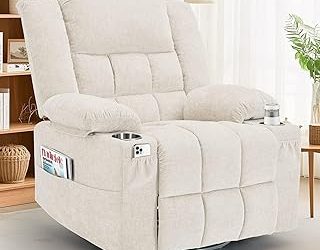
Genuine Leather Power Recliner Sofa with Hidden Cup Holders
A well-rounded electric option with supportive arms, a generously padded back, and concealed cup holders that keep the sightlines clean. Recline transitions are smooth and gradual, which is preferable to a jolting mechanism if someone in the household is already drifting off.
Genuine Leather Manual 3-Seat Recliner Sofa (Vintage Brown)
Manual recliners have a quiet advantage: no motor, no cord, nothing to fail, and no ports encouraging late-night screen time. The integrated headrest and armrests hold a stable, neutral posture, and the vintage brown hide is the sort that improves with a decade of use.
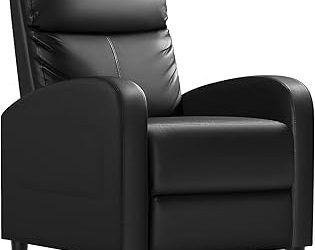
Faux Leather Mid-Century Modern Reclining Sofa (Brown)
The overstuffed armrests and tapered mid-century silhouette give this one broad design appeal at an accessible price. Faux upholstery traps more heat than hide, so it suits cooler rooms and shorter sitting sessions best.
Frequently Asked Questions
Is sleeping on a recliner couch bad for you?
Occasional recliner sleep is generally harmless, and for people with reflux or certain respiratory conditions an inclined position can actually help. Nightly recliner sleep is a different story — it restricts position changes, which your joints and circulation depend on, so treat the couch as a transition zone rather than a bed.
Do I need a power recliner or is manual fine?
Power wins if you want infinite positioning, an adjustable headrest, or effortless operation for anyone with limited grip or shoulder strength. Manual wins on simplicity, price, and long-term reliability, since there’s no motor or transformer to replace.
How much clearance do I really need behind the sofa?
Conventional reclining sofas want 12 to 18 inches from the wall. Wall-hugger models typically need three to six inches, which is why they’re worth prioritizing in rooms under roughly 12 feet across.
Will genuine leather stay cool in a warm room?
Top-grain and full-grain leather manages heat and moisture far better than faux or bonded material, though no upholstery is truly cool in a hot room. Keep the sofa away from direct sun and radiators, both for your comfort and to prevent the hide from drying and cracking.
Final Thoughts
If you want the most supportive evening seat available this year, the Watson & Whitely Wall Hugger leads on adjustable headrests, breathable hide, and small-room fit, with the CHITA Wall Hugger a close second thanks to its drop-down table and power headrest. Prefer something mechanically simple that will outlast every motor on this list? The Genuine Leather Manual 3-Seat in vintage brown is the one to buy.