Key takeaways
- Recline angle range: For genuine rest, look for a seat that reaches beyond 130 degrees. Anything shallower keeps your torso working against gravity, and a mild incline of 30 to 45 degrees is the range that reduces nighttime reflux and eases positional snoring.
- Leather grade and breathability: Top-grain and full-grain hides transfer heat away from the skin far better than PU or bonded surfaces, which behave more like a plastic film. If you sleep warm or share the couch with a pet, prioritize genuine leather and perforated seat panels.
- Power headrests: Independent headrest articulation is the single most underrated feature here. It lets you align your cervical spine without stacking pillows, preventing the chin-to-chest slump that causes morning neck stiffness and airway compression.
- Wall-hugger mechanism: These recline within a few inches of the wall, which matters if your couch sits in a bedroom, den, or RV where clearance is tight and you don’t want the footrest blocking a walkway at night.
- Manual versus power: Manual mechanisms are simpler and cheaper to repair, but they require a torso pull that’s genuinely difficult after abdominal or shoulder surgery. Power operation, ideally with USB-C at seat level, is the safer long-term choice for recovery use.
What's inside
Most people shop for a recliner sofa expecting to sit in it. In practice, they end up sleeping in it. Ask anyone who has spent the second half of a movie unconscious with the footrest up, or who has ridden out a head cold semi-upright because lying flat made the coughing worse. A leather reclining couch is one of the few pieces of furniture in a home that quietly doubles as a sleep surface, and that changes which specifications actually matter. Lumbar support that feels acceptable for twenty minutes of TV can become a source of 3 a.m. back pain. Leather that traps heat can push your core temperature in exactly the wrong direction, since falling asleep depends on your body shedding roughly a degree of heat, not holding onto it.
This guide evaluates 2026’s strongest three-seat leather recliners with that dual role in mind: daytime comfort, yes, but also recline geometry, breathability, headrest adjustability, and whether the mechanism holds a position without slowly creeping flat under your weight. Below you’ll find our picks, followed by a buyer’s checklist and answers to the questions we hear most from clients dealing with reflux, snoring, or post-surgery recovery.
As an Amazon Associate we earn from qualifying purchases.


How to Choose a Leather Recliner Couch (2026)
- Recline angle range: For genuine rest, look for a seat that reaches beyond 130 degrees. Anything shallower keeps your torso working against gravity, and a mild incline of 30 to 45 degrees is the range that reduces nighttime reflux and eases positional snoring.
- Leather grade and breathability: Top-grain and full-grain hides transfer heat away from the skin far better than PU or bonded surfaces, which behave more like a plastic film. If you sleep warm or share the couch with a pet, prioritize genuine leather and perforated seat panels.
- Power headrests: Independent headrest articulation is the single most underrated feature here. It lets you align your cervical spine without stacking pillows, preventing the chin-to-chest slump that causes morning neck stiffness and airway compression.
- Wall-hugger mechanism: These recline within a few inches of the wall, which matters if your couch sits in a bedroom, den, or RV where clearance is tight and you don’t want the footrest blocking a walkway at night.
- Manual versus power: Manual mechanisms are simpler and cheaper to repair, but they require a torso pull that’s genuinely difficult after abdominal or shoulder surgery. Power operation, ideally with USB-C at seat level, is the safer long-term choice for recovery use.
The Best Leather Recliner Couches (2026) Reviewed
Watson & Whitely Wall Hugger Power Reclining Sofa
Our top overall pick, largely because the adjustable power headrests give you real control over neck alignment rather than a single fixed curve. The wall-hugger design and dual USB/Type-C ports make it the most practical option for a bedroom or a compact den where the couch does double duty as a nap station.
CHITA Leather Power Recliner Sofa Wall Hugger
The strongest build quality in the group, with a genuine leather wrap and a drop-down table that keeps water, medication, and a phone within reach without leaning. Power headrests plus tight wall clearance make this the one we recommend most often for recovery seating.
Genuine Leather Power Recliner Sofa with Hidden Cup Holders
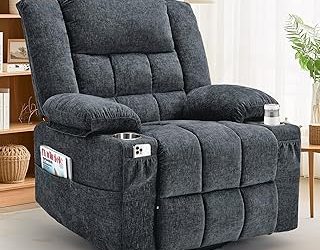
A well-judged middle option: soft genuine leather, smooth motorized recline, and concealed cup holders that keep the silhouette clean when guests are over. The seat back is generous enough to support a taller frame, though the fixed headrest offers less cervical fine-tuning than our top two picks.
Genuine Leather Manual 3-Seat Recliner Sofa (Vintage Brown)
For buyers who prefer no motors, cords, or eventual electronics failures, this vintage brown manual model is a sound long-term investment in real leather. Just confirm you can comfortably operate the lever, as the pull mechanism requires more upper-body effort than most catalog photos suggest.
Manual Reclining 3-Seater with Heat & Massage
The heat and massage functions are genuinely useful as a pre-sleep wind-down for tight lower backs, and the deep cushions are the plushest here. Bear in mind the PU upholstery runs warmer than genuine hide, so use the heat setting early in the evening rather than as you drift off.
Frequently Asked Questions
Is sleeping in a recliner bad for you?
Occasionally, no, and for some conditions it’s actively better. Reclined sleep can reduce acid reflux and positional snoring. The real risks are prolonged immobility affecting circulation in the legs and poorly supported necks, so shift position, keep knees slightly bent, and don’t make it a permanent arrangement without a clinician’s input.
Does leather sleep hotter than fabric?
Genuine leather feels cool on contact and conducts heat away efficiently, but it doesn’t breathe like woven fabric, so it can warm up over hours. Faux leather and PU are markedly worse. A thin cotton or linen throw over the seat solves this cheaply.
How much clearance do I need behind the couch?
Standard reclining sofas need 12 to 18 inches from the wall. Wall-hugger models typically need only three to six, which is why they dominate our top picks for smaller rooms.
Is genuine leather worth the premium over faux?
For a piece that will absorb daily use and body heat for a decade, yes. Faux leather tends to crack and delaminate at stress seams within a few years, while quality hide develops a patina instead.
Final Thoughts
If you want one recommendation, take the Watson & Whitely Wall Hugger for its adjustable power headrests and tight wall clearance, the combination that best supports genuine rest rather than mere lounging. The CHITA Power Recliner is the more premium build and the smarter choice for recovery seating thanks to its drop-down table, while the manual Vintage Brown three-seater remains the value pick for anyone who would rather own real leather than own motors.