Key takeaways
- Recline angle over recline count: The sweet spot for pre-sleep relaxation is roughly 25 to 40 degrees off vertical — enough to unload the lumbar discs and let the legs rise toward heart level without fully committing you to a flat sleep position. Power models with infinite adjustment beat two-position manual mechanisms here, because your ideal angle shifts as the evening progresses.
- Heat placement and shut-off: Lumbar heat is a legitimate relaxation tool, but core body temperature needs to fall for sleep to begin. Look for zoned heat you can target at the low back rather than the whole seat, and confirm there’s an auto shut-off so you’re not being warmed for hours after you’ve dozed off.
- Head and neck support geometry: A headrest that pushes your chin toward your chest is the single most common cause of the stiff-neck-and-headache combination people blame on their pillow. Test whether the top of the backrest cradles the base of your skull or shoves it forward, and favor adjustable or power headrests.
- Wall-hugger mechanisms for real rooms: Standard recliners need eight to twelve inches of clearance behind them. Wall-hugger designs recline within three to six inches, which matters enormously if your loveseat sits under a window or in an RV where every inch is negotiated.
- Foam density and edge retention: Low-density foam feels plush in the showroom and collapses into a hammock within a year, leaving your pelvis tilted and your spine in flexion. Ask about foam density ratings, check the weight capacity as a proxy for internal build quality, and be skeptical of anything that feels bottomless on first sit.
What's inside
Most people shop for a reclining loveseat the way they shop for a coffee table — by color, by measurements, by whether it survives the doorway. But as someone who spends their working hours studying how bodies wind down at the end of a day, I’d argue that this particular piece of furniture deserves a different kind of scrutiny. The reclining loveseat is where the majority of us actually begin sleep: that 40-to-90-minute stretch of drifting, half-watching, and eyelid-fluttering before we finally drag ourselves upstairs. Get it wrong and you’re building a nightly habit of neck strain, interrupted sleep-onset cues, and 2 a.m. wake-ups on a cushion that has quietly ruined your lumbar spine.
This guide looks at reclining loveseats through that lens. I’ve weighed recline geometry against what we know about supine circulation, considered how heat and massage functions interact with the body’s natural pre-sleep temperature drop, and flagged which features genuinely support restorative rest versus those that simply add clutter to a control panel. Below you’ll find the models worth your attention in 2026, a framework for choosing between them, and answers to the questions I hear most often from clients trying to fix their evenings.
As an Amazon Associate we earn from qualifying purchases.



How to Choose a Reclining Loveseat (2026)
- Recline angle over recline count: The sweet spot for pre-sleep relaxation is roughly 25 to 40 degrees off vertical — enough to unload the lumbar discs and let the legs rise toward heart level without fully committing you to a flat sleep position. Power models with infinite adjustment beat two-position manual mechanisms here, because your ideal angle shifts as the evening progresses.
- Heat placement and shut-off: Lumbar heat is a legitimate relaxation tool, but core body temperature needs to fall for sleep to begin. Look for zoned heat you can target at the low back rather than the whole seat, and confirm there’s an auto shut-off so you’re not being warmed for hours after you’ve dozed off.
- Head and neck support geometry: A headrest that pushes your chin toward your chest is the single most common cause of the stiff-neck-and-headache combination people blame on their pillow. Test whether the top of the backrest cradles the base of your skull or shoves it forward, and favor adjustable or power headrests.
- Wall-hugger mechanisms for real rooms: Standard recliners need eight to twelve inches of clearance behind them. Wall-hugger designs recline within three to six inches, which matters enormously if your loveseat sits under a window or in an RV where every inch is negotiated.
- Foam density and edge retention: Low-density foam feels plush in the showroom and collapses into a hammock within a year, leaving your pelvis tilted and your spine in flexion. Ask about foam density ratings, check the weight capacity as a proxy for internal build quality, and be skeptical of anything that feels bottomless on first sit.
The Best Reclining Loveseats (2026) Reviewed
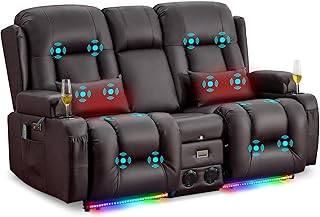
URRED Power Loveseat Recliner with Massage and Heat (Dark Brown)
This is the most complete wind-down package on the list: powered infinite recline, zoned lumbar heat, and a massage function that’s genuinely useful for releasing the hip flexors after a day of sitting. The wall-hugger mechanism makes it viable in tight living rooms, and the dark brown faux leather hides the inevitable evidence of nightly use better than lighter finishes.
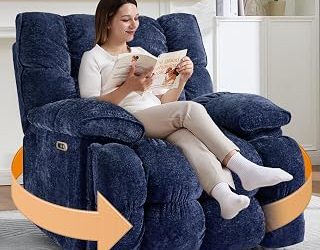
Massage Loveseat Recliner with Heavy Weight Capacity and USB-C
The elevated weight capacity signals a sturdier internal frame, which in practice means slower foam breakdown and better long-term postural support — the thing most buyers regret ignoring. Built-in USB-A and Type-C ports also let you charge a phone without reaching behind furniture, a small detail that reduces the fidgeting that fragments early sleep.
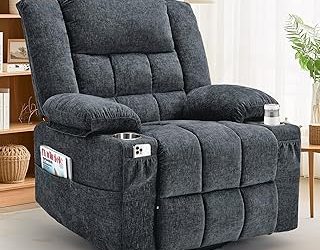
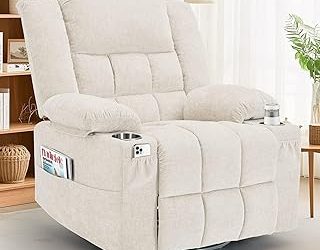
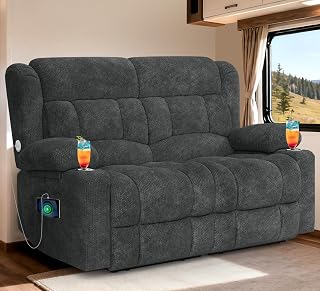
RV Loveseat Recliner with USB Ports and Cup Holders
Purpose-built for compact spaces, this one recliners cleanly against a wall and keeps essentials in insert pockets rather than on a side table you don’t have room for. It’s the pick for RVs, bonus rooms, and any setup where footprint discipline matters more than a massage motor.
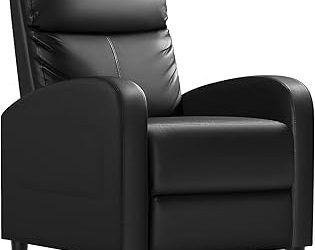
Faux Leather Manual Loveseat Recliner with Center Console
A manual mechanism means no cords, no motors, and nothing to fail in year three — a reasonable trade if you tend to settle into one position anyway. The center console with hidden storage keeps remotes and reading glasses within arm’s reach, which sounds trivial until you’ve broken your own drowsiness three times looking for them.
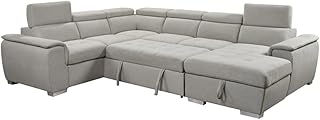
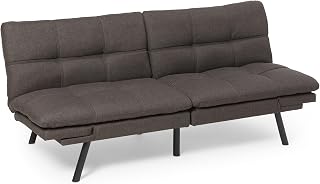
MAXYOYO 64-Inch Boneless Sofa Bed Loveseat
This 4-in-1 converts from loveseat to recliner to floor couch to sleeping surface, arriving in a box with no assembly required. It’s the flexible, apartment-friendly option — softer and less structured than a framed recliner, so best suited to shorter lounging sessions rather than as a primary support seat.
Frequently Asked Questions
Is it bad to fall asleep in a reclining loveseat?
Occasionally, no — and for people with acid reflux or certain respiratory conditions, an inclined position can actually improve sleep quality. The problem is chronic, unplanned dozing in a seat that doesn’t support your neck, which tends to produce lighter, more fragmented sleep than a proper bed.
Does the massage function actually help with sleep?
Modest mechanical massage can lower perceived muscle tension and help downshift the nervous system, which supports faster sleep onset. Use it as a 10-to-15-minute transition ritual rather than leaving it running, since continuous vibration becomes a stimulus rather than a cue.
Power or manual recline?
Power, if you want to fine-tune your angle throughout the evening or have any mobility, back, or joint limitations. Manual, if you value mechanical simplicity, cord-free placement, and a lower price point.
How much clearance do I need behind a wall-hugger?
Typically three to six inches, versus eight to twelve for a conventional mechanism. Always confirm the specific figure for your model before committing to a wall placement.
Final Thoughts
If you want your loveseat to actively support better rest, the URRED Power Loveseat Recliner with Massage and Heat offers the strongest combination of adjustable recline geometry and targeted lumbar heat, with the black finish available if dark brown doesn’t suit your room. For buyers prioritizing structural longevity and charging convenience, the Massage Loveseat Recliner with Heavy Weight Capacity is the smarter long-term investment, while the MAXYOYO Boneless Sofa Bed remains the most sensible choice for small, multipurpose spaces where flexibility outweighs firm support.