Key takeaways
- Unbox and air the topper for 24 to 48 hours before sleeping on it. Foam ships compressed and needs time to reach full loft, and off-gassing odor dissipates in that window.
- Give it a fortnight before judging. Your body has adapted to your old surface, and a brief adjustment ache is common and usually transient.
- Add a thin, stretchy mattress protector rather than a quilted one — bulky quilting sits between you and the contouring layer and blunts it.
- Rotate the topper end-to-end every few months to spread compression and delay body impressions.
What's inside
Back pain and sleep have a frustrating habit of feeding each other. A mattress that lets your hips sink too far or holds your spine in a rigid arch will keep your paraspinal muscles quietly working all night — and muscles that never fully switch off are the ones that greet you with stiffness at 6 a.m. Replacing a mattress is the obvious fix, but it’s also a several-hundred-dollar decision that most people put off for years. A topper sits in that gap: two to five inches of engineered comfort layer that can meaningfully change how your body is supported, for a fraction of the cost.
What follows is a practical framework for choosing one when back discomfort is your main concern — how thickness interacts with your body weight, why density matters more than the marketing word “memory foam,” how sleep position changes the ideal firmness, and what to expect in the first two weeks. I’ll flag specific products where they illustrate a point, and there’s a short list of picks below to orient you before we get into the reasoning.
As an Amazon Associate we earn from qualifying purchases.


🛒 Best Price Today on Amazon
Prime members get fast, free shipping on everything above, plus member-only deals. New members get a 30-day free trial — cancel anytime.
Start With Your Sleep Position, Not the Product Reviews
Position determines where you need give and where you need resistance. Side sleepers have a shoulder and a hip protruding well past the line of the spine; they need enough surface conformity for those two points to sink in so the lumbar region stays neutral. That usually means three inches or more of responsive foam — something like the JSELF 3 Inch Gel Memory Foam Topper, whose wave-textured surface is designed to redistribute pressure at those contact points. Back sleepers need the opposite emphasis: a supportive layer that fills the lumbar hollow without letting the pelvis drop. Stomach sleepers are the trickiest case, since deep sinkage hyperextends the low back — they generally do best with the thinnest, firmest option they can tolerate.
Thickness Is a Function of Your Weight and Your Current Mattress
Thickness isn’t a “more is better” scale. A two-inch topper such as the Sleepyhead 2 Inch Cooling Gel Topper is the right call for lighter sleepers, dorm and guest beds, or a mattress that’s fundamentally sound and just needs its edge taken off. Three inches is the versatile middle, appropriate for most adults on a mattress that’s grown slightly too firm. Five inches — the territory of the SHOUREN 5 Inch Memory Foam Topper — is a rescue measure. It suits heavier sleepers who compress thinner layers straight through, or a mattress that’s firm but still flat. The critical caveat: a thick topper cannot fix a sagging mattress. Foam has no structural rigidity, so it simply follows the dip and reproduces it a few inches higher.
Foam Versus Fiber Fill: Two Different Jobs
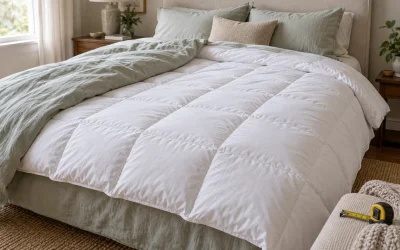
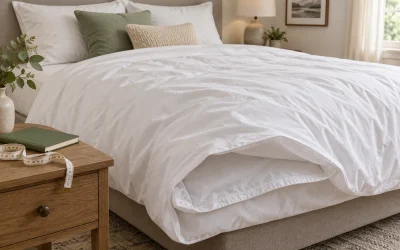
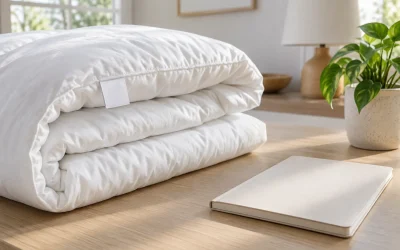
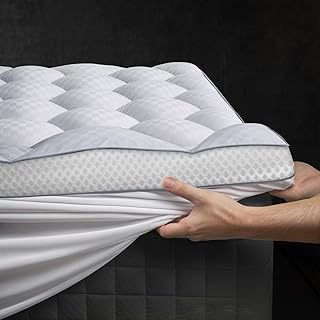
These are not competing versions of the same product. Memory foam and gel foam conform to your outline and hold it, which is what produces genuine pressure redistribution along the spine. Down-alternative fill — the 1000GSM Extra Thick Pillow Top being a good example — compresses into a plush cushion but springs back rather than contouring. That’s excellent for softening a punishingly hard surface and adding luxury feel, but it does less to correct alignment. Some products aim to bridge the two: the 3 Inch Ultra-Fluffy Memory Foam Topper pairs a pillow-top surface with foam support beneath, and the BEDLORE Viscose Bamboo Topper takes a similar approach with a breathable bamboo-derived cover. If alignment is the goal, foam should be doing the structural work.
Heat Retention Undermines the Whole Point
Overheating fragments sleep, and fragmented sleep amplifies pain perception — this is well established in the literature. Because foam conforms closely, it traps heat by design, so look for genuine mitigation rather than a “cooling” label: gel infusion, open-cell structure, mesh or ventilated side panels, or a moisture-managing cover fabric. Bamboo viscose and similar cellulosic covers move humidity away from the skin more effectively than polyester. Also check the certification line — CertiPUR-US and Oeko-Tex indicate the foam has been tested for emissions and restricted substances, which matters when your face is inches from it for eight hours.
Fit and Anchoring
A topper that slides is worse than none at all: you wake to reposition it, and the exposed edge creates an uneven surface. Check the deep-pocket range against your actual mattress height including any existing pad — ranges like 6–21 inches or 8–21 inches cover almost everything, while a 6–18 inch skirt may not stretch over a modern pillow-top. Foam toppers without skirts should offer anchoring straps.
Tips
- Unbox and air the topper for 24 to 48 hours before sleeping on it. Foam ships compressed and needs time to reach full loft, and off-gassing odor dissipates in that window.
- Give it a fortnight before judging. Your body has adapted to your old surface, and a brief adjustment ache is common and usually transient.
- Add a thin, stretchy mattress protector rather than a quilted one — bulky quilting sits between you and the contouring layer and blunts it.
- Rotate the topper end-to-end every few months to spread compression and delay body impressions.
Frequently Asked Questions
Can a topper actually reduce back pain?
It can help when the pain stems from poor spinal alignment or unrelieved pressure points. It won’t address underlying pathology — disc issues, arthritis, or radiating nerve pain warrant a clinician’s assessment.
Should I choose firm or soft?
Aim for medium-firm support with a conforming surface. Very soft surfaces let the pelvis sink; very firm ones concentrate load at the shoulders and hips.
Will a topper fix a sagging mattress?
No. It will disguise the feel briefly, then follow the sag. A visible dip means the mattress needs replacing.
How long do they last?
Roughly three to five years for quality foam. Once permanent body impressions appear, the support has gone.
Conclusion
Match thickness to your body weight and sleep position, insist on real support rather than surface plushness alone, take heat management seriously, and confirm the fit before you buy — get those four right and a topper is one of the highest-value adjustments you can make to how your back feels in the morning.