Key takeaways
- Low-odor, non-toxic formulas: Anything you apply to a surface you breathe next to for hours should be free of harsh solvents and heavy fragrance. Strong scents linger in upholstery for days and can quietly disrupt an evening wind-down routine.
- Clean first, condition second: Conditioner applied over body oils and dust seals grime into the grain. Look for a dedicated cleaner, or buy a kit that pairs the two properly matched steps.
- Non-darkening behavior: Cream and light-tan sofas are unforgiving. Confirm the product is rated safe for pale colors, including white, before it touches a visible panel.
- Absorption over surface gloss: Silicone-heavy dressings leave a slick film that feels tacky against skin and traps heat. You want something that penetrates and leaves a dry, matte, natural finish.
- Volume matched to your sofa: A three-seater with a chaise can swallow a small bottle in one session. Larger twin-bottle kits are far better value if you’re treating a full suite rather than a pair of boots.
What's inside
The sofa is where most of us actually rest. Long before we climb into bed, we sink into the living room for the slow decompression hour — the reading, the half-watched film, the accidental twenty-minute nap that turns into ninety. As someone who spends their days talking to people about sleep environments, I can tell you the couch is the most overlooked piece of restorative furniture in the house. And when leather goes dry, it stops cooperating. Cracked grain scratches at bare arms, stiffened cushions push back instead of giving, and that faint chemical smell from a badly chosen cleaner is exactly the kind of low-grade irritant that keeps a nervous system slightly switched on when it should be powering down.
Good leather care isn’t cosmetic maintenance — it’s comfort maintenance. Supple hide breathes better, regulates temperature more evenly against skin, and stays quiet instead of creaking every time you shift position. This guide covers the cleaners, conditioners, and complete kits worth putting on your shelf in 2026, what separates a formula that nourishes from one that merely shines, and how to build a low-effort routine that keeps your sofa feeling like somewhere you actually want to unwind.
As an Amazon Associate we earn from qualifying purchases.



How to Choose a Leather Care For Sofa (2026)
- Low-odor, non-toxic formulas: Anything you apply to a surface you breathe next to for hours should be free of harsh solvents and heavy fragrance. Strong scents linger in upholstery for days and can quietly disrupt an evening wind-down routine.
- Clean first, condition second: Conditioner applied over body oils and dust seals grime into the grain. Look for a dedicated cleaner, or buy a kit that pairs the two properly matched steps.
- Non-darkening behavior: Cream and light-tan sofas are unforgiving. Confirm the product is rated safe for pale colors, including white, before it touches a visible panel.
- Absorption over surface gloss: Silicone-heavy dressings leave a slick film that feels tacky against skin and traps heat. You want something that penetrates and leaves a dry, matte, natural finish.
- Volume matched to your sofa: A three-seater with a chaise can swallow a small bottle in one session. Larger twin-bottle kits are far better value if you’re treating a full suite rather than a pair of boots.
The Best Leather Care For Sofa (2026)s Reviewed
Leather Honey Leather Conditioner
This is the benchmark I keep coming back to — a non-toxic, water-based formula that’s been made in the USA since 1968 and soaks in rather than sitting on top. It restores flex to dried-out cushions without leaving a greasy residue, and because it’s safe across all colors including white, you can use it confidently on a pale sofa where most conditioners are a gamble.
Leather Honey Leather Cleaner
A genuinely gentle deep cleaner that lifts the accumulated skin oils and hair product residue that build up on headrests and armrests — the invisible layer that dulls leather fastest. It works on faux leather and vinyl too, so one bottle covers the couch, the car seats, and the reading chair without a second product.
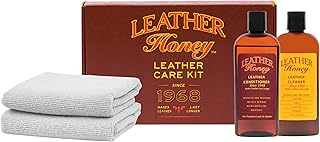
Leather Honey Complete Leather Care Kit
The 8 oz cleaner and 8 oz conditioner pairing is the sensible entry point for anyone starting from scratch, and buying them together removes the temptation to skip the cleaning step. For a standard two- or three-seater, this covers a full treatment with enough left over for spot maintenance.
Bick 4 Leather Conditioner & Cleaner
Bick 4 earns its reputation on one specific promise: it won’t darken leather. If your sofa is a light caramel or a delicate cream and you’ve been burned before by a conditioner that turned one cushion two shades deeper, this single-step cleaner-conditioner is the low-risk choice.
Furniture Clinic Large Leather Care Kit
Two 17 oz bottles plus a sponge and cloth make this the kit for large sectionals, or for households treating several pieces at once. The conditioning protection cream builds a light barrier that helps resist future soiling — useful on a family sofa that sees nightly use.
Frequently Asked Questions
How often should I condition a leather sofa?
Every three to six months for most homes, and toward the shorter end if your sofa sits near a radiator, in direct sun, or in a dry, heated room over winter. Dry indoor air pulls moisture from hide the same way it dries out your throat overnight.
Can leather care products affect air quality in the room?
Solvent-heavy or heavily perfumed products can off-gas for days in an enclosed living room. Choosing a low-odor, non-toxic formula and ventilating for an hour afterward keeps the space comfortable to relax in the same evening.
Will conditioner fix cracks that have already formed?
It will soften the surrounding leather and make existing cracks far less prominent, but it can’t rebuild fibers that have already split. Consistent conditioning is prevention, not repair.
Do I need a separate product for faux leather?
Faux leather and vinyl don’t absorb conditioner, so they need cleaning rather than feeding. A cleaner rated for synthetics — like the Leather Honey cleaner — handles both surfaces safely.
Final Thoughts
If you want one decision made for you, start with the Leather Honey Complete Leather Care Kit — it covers both essential steps in a formula that’s safe on every color and won’t leave your living room smelling like a workshop. For large sectionals, the Furniture Clinic Large Leather Care Kit offers the volume and added protection cream you’ll need, while Bick 4 remains the safest pick for pale leather you can’t risk darkening. Treat the sofa well and it’ll keep doing what it does best: helping you switch off at the end of the day.