Key takeaways
- Match firmness to your sleep position: Back and stomach sleepers benefit most from true firm surfaces that keep the lumbar curve shallow. Dedicated side sleepers usually do better on medium-firm, which still supports the spine while letting the shoulder sink enough to avoid nerve compression.
- Look at the support core, not the box height: An 18-inch profile isn’t inherently better than a 12-inch one. What matters is coil gauge and count in a hybrid, or foam density in an all-foam bed. Thicker comfort layers on a firm coil unit can actually soften the feel you paid for.
- Prioritise edge reinforcement if you share the bed: Perimeter coils or high-density foam rails let two people use the full width of the mattress and make sitting on the side to dress far less precarious. This is also the first zone to sag on budget builds.
- Take cooling claims literally, then verify: Gel infusions and knit covers help at the surface, but airflow through a pocketed spring layer does the heavier lifting. If you sleep hot, a hybrid will almost always outperform a comparable all-foam model.
- Read the trial and the certifications together: CertiPUR-US certification covers foam emissions and content; fiberglass-free construction matters for what happens if a cover is ever removed. A trial of 100 nights or longer gives your body the four to six weeks it genuinely needs to adapt.
What's inside
Firmness is the most misunderstood spec in the mattress aisle. Shoppers who wake up with a sore lower back often assume they need “firm,” order the hardest slab they can find, and end up with a bed that presses on the shoulders and hips instead of supporting them. The opposite mistake is just as common: a plush model that swallows the pelvis, tilts the spine out of neutral, and turns every morning into a stiff, slow start. Compressed-and-boxed mattresses have made the problem easier to solve — you can trial a bed at home for months — but they’ve also flooded the category with near-identical listings that make honest comparison difficult.
This guide approaches firm beds the way a sleep clinician would: as a question of spinal alignment, surface temperature, and how well a mattress holds its shape at the perimeter over years of use, not just how hard it feels in the first five minutes. Below you’ll find the firm and medium-firm boxed mattresses currently worth your attention in 2026, spanning hybrids with pocketed coil systems and all-foam builds for guest rooms and kids’ beds, plus the specifications that genuinely predict long-term comfort.
As an Amazon Associate we earn from qualifying purchases.



🛒 Best Price Today on Amazon
Prime members get fast, free shipping on everything above, plus member-only deals. New members get a 30-day free trial — cancel anytime.
How to Choose a Firm Mattress In A Box (2026)
- Match firmness to your sleep position: Back and stomach sleepers benefit most from true firm surfaces that keep the lumbar curve shallow. Dedicated side sleepers usually do better on medium-firm, which still supports the spine while letting the shoulder sink enough to avoid nerve compression.
- Look at the support core, not the box height: An 18-inch profile isn’t inherently better than a 12-inch one. What matters is coil gauge and count in a hybrid, or foam density in an all-foam bed. Thicker comfort layers on a firm coil unit can actually soften the feel you paid for.
- Prioritise edge reinforcement if you share the bed: Perimeter coils or high-density foam rails let two people use the full width of the mattress and make sitting on the side to dress far less precarious. This is also the first zone to sag on budget builds.
- Take cooling claims literally, then verify: Gel infusions and knit covers help at the surface, but airflow through a pocketed spring layer does the heavier lifting. If you sleep hot, a hybrid will almost always outperform a comparable all-foam model.
- Read the trial and the certifications together: CertiPUR-US certification covers foam emissions and content; fiberglass-free construction matters for what happens if a cover is ever removed. A trial of 100 nights or longer gives your body the four to six weeks it genuinely needs to adapt.
The Best Firm Mattresses In A Box (2026), Reviewed
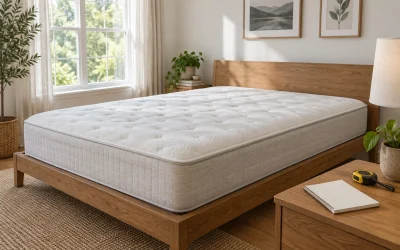
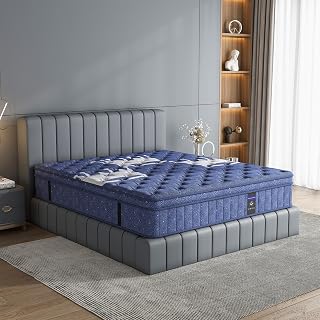
Luxury Hotel 18″ Queen Hybrid, Medium Firm
The tallest option here, pairing cooling-gel memory foam over pocket springs with reinforced edges — a combination that reads plush at first contact but holds the hips in line underneath. The 365-night trial is unusually generous and effectively removes the risk of committing to a medium-firm feel you haven’t lived with.
BedStory Firm 14″ Queen Hybrid
This is the most genuinely firm bed on the list, with a 7-zone coil layout that stiffens under the lumbar region and softens slightly at the shoulders. It’s my first recommendation for back and stomach sleepers who have found “medium-firm” beds too yielding, and the fiberglass-free, CertiPUR-US construction is reassuring.
Kin by Tuft & Needle Firm 8″ Adaptive Foam Twin
A well-engineered all-foam pick for bunk beds, growing kids, and guest rooms where profile height matters. The adaptive foam resists the sinking sensation that plagues cheap memory foam, and the 10-year warranty behind an 8-inch twin says something about the build quality.
Ailis 12″ Queen Hybrid, Medium Firm
The standout here is motion isolation: individually wrapped springs keep a partner’s movement from travelling across the bed, which matters more than most buyers anticipate. At 12 inches it works well with standard sheets and existing bed frames, with strong edge support for its price bracket.
Crown 14″ Queen Hybrid, Medium Firm
A balanced medium-firm hybrid with zoned pocket springs and a breathable knit cover that stays noticeably cooler than laminated alternatives. A sensible default choice for couples with mismatched sleep positions who need one surface to serve both.
Frequently Asked Questions
How long does a boxed mattress take to expand?
Most reach usable shape within a few hours and full loft in 24 to 72 hours. Firm hybrids often expand faster than dense all-foam beds because the coil unit does much of the work mechanically.
Will a firm mattress fix my back pain?
Not automatically. Firm surfaces help when pain stems from a spine sagging out of neutral, but pain caused by pressure points at the shoulder or hip can worsen on an overly rigid bed. Persistent pain warrants a clinician’s assessment.
Do I need a special foundation?
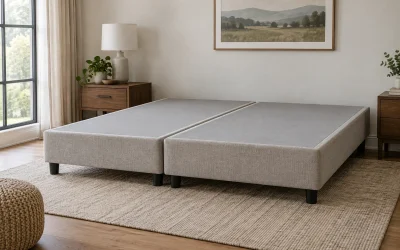
Boxed mattresses need continuous, even support. Slats should sit no more than about three inches apart; wider gaps allow localised sagging and can void warranties. A solid platform or bunkie board solves this cheaply.
How long should a firm mattress feel firm?
Expect a modest break-in softening over the first month, then stability for roughly seven to ten years. Rotating head to foot every six months distributes wear and delays the development of body impressions.
Final Thoughts
If you want unambiguous firmness with targeted lumbar support, the BedStory Firm 14″ hybrid is the most decisive pick in this group. Couples who need a cooler, more forgiving medium-firm compromise should look at the Luxury Hotel 18″ hybrid for its cushioned surface and year-long trial, or the Crown 14″ for a leaner, well-ventilated build at a friendlier price. For a twin bed, bunk, or guest room, the Kin by Tuft & Needle 8″ foam mattress remains the smartest low-profile option on the market.