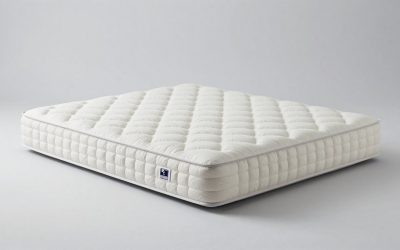
Shopping for a mattress used to mean fifteen minutes of awkward test-lying under fluorescent lights while someone in a polo shirt talked about coil counts. The compressed-and-shipped model fixed that problem and created a new one: there are now hundreds of nearly identical white boxes on the market, most describing themselves with the same four adjectives. As a sleep-wellness practitioner, the questions I field most often aren’t about thread counts or trial lengths — they’re about why someone still wakes at 3 a.m. with a hot lower back after spending real money on a bed that reviewed well.
This guide is built around the variables that actually change how you sleep: how a surface manages heat across a full night, whether it supports the lumbar curve or lets the pelvis sink, and how much of your partner’s movement travels across the bed. Below you’ll find the standout boxed mattresses for 2026 — memory foam and hybrid alike — followed by a selection framework and answers to the questions I hear most in consultations.
Our top picks

 EGOHOME Queen 14 inch Memory Foam Mattress
- Cooling Fabric Combine with Graphene Technology: In short,…
- Most Advanced Memory Foam by MLILY: The top…
- CertiPUR-US Certified & Endorsed by ICA: Foam proudly…


As an Amazon Associate we earn from qualifying purchases at no extra cost to you.
🛒 Best Price Today on Amazon
Prime members get fast, free shipping on everything above, plus member-only deals. New members get a 30-day free trial — cancel anytime.
How to Choose an Online Mattress in a Box (2026)
- Match firmness to sleep position, not preference: Side sleepers need enough give at the shoulder and hip to keep the spine level; back and stomach sleepers need a firmer surface that resists pelvic sinkage. Medium-firm suits the widest range of bodies because most people rotate positions overnight.
- Treat heat as a structural issue: Gel, copper, graphene, and green tea infusions help at the surface, but airflow through the core matters more. If you run warm, a coil-based hybrid will almost always outperform a solid foam slab of equal price.
- Scale height to your body and your bed frame: Ten inches is ample for lighter sleepers and guest rooms. Heavier sleepers and anyone with chronic back complaints generally do better at twelve to fourteen inches, where there’s enough material for genuine progressive support.
- Verify certifications and fiberglass status: CertiPUR-US confirms the foam meets emissions and content standards. Separately, look for an explicit fiberglass-free statement — it signals the maker uses a safer flame barrier you won’t have to worry about if the cover ever tears.
- Give the trial period real work: Your body needs roughly two to four weeks to adapt to a new support surface. Judge the mattress at week four, not night two, and keep the trial window in mind before you commit.
The Best Online Mattresses in a Box (2026), Reviewed
EGOHOME 14″ Copper Gel Memory Foam
This is the one I point back-pain clients toward first: the fourteen-inch build layers copper-infused foam under a graphene cover, which gives you deep contouring without the trapped-heat penalty foam is usually criticized for. Motion isolation is excellent, making it a strong pick for couples with mismatched schedules.
Luxury Hotel Cooling Hybrid, 14″
Zoned pocket springs deliver firmer reinforcement through the lumbar region while easing off at the shoulders and hips — the closest thing to tailored support at this price point. The generous 365-night trial also removes most of the risk from buying a hybrid sight unseen.
Novilla 12″ Gel Memory Foam
A well-judged all-foam option for lighter and average-weight sleepers who want pressure relief without a firm feel. Twelve inches gives it noticeably more cradle than budget eight- and ten-inch foam beds, and the gel layer keeps surface temperature reasonable.
EGOHOME 10″ Green Tea Gel Memory Foam
The most sensible pick for a guest room, a teenager’s bed, or a first apartment. Medium-firm support and green tea gel infusion cover the fundamentals competently, and at ten inches it suits platform frames and lower bed heights well.
12″ Hybrid with Pocket Springs
Memory foam over individually wrapped coils is the most forgiving construction for mixed-position sleepers, and this one balances contouring and bounce cleanly. Edge support holds up better than in all-foam rivals, which matters if you sit on the mattress to dress.
Frequently Asked Questions
How long should I wait before sleeping on a new boxed mattress?
Most expand usable within a few hours, but allow 24 to 72 hours for full loft and for any manufacturing odor to dissipate. Unbox in a ventilated room and leave the cover uncovered during that window.
Is a hybrid genuinely cooler than memory foam?
Generally, yes. The coil layer creates open vertical space for air to move, whereas foam is a closed cell structure that stores body heat. Cooling infusions narrow the gap but rarely close it.
Do I need a box spring?
No. Boxed mattresses are designed for platform frames or slatted bases with slats no more than three inches apart. A traditional box spring can actually leave the foam under-supported.
How long will one of these last?
Expect seven to ten years from quality foam and eight to twelve from a well-built hybrid. Rotate head-to-foot every six months — never flip a one-sided mattress — and use a breathable protector.
Final Thoughts
If chronic back discomfort is your primary complaint, the EGOHOME 14″ copper gel model offers the most support per dollar in this group. Hot sleepers and couples should look first at the 14″ zoned hotel hybrid, whose year-long trial makes it an unusually low-risk purchase, while the Novilla 12″ remains the smartest choice for anyone who wants classic memory foam comfort without overspending.