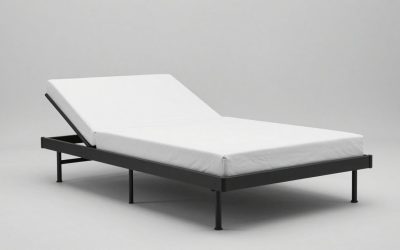
Key takeaways
- Flexibility rules: all-foam and hybrids with pocketed coils bend cleanly. Traditional continuous-coil or bonnell-spring mattresses do not, and forcing them can damage both mattress and base.
- Height and heat: thicker is not automatically better. A 12-inch profile, as in the SF Split King or the 3000 Series Twin XL bundle, articulates more readily than a very tall build, while a 14-inch hybrid like the Sven & Son Classic pairing gives more contouring for heavier sleepers.
- Firmness: medium and medium-soft feels tend to conform best to an inclined surface. Very firm mattresses can create pressure at the hinge.
- Buying the base and mattress together removes compatibility guesswork, which is why bundles are worth a look for first-time buyers.
Most people shopping for an adjustable bed are not chasing luxury — they are chasing a workaround. Reflux that flares the moment the lights go out. A partner whose snoring rattles the headboard. Lower-back tightness that only eases when a pillow is wedged under the knees. An adjustable base solves those problems structurally rather than asking your body to tolerate them, and that is why it has quietly moved from the medical-supply catalog into ordinary bedrooms.
The catch is that adjustable bases have converged on a nearly identical feature list — massage, USB ports, underbed lighting, a “zero gravity” preset — which makes the category surprisingly hard to shop. Below, I break down what actually affects your sleep (motor behavior, split configurations, mattress pairing, weight capacity) and what is mostly showroom decoration. By the end you should be able to look at any listing and know within a minute whether it deserves your money.
Our top picks

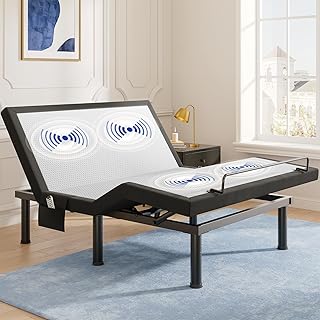


As an Amazon Associate we earn from qualifying purchases at no extra cost to you.
🛒 Best Price Today on Amazon
Prime members get fast, free shipping on everything above, plus member-only deals. New members get a 30-day free trial — cancel anytime.
Start With Your Sleep Complaint, Not the Feature List
Work backward from the symptom. For nighttime reflux, you need meaningful head elevation — roughly six to eight inches of torso lift, which nearly any head-and-foot base delivers, though you should confirm the hinge point falls near your hips rather than your mid-back. For snoring and mild positional apnea, a modest incline of 10 to 30 degrees is usually enough, and a preset button matters more than raw range because you will be pressing it half-asleep. For lumbar pain, foot articulation is the underrated half of the equation: raising the knees slightly flattens the lumbar curve and takes load off the discs. Models like the ESHINE Split King 6000 Series add dedicated lumbar support and pillow tilt, which are genuinely useful for side sleepers with neck complaints — and unnecessary if your only issue is heartburn.
Split King vs. Single-Motor: The Decision That Actually Matters
If you sleep alone, or you and your partner want the same position every night, a one-piece Queen or Full base is simpler, cheaper, and easier to make with standard bedding. The Tami Tami T600 Queen and Marsail Queen both fit that profile. If your sleep needs diverge — one of you reads propped up while the other lies flat, or one snores and the other doesn’t — split configurations are the only real answer. Two independent bases under two twin XL mattresses mean zero compromise and zero motion transfer. Options like the SF Split King bundle sit in this lane. The tradeoff is a center gap you will want to bridge with a gap filler and a king-size fitted sheet designed for split use, plus a heavier setup day.
Judge the Motor by Sound and Load, Not Speed
A base that whirs loudly will train you to stop adjusting it, which defeats the purpose. Look for language about quiet or brushless motors — the Marsail Queen and Tami Tami T600 both emphasize this — and check whether the motor drives from a rigid steel frame or a lighter channel. Then check dynamic weight capacity, meaning the load the base can move rather than simply hold. Add your body weight, your partner’s, and the mattress, then leave 20 percent of headroom. An overloaded motor gets louder, slower, and shorter-lived over a few years, and it is the single most common failure point in this category.
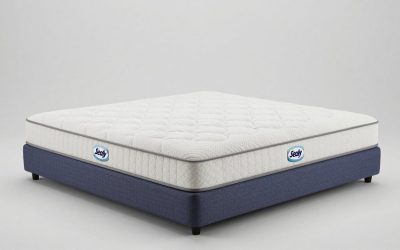
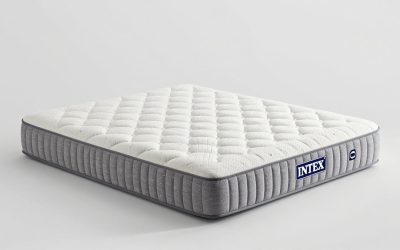
The Mattress Is Half the System
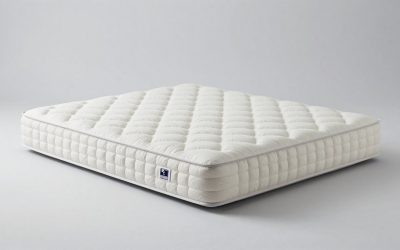
- Flexibility rules: all-foam and hybrids with pocketed coils bend cleanly. Traditional continuous-coil or bonnell-spring mattresses do not, and forcing them can damage both mattress and base.
- Height and heat: thicker is not automatically better. A 12-inch profile, as in the SF Split King or the 3000 Series Twin XL bundle, articulates more readily than a very tall build, while a 14-inch hybrid like the Sven & Son Classic pairing gives more contouring for heavier sleepers.
- Firmness: medium and medium-soft feels tend to conform best to an inclined surface. Very firm mattresses can create pressure at the hinge.
- Buying the base and mattress together removes compatibility guesswork, which is why bundles are worth a look for first-time buyers.
Which Extras Earn Their Keep
Underbed lighting is genuinely valuable if you get up at night — it lets you navigate without triggering a cortisol spike from overhead light. USB ports, ideally on both sides as on the ESHINE and SF models, keep chargers off the floor. Height-adjustable legs, offered on the Marsail, let you match your existing bed frame. Massage is pleasant and mildly relaxing, but treat it as a bonus rather than a reason to pay more. App control is convenient; a reliable wireless remote with backlit buttons and position memory is the thing you will actually use every night.
Tips
- Measure your doorway and stairwell before ordering. Split bases arrive as two manageable boxes; a one-piece king does not.
- Elevate gradually. Jumping straight to a steep incline often causes morning neck stiffness — add an inch or two per week.
- Save your two most-used positions to preset buttons on night one so you never fumble in the dark.
- Keep the underbed area clear. Pinch hazards and trapped cords are the leading cause of avoidable damage.
Frequently Asked Questions
Can I keep my current mattress?
Only if it flexes. Foam, latex, and pocketed-coil hybrids are compatible. Innerspring mattresses with a rigid perimeter or connected coil unit are not, and most manufacturers void the warranty if you bend them.
Do adjustable beds actually reduce snoring?
For positional snoring, often yes — elevating the head helps keep the airway open. It is not a treatment for diagnosed sleep apnea, so keep using prescribed therapy and talk to your clinician.
Is “zero gravity” a gimmick?
No. It is a preset that raises head and knees to distribute weight more evenly, taking pressure off the lower spine. Many people find it excellent for winding down, though most eventually roll flat once asleep.
How long should one last?
Expect seven to ten years from a well-matched base. Check warranty terms separately for the frame, the motor, and the electronics, since coverage lengths often differ.
Conclusion
Choose the configuration that matches how you and your partner actually sleep, confirm your mattress can bend, verify the weight capacity with room to spare, and treat massage and app control as garnish rather than the meal. Get those four things right and an adjustable bed stops being a gadget and becomes infrastructure — something you notice only on the nights you sleep somewhere else.