Key takeaways
- Use the chair 60 to 90 minutes before bed, not immediately before — you want the wind-down curve, not stimulation at lights-out.
- Start at the lowest intensity for your first week. Aggressive settings on untrained tissue cause next-day soreness that people misread as the chair being wrong for them.
- Cap sessions at 15 to 20 minutes; most chairs auto-stop for good reason.
- Skip yoga-stretch programs if you have disc pathology, osteoporosis, or recent spinal surgery, and clear any use with your clinician if you’re pregnant or have a pacemaker.
What's inside
Most people shop for a massage chair the way they shop for a sofa — by looking at it. But from where I sit, having spent years helping people untangle why they lie awake at 1 a.m. with a rigid neck and a racing pulse, a massage chair isn’t furniture. It’s a nervous-system tool. The reason it earns its footprint in a living room is that mechanical pressure applied slowly to the back, shoulders and calves nudges the body out of sympathetic “alert” mode and into the parasympathetic state that has to precede sleep. Muscle tension and sleep quality are two ends of the same rope. Pull on one, you move the other.
That reframing changes what you should be looking for. Suddenly roller depth control matters more than cup holders, and whether the chair has a genuinely gentle low setting matters more than whether it has forty airbags. Below I’ll walk you through the mechanics that actually affect how a chair feels, how to size one for your body rather than the showroom model’s, what heat does and doesn’t do, and how to build a short pre-bed routine around the chair so you’re not just buying an expensive recliner. Our recommended picks are first, then the reasoning behind them.
As an Amazon Associate we earn from qualifying purchases.


🛒 Best Price Today on Amazon
Prime members get fast, free shipping on everything above, plus member-only deals. New members get a 30-day free trial — cancel anytime.
Understand the track before anything else
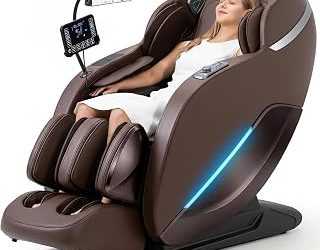
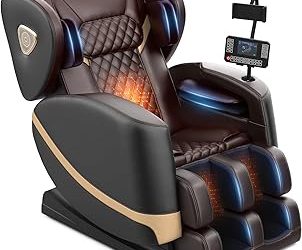
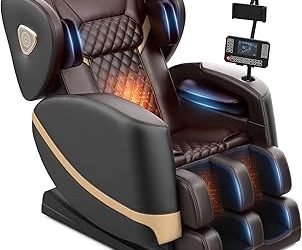
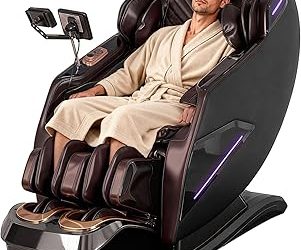
The “track” is the rail the rollers travel along, and it dictates where you’ll feel the massage. An S-track curves to follow the natural double bend of the spine, keeping contact through the lumbar hollow instead of skating over it — the Real Relax Dual-core S Track model is built around this idea. An SL-track extends that curve down under the seat and along the back of the thighs and glutes, which is where a surprising amount of low-back referral pain actually originates. If you sit for a living, the longer rail is worth it; the 55-inch SL-track 4D chair and the Real Relax 2026 SL-track both cover that extended range. Also note roller dimensionality: 2D rollers move up/down and side to side, 3D adds forward pressure, and 4D varies the rhythm and speed of that pressure, which feels markedly more like human hands and less like machinery.
Match the chair to your frame, not the average
A body-scan feature exists because spine length varies enormously between two people of the same height. Chairs that scan — the 4D SL-track model does this before each session — reposition the shoulder and neck rollers to your actual anatomy, which is the difference between a shiatsu node landing on your trapezius and landing on your cervical vertebrae. If you’re under about 5’2″ or over 6’2″, check the manufacturer’s stated user range specifically rather than assuming. Also measure your room: most of these chairs need clearance behind them to recline, though wall-hugging designs slide forward as they tilt. And check the doorway and stair turns on the way in. The pre-assembled Real Relax Shiatsu chair sidesteps a genuinely tedious build, but it still has to physically fit through your hallway.
Zero gravity is a sleep feature, not a gimmick
Zero-gravity positioning raises your knees to or above heart level and distributes your weight across a wide surface, dramatically reducing compressive load on the lumbar discs. Physiologically, this position also lowers the effort required to breathe and encourages venous return from the legs. For anyone who wakes with heavy, restless legs or low-back stiffness, this position alone — even without the rollers running — is therapeutic. Nearly every chair here offers it; what varies is how many preset recline stages you get and whether the leg rest extends far enough for taller users.
Heat, air compression and the extras that earn their keep
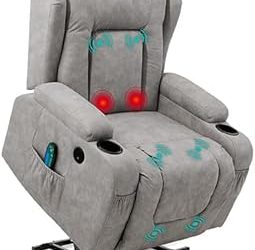
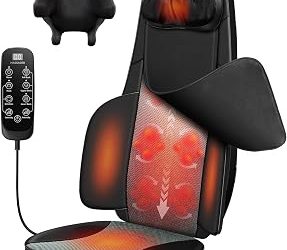
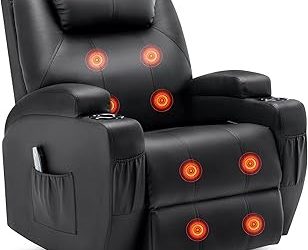
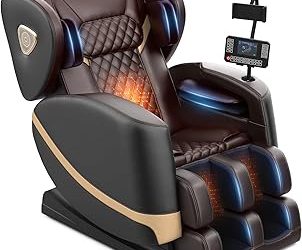
Targeted heat raises local tissue temperature, which increases tissue extensibility and makes rollers feel less abrasive — waist and calf heating, as on the Real Relax Shiatsu model, is well-placed for this. Airbag compression on the arms, hips and calves works differently, using rhythmic squeeze-and-release rather than point pressure, which many people with pressure sensitivity strongly prefer. The FURNIMAT chair pairs 14 shiatsu rollers with airbag work and a foot massage, a reasonable all-round combination. Treat biometric readouts, like the heart and blood measurement on the Real Relax Favor-06, as interesting context rather than clinical data. Genuinely useful extras: a child lock, an accessible pause button, and app control so you’re not squinting at a remote in a dim room.
Tips
- Use the chair 60 to 90 minutes before bed, not immediately before — you want the wind-down curve, not stimulation at lights-out.
- Start at the lowest intensity for your first week. Aggressive settings on untrained tissue cause next-day soreness that people misread as the chair being wrong for them.
- Cap sessions at 15 to 20 minutes; most chairs auto-stop for good reason.
- Skip yoga-stretch programs if you have disc pathology, osteoporosis, or recent spinal surgery, and clear any use with your clinician if you’re pregnant or have a pacemaker.
Frequently Asked Questions
Can a massage chair actually improve my sleep?
Indirectly, yes. It won’t sedate you, but by reducing muscular tension and shifting you toward parasympathetic dominance, it lowers two common barriers to falling asleep. Used consistently as part of a routine, that’s a meaningful effect.
Is 4D worth paying more for?
If you have chronic tension or you’re particular about pressure, yes — the variable rhythm feels more like manual therapy. For general relaxation, a good 3D SL-track chair is plenty.
How often should I use it?
Three to five short sessions a week suits most people. Daily is fine at moderate intensity if you feel good the following morning.
Do I need professional installation?
Usually not, but plan for two people and a cleared path. Pre-assembled models remove most of the hassle.
Conclusion
Choose the track geometry and pressure style that fits your body and your tolerance, put the chair where you’ll actually pass it every evening, and treat it as the opening move in a wind-down sequence rather than a standalone cure — that’s how a massage chair stops being a novelty and starts changing how you sleep.