Key takeaways
- Wash sheets separately from towels and rough clothing.
- Close zippers and fasteners before laundering.
- Do not use fabric softener every wash; it can leave a coating that reduces absorbency.
- Remove sheets promptly from the dryer to limit set-in wrinkles.
- Rotate two or three sheet sets to reduce wear on one fitted sheet.
The best sateen sheets for most sleepers are long-staple cotton sheets in a 400–600 thread-count range, while cotton-polyester blends are the better choice when wrinkle resistance, lower cost, and easy care matter more than maximum breathability.
Our top picks

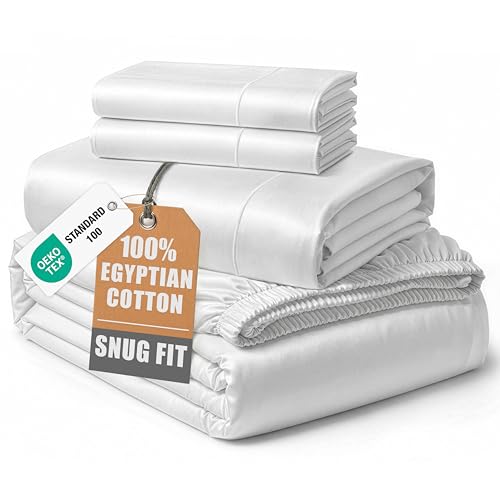


As an Amazon Associate we earn from qualifying purchases at no extra cost to you. Ratings are shown as listed on Amazon.
Quick picks by sleeping situation
| Sleeping situation | Best sateen sheet choice | Why it fits | What to compromise |
|---|---|---|---|
| Warm sleeper or humid bedroom | 100% cotton, 300–400 thread count | More airflow and better moisture absorption | More wrinkling and a slightly less glossy finish |
| Cold bedroom or winter use | 100% cotton, 500–600 thread count | Denser, smoother fabric with more warmth | Can feel heavy or less ventilated |
| Children, pets, or frequent washing | Cotton-polyester blend, around 200–400 thread count | Dries quickly, resists wrinkles, and usually costs less | Can retain more heat and may pill sooner |
| Luxury feel without excessive weight | Long-staple cotton sateen, 400–500 thread count | Silky hand feel with a balanced drape | Costs more than standard cotton blends |
| Deep mattress or thick topper | Fitted sheet with 16–18 inch pocket depth | Leaves enough fabric to grip the mattress corners | Excess fabric can loosen on a thinner mattress |
What makes sateen sheets feel smooth and silky?
Sateen describes the weave, not the fiber. The typical sateen construction places more yarns on the surface than a plain weave, often using a four-over, one-under pattern. This creates a smooth face with a gentle sheen and a warmer, silkier hand feel than percale.
That surface comes with a trade-off. The longer exposed floats can catch on rough nails, pet claws, or abrasive laundry hardware more easily than the tighter, simpler structure of percale. Sateen is also usually less crisp and airy. It is designed to feel fluid and polished rather than cool and crisp.
Cotton sateen versus cotton-polyester sateen
| Feature | 100% cotton sateen | Cotton-polyester sateen |
|---|---|---|
| Typical fabric weight | Approximately 110–170 GSM | Approximately 90–150 GSM |
| Surface appearance | Natural, soft sheen that usually becomes subtler with washing | Often smoother and more consistently shiny |
| Breathability | Moderate to good, depending on weight and finishing | Moderate to low, especially with a higher polyester percentage |
| Moisture handling | Absorbs perspiration and feels less clammy | Dries quickly but may hold perspiration against the skin |
| Wrinkle resistance | Low to moderate | Good to very good |
| Durability after repeated washing | Can become softer; quality depends on staple length and finishing | Resists shrinking but may pill or develop a slick, worn finish |
| Usual market position | Mid-range to premium | Budget to mid-range |
How to compare the important specifications
1. Weave and fiber content
Start with fiber content, then assess the weave. A 100% cotton sateen sheet is generally the better choice for natural moisture management and year-round comfort. Long-staple cotton tends to produce a smoother, stronger yarn because its fibers are longer and have fewer exposed ends. Extra-long-staple cotton can feel particularly sleek, but the label should identify the actual fiber rather than relying only on words such as “luxury” or “hotel.”
Blended sateen makes practical sense for guest rooms, children’s beds, rental properties, or anyone who does not want to iron. A blend containing roughly 50% or more polyester will normally dry faster and crease less. However, the polyester content can reduce airflow and increase the chance of pilling if the fabric is lightweight or washed with rough items.
2. Fabric weight and thread count
Thread count is not a complete quality score. It measures threads per square inch, but manufacturers can count individual plies in a way that makes the number look higher. A well-made 400 thread-count sheet can feel better than a loosely constructed 1,000 thread-count sheet.
Fabric weight gives useful additional context. Around 90–120 GSM feels lighter and more breathable; approximately 120–150 GSM offers a balanced, smooth drape; and 150–180 GSM feels denser, warmer, and more substantial. Very heavy sateen can be appealing in winter but uncomfortable for hot sleepers, particularly when paired with a waterproof mattress protector.
3. Sheen and hand feel
The best sateen sheets have a soft luster rather than a mirror-like shine. A very glossy surface may indicate heavy finishing, which can initially make the sheet feel exceptionally smooth but may fade after repeated washing. For a natural-looking bedroom, choose a low-to-medium sheen. If you prefer a polished, hotel-inspired appearance, a denser weave with a higher sheen will provide it, provided you are comfortable with less airflow.
4. Breathability and temperature control
Cotton sateen is not automatically cool. Fiber content, fabric weight, weave density, room humidity, and bedding layers all affect sleeping temperature. For a warm bedroom, select 100% cotton around 300–400 thread count, avoid very heavy sateen, and use a lightweight duvet. For a cold room, a 500–600 thread-count cotton sateen can add welcome insulation.
If you regularly wake sweaty, a blend may be the wrong choice despite its easy-care benefits. Polyester does not absorb moisture like cotton, so the sheet can feel dry to the touch while making the sleeper feel warmer.
5. Pocket depth and mattress fit
Measure the mattress, topper, and protector together before ordering. Add their heights, then allow at least 2 inches of extra fabric for a secure tuck. For example, a 12-inch mattress plus a 3-inch topper and 1-inch protector creates a 16-inch stack; a fitted sheet marketed for 16 inches may fit tightly, so an 18-inch pocket is safer.
Check the actual pocket range rather than relying only on “deep pocket.” A pocket intended for 14–18 inches can be loose on a 10-inch mattress, while a fitted sheet made for 8–14 inches may pop off a thick bed. Full elastic around the fitted-sheet edge generally holds more securely than elastic only at the corners.
Which sheets hold up best after repeated washing?
Quality cotton sateen usually becomes softer over time, but it may shrink slightly and develop more visible creases. Follow the care label, wash in cool or warm water, avoid overloading the drum, and use a low-heat dryer setting. High heat is one of the fastest ways to weaken cotton fibers and damage elastic.
Cotton-polyester blends typically retain their dimensions and emerge with fewer wrinkles. Their first failure is more likely to be pilling, especially when washed with towels, fleece, or garments with zippers. Cotton sateen more often shows thinning at the center of the fitted sheet, fraying at the elastic casing, or fading at high-friction areas.
- Wash sheets separately from towels and rough clothing.
- Close zippers and fasteners before laundering.
- Do not use fabric softener every wash; it can leave a coating that reduces absorbency.
- Remove sheets promptly from the dryer to limit set-in wrinkles.
- Rotate two or three sheet sets to reduce wear on one fitted sheet.
Best choice for common bedroom priorities
For the coolest feel
Choose lightweight 100% cotton sateen at roughly 300–400 thread count. It will not feel as crisp as percale, but it provides more surface smoothness without the heat of heavy sateen. Linen or cotton percale may be a better alternative if you want maximum ventilation rather than a silky finish.
For a smooth, luxurious feel
Look for long-staple cotton sateen around 400–500 thread count and approximately 120–150 GSM. This range usually balances softness, drape, and durability. Avoid choosing solely by the highest thread-count number, and inspect the fabric description for fiber quality and finishing details.
For a busy household
A cotton-polyester blend is practical when sheets must be washed frequently and put back on the bed quickly. Select a moderate polyester percentage rather than the heaviest synthetic blend if breathability matters. Keep a spare fitted sheet available because it typically wears before the flat sheet and pillowcases.
For a deep or adjustable bed
Prioritize pocket depth, corner elastic, and a little stretch over sheen. Adjustable bases can pull a fitted sheet toward the head or foot of the bed, so a sheet with full elastic and a generous pocket range is less likely to come loose. If the mattress is unusually thick, verify the return policy before buying several sets.
Bottom line
The best sateen sheets are not necessarily the heaviest or shiniest. Choose 100% cotton sateen for breathable, absorbent comfort and a softer feel that improves with care; choose a cotton-polyester sateen blend for fewer wrinkles, faster drying, and a lower-maintenance bed. Match the fabric weight to your sleeping temperature, confirm pocket depth against the complete mattress stack, and judge durability by fiber quality and construction rather than thread count alone.