Key takeaways
- Measure the recline path, not the chair: A footprint of 30 inches means little if the backrest needs 12 inches of travel. Wall-hugging and rocker-style frames typically need 3–6 inches behind them; measure from the wall to the nearest obstruction — including baseboard heating and skirting — before you commit.
- Match seat depth to your leg length: Petite users are often swallowed by a 22-inch seat, which rounds the lower back and creates the shoulder and neck tension that makes falling asleep harder. Aim for a depth where your feet rest flat and roughly two fingers fit behind your knees.
- Choose the motion deliberately: Rhythmic rocking and gliding have a genuine soothing effect and suit nursery and wind-down duty; a fixed or swivel-only base is steadier for reading, working, or anyone with vertigo or balance concerns.
- Think about heat, not just texture: Core temperature has to fall for sleep to begin. Dense chenille and velvet feel wonderful in a cool bedroom but trap warmth in a sunny apartment — if you overheat easily, favour a lighter weave or plan on a breathable throw.
- Only pay for features that save space: Side pockets replace a side table. Built-in lumbar support replaces a cushion. Massage motors are a nice extra but add bulk and require a nearby outlet, so decide whether that trade is worth it in your room.
What's inside
Small rooms punish bad furniture decisions. When square footage is tight, a recliner has to earn every inch it occupies — and in my work with clients who struggle with sleep onset, evening restlessness, or the broken nights that come with a newborn, the chair in the corner often matters more than they expect. It is where the nervous system downshifts before bed, where a 3 a.m. feed happens, where someone recovering from surgery sleeps semi-upright because lying flat hurts. A too-deep seat that tips the pelvis backward, or a chair that needs half a metre of wall clearance in a room that has none, quietly sabotages all of that.
This guide looks at compact recliners through a rest-and-recovery lens rather than a purely decorative one. Below you will find the models worth considering in 2026, followed by the specifications I tell people to check before buying, honest notes on each chair’s strengths, and answers to the questions that come up most often — including the one nobody wants to ask, which is whether sleeping in a recliner night after night is actually a good idea.
As an Amazon Associate we earn from qualifying purchases.


How to Choose a Recliner For Small Spaces (2026)
- Measure the recline path, not the chair: A footprint of 30 inches means little if the backrest needs 12 inches of travel. Wall-hugging and rocker-style frames typically need 3–6 inches behind them; measure from the wall to the nearest obstruction — including baseboard heating and skirting — before you commit.
- Match seat depth to your leg length: Petite users are often swallowed by a 22-inch seat, which rounds the lower back and creates the shoulder and neck tension that makes falling asleep harder. Aim for a depth where your feet rest flat and roughly two fingers fit behind your knees.
- Choose the motion deliberately: Rhythmic rocking and gliding have a genuine soothing effect and suit nursery and wind-down duty; a fixed or swivel-only base is steadier for reading, working, or anyone with vertigo or balance concerns.
- Think about heat, not just texture: Core temperature has to fall for sleep to begin. Dense chenille and velvet feel wonderful in a cool bedroom but trap warmth in a sunny apartment — if you overheat easily, favour a lighter weave or plan on a breathable throw.
- Only pay for features that save space: Side pockets replace a side table. Built-in lumbar support replaces a cushion. Massage motors are a nice extra but add bulk and require a nearby outlet, so decide whether that trade is worth it in your room.
The Best Recliners For Small Spaces (2026), Reviewed
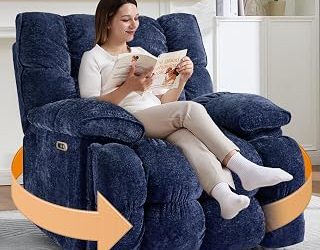
Korser Swivel Rocker Recliner (Chenille)
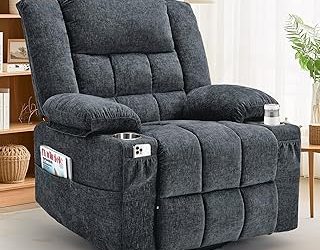
The most versatile chair here: a genuine 360-degree swivel paired with a smooth rocking motion makes it equally useful for night feeds and daytime reading. The chenille is plush without being oppressively warm, and the side pockets keep a water glass, book, or monitor within reach so you are not standing up mid-wind-down.
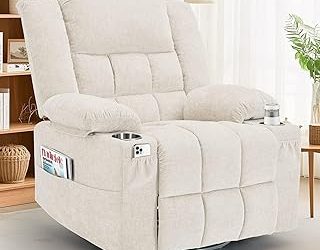
Sweetcrispy Massage Recliner
Lumbar support plus vibration massage is a meaningful combination for anyone whose evening restlessness is really muscular tension in disguise. It is the most feature-rich pick for a compact home theatre corner, though you will need an accessible outlet and slightly more clearance than the manual models.
Furnimart Small Manual Recliner
Overstuffed chenille and chunky cushioning give this one an armchair-first feel — it reads as a sofa chair that happens to recline rather than a piece of recovery equipment. A strong choice for a studio or bedroom where the chair is visible all day and should not look clinical.
Velvet Glider Recliner with 360° Swivel
The gliding action is the gentlest of the group, which is exactly what you want when the goal is settling an infant without fully waking yourself. Velvet is warmer than chenille, so I would steer heat-sensitive sleepers elsewhere, but in a cool nursery it is an excellent, quiet performer.
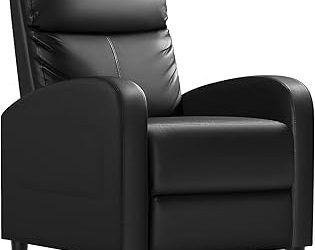
Korser Manual Recliner with Side Pockets
A stationary alternative for people who find rocking distracting rather than calming, with the same thick upholstery and practical storage as its swivelling sibling. Its narrow profile and lack of motion hardware make it the easiest of these chairs to slot into an RV, a landing, or a narrow bedroom alcove.
Frequently Asked Questions
Is it unhealthy to sleep in a recliner every night?
Short-term it is often beneficial — an inclined position can ease acid reflux, sinus congestion, and post-operative discomfort. Long-term nightly use is a different matter, as sustained hip and knee flexion raises circulation and stiffness concerns. Treat it as a bridge, and speak to a clinician if you cannot tolerate lying flat for more than a few weeks.
How much clearance does a small recliner really need?
Most compact manual models want 3–6 inches behind the backrest, and the footrest can extend 18–24 inches forward. Tape the full extended footprint onto your floor before ordering; the forward projection catches people out far more often than the rear gap.
Does rocking genuinely help with sleep?
There is real evidence that slow, steady rocking shortens sleep onset and deepens early sleep stages, which is why it works so reliably with infants. The effect depends on rhythm rather than speed, so a smooth glider beats a fast, choppy rock.
Manual or power for a tight room?
Manual, in most cases. Power recliners need cable routing and a wall socket, which limits placement, and the motor housing adds depth. Choose power only if a lever is difficult for you to operate.
Final Thoughts
For most compact rooms, the Korser Swivel Rocker is the smartest all-rounder — it handles wind-down, feeds, and reading without demanding extra floor space. Choose the Sweetcrispy Massage Recliner if tension is what keeps you awake, and the Velvet Glider Recliner if your priority is the quietest possible motion in a nursery.