Key takeaways
- Recline range, not just “reclines”: A chair that stops at 120° is a lounger; one that reaches 155°–165° opens the hip and torso angle enough for genuine restorative rest. If you nap in the chair, look for a stated maximum angle and a footrest that extends past your heels.
- Rear clearance: Measure the gap behind your intended spot before anything else. Wall-hugger and zero-wall mechanisms glide forward as they open, needing roughly 4–6 inches instead of the 12–18 inches a standard hinge demands.
- Seat scale versus your frame: Compact chairs typically run 26–32 inches wide with an 18–20 inch seat depth. Shorter users benefit from a shallower seat that lets the knees bend at the edge; taller users should verify back height so the headrest meets the skull, not the shoulder blades.
- Fabric and heat retention: Core body temperature must fall for sleep pressure to build. Breathable chenille and woven blends shed warmth better than faux leather, which traps it — worth weighing if you tend to sleep hot or plan to doze in the chair regularly.
- Mechanism noise and control: Push-back and manual levers are silent and cost less; power actuators offer stepless positioning but hum. In a nursery or a shared studio, silence is a feature, not a compromise.
What's inside
Most people shopping for a compact recliner aren’t furnishing a living room — they’re building a wind-down zone. In a studio apartment, a nursery corner, or a bedroom where the bed is three steps away, the chair becomes the place you decompress before sleep: the last forty minutes of reading, feeding an infant, or simply letting your nervous system downshift. The trouble is that the recliner category was designed around large rooms. A conventional model can swallow three feet of clearance behind it and another two in front, which is more square footage than a small space can spare without pushing the walking path into chaos.
As a sleep-wellness writer, I evaluate seating the way I’d evaluate a mattress: by how well it supports a relaxed spine, how quietly it moves, and whether it encourages rest rather than a stiff neck at 2 a.m. Below are six compact recliners worth considering in 2026, along with a buying framework that prioritizes recline geometry, footprint, and thermal comfort — the three variables that decide whether a chair actually helps you sleep better or just takes up room.
As an Amazon Associate we earn from qualifying purchases.


How to Choose a Recliner For Small Space (2026)
- Recline range, not just “reclines”: A chair that stops at 120° is a lounger; one that reaches 155°–165° opens the hip and torso angle enough for genuine restorative rest. If you nap in the chair, look for a stated maximum angle and a footrest that extends past your heels.
- Rear clearance: Measure the gap behind your intended spot before anything else. Wall-hugger and zero-wall mechanisms glide forward as they open, needing roughly 4–6 inches instead of the 12–18 inches a standard hinge demands.
- Seat scale versus your frame: Compact chairs typically run 26–32 inches wide with an 18–20 inch seat depth. Shorter users benefit from a shallower seat that lets the knees bend at the edge; taller users should verify back height so the headrest meets the skull, not the shoulder blades.
- Fabric and heat retention: Core body temperature must fall for sleep pressure to build. Breathable chenille and woven blends shed warmth better than faux leather, which traps it — worth weighing if you tend to sleep hot or plan to doze in the chair regularly.
- Mechanism noise and control: Push-back and manual levers are silent and cost less; power actuators offer stepless positioning but hum. In a nursery or a shared studio, silence is a feature, not a compromise.
The Best Recliners For Small Spaces (2026) Reviewed
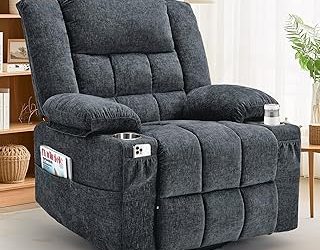
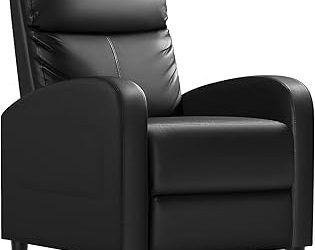
HRVEOCEI Modern Small Recliner
Its 90°–160° push-back range is the standout here — that upper angle sits in the territory where the lumbar curve stays supported and breathing stays unrestricted, which matters if you drift off mid-chapter. The extended footrest prevents the calf-dangling that leaves feet cold and tingly, and the integrated cup holder keeps a mug of chamomile within reach.
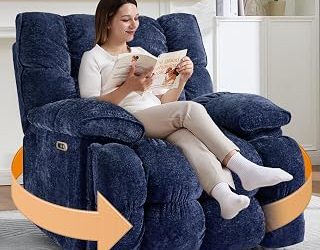
Furnimart Overstuffed Chenille Recliner
The chunky cushioning distributes pressure across the hips and shoulders rather than concentrating it, which is what keeps a chair comfortable past the twenty-minute mark. Chenille breathes well, making this a smart choice for warm bedrooms or anyone who overheats in synthetic upholstery.
Sweetcrispy Massage Recliner
Gentle vibration before bed can help down-regulate muscle tension, and the dedicated lumbar support here addresses the low-back tightness that so often disrupts the transition into sleep. Use the massage function as a pre-sleep ritual rather than an all-night companion — steady stimulation tends to keep the brain alert.
Zero Wall Power Recliner
Engineered for petite frames and tight rooms, this one opens with only inches of rear clearance, letting you place it flush against a bedroom wall. Powered adjustment means you can fine-tune the angle without bracing your body against a lever — a real advantage for anyone with joint pain or limited mobility.
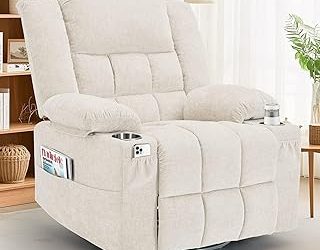
Korser Swivel Rocker Recliner
The rocking motion is the draw: rhythmic, low-frequency movement is genuinely soothing to the vestibular system, which is why it works so well for nursery feeds and evening decompression alike. Side pockets hold a book or monitor, and the beige chenille reads calm rather than clinical.
Frequently Asked Questions
Is sleeping in a recliner every night harmful?
Occasional nights are fine, and for people managing reflux, sinus congestion, or post-surgical recovery, an inclined position can be preferable to lying flat. Long-term nightly use is less ideal — reduced positional variety can stiffen the hips and calves — so treat the recliner as a supplement to a proper mattress unless a clinician has advised otherwise.
What recline angle is best for rest?
Roughly 130°–150° between torso and thighs is the sweet spot most people find restorative. It relieves spinal compression while keeping the airway open, whereas shallower angles load the lower back and steeper ones can encourage sliding.
How much space do I actually need behind the chair?
For a zero-wall or wall-hugger design, 4–6 inches is typically sufficient. Standard mechanisms need a foot or more, so always check the manufacturer’s stated clearance rather than assuming a compact seat means a compact swing.
Should I choose a rocker or a fixed base?
Choose a rocker if you’ll use the chair for infant care, anxiety relief, or evening wind-down, since the motion has a measurable calming effect. Pick a fixed base if the chair doubles as a workstation or reading perch where stability matters more.
Final Thoughts
For most small rooms, the HRVEOCEI delivers the best balance of deep recline and modest footprint, making it the strongest all-around pick for pre-sleep relaxation. If your wall clearance is measured in inches, the Zero Wall Power Recliner solves that constraint outright, and the Korser Swivel Rocker remains the one I’d recommend for nurseries and anyone who finds gentle motion easier to fall asleep to than stillness.