Key takeaways
- Weave tightness over fiber name: Claws need a loop to hook. Flat, densely woven surfaces — microfiber, performance velvet, tight canvas, faux suede — give them nothing to grab. Avoid bouclé, chenille, slubby linen, and anything with visible texture nubs, regardless of how durable the marketing copy claims the fiber is.
- Thermal behavior at nap length: A fabric that feels neutral for five minutes can feel stifling at forty. Laminated waterproof backings trap body heat and block vapor transfer, which raises skin temperature and fragments light sleep. If you nap on your sofa regularly, favor water-resistant finishes over fully sealed membranes on the seating area.
- Acoustic profile: Cheap polyurethane liners crinkle audibly with every shift in position. That sound is a genuine sleep disruptor. Press and roll a fabric sample near your ear before committing; quality quilted protectors move silently.
- Fur and stain camouflage: Match your cat’s coat to within a few shades, or choose a mid-tone heather that scatters the difference. Solution-dyed and stain-resistant finishes matter more than color depth for organic accidents — hairballs are acidic and set fast.
- Realistic reset cycle: Dander is a genuine bedroom-air-quality issue, and a sofa you sleep on deserves the same hygiene standard as bedding. Choose removable covers that fit a standard home washer and dry without shrinking, and check for non-slip backing or anchor straps so the surface stays flat under a shifting sleeper.
What's inside
The sofa has quietly become the most-used sleep surface in the average home. Most people log more unplanned rest there — the Sunday afternoon nap, the 20 minutes between dinner and bedtime, the accidental overnight — than they’d ever admit to a sleep clinician. Add a cat, and that surface takes on a second job: it becomes a scratching post, a sunbathing platform, a hairball landing zone, and a shedding station. The result is a piece of furniture that has to be simultaneously restorative for you and indestructible against a small predator with retractable knives.
This guide approaches sofa fabric the way I’d approach a mattress or pillow selection: by weave structure, thermal behavior, tactile response, and how easily the surface can be reset to clean. Below you’ll find performance upholstery you can specify by the yard, full-coverage slipcovers for sofas that are already scarred, spot protectors for the one cushion your cat has claimed, and a decoy option that redirects claws entirely. Every pick is judged on two axes at once: how well it survives feline attention, and whether it’s still a surface you’d want to fall asleep on.
As an Amazon Associate we earn from qualifying purchases.


How to Choose a Fabric For Sofa With Cats (2026)
- Weave tightness over fiber name: Claws need a loop to hook. Flat, densely woven surfaces — microfiber, performance velvet, tight canvas, faux suede — give them nothing to grab. Avoid bouclé, chenille, slubby linen, and anything with visible texture nubs, regardless of how durable the marketing copy claims the fiber is.
- Thermal behavior at nap length: A fabric that feels neutral for five minutes can feel stifling at forty. Laminated waterproof backings trap body heat and block vapor transfer, which raises skin temperature and fragments light sleep. If you nap on your sofa regularly, favor water-resistant finishes over fully sealed membranes on the seating area.
- Acoustic profile: Cheap polyurethane liners crinkle audibly with every shift in position. That sound is a genuine sleep disruptor. Press and roll a fabric sample near your ear before committing; quality quilted protectors move silently.
- Fur and stain camouflage: Match your cat’s coat to within a few shades, or choose a mid-tone heather that scatters the difference. Solution-dyed and stain-resistant finishes matter more than color depth for organic accidents — hairballs are acidic and set fast.
- Realistic reset cycle: Dander is a genuine bedroom-air-quality issue, and a sofa you sleep on deserves the same hygiene standard as bedding. Choose removable covers that fit a standard home washer and dry without shrinking, and check for non-slip backing or anchor straps so the surface stays flat under a shifting sleeper.
The Best Fabrics for Sofas With Cats (2026), Reviewed
Cat Scratch Proof Couch Cover (3-Cushion, 91″ x 134″)
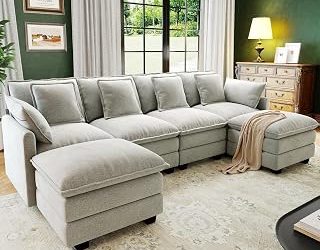
This is the honest answer for a sofa that’s already taken damage: a single oversized panel of tightly woven, low-pile fabric that drapes over arms, back, and seat with no seams for claws to exploit. It reads more like a heavy throw than a slipcover, which keeps the hand soft enough for napping while denying cats the loop structure they’re actually seeking.
Canora Graphite Performance Upholstery Fabric
If you’re reupholstering or building custom, this stain-resistant Greek key stripe is the smartest long-term specification here — a flat geometric weave with no exposed floats, sold by the yard in a graphite tone that hides both grey and dark fur. Performance-grade finishes like this clean with water-based solutions, so you’re not scheduling a professional visit after every incident.
Easy-Going Reversible Couch Cover (3 Cushion, Gray/Light Gray)
The reversible construction is the underrated feature: flip it and you’ve bought yourself another week before laundry day, which matters if you nap on the sofa daily. Water resistance is achieved through a treated surface rather than a heavy laminate, so it breathes reasonably well and stays quiet under movement.
Smiry Waterproof Couch Cover (36″ x 71″)
A targeted protector for the single cushion your cat has annexed, in a plush flannel that’s genuinely pleasant against skin. The waterproof layer is the trade-off — it runs warm — so deploy it on the cat’s preferred spot rather than the section where you actually stretch out.
White Cat Sofa Bed with Pine Wood Legs
Behavioral redirection beats defense. Giving a cat an elevated, cotton-velvet perch of its own, positioned beside your sofa in a warm patch of light, resolves a surprising number of territorial scratching problems, and the removable cover washes as easily as any slipcover.
Frequently Asked Questions
Is leather better than fabric if I have cats?
Leather resists shedding and wipes clean, but punctures are permanent and highly visible, and it swings hot in summer and cold in winter — poor thermal behavior for a napping surface. A tight performance weave is more forgiving on both counts.
What fabric do cats dislike scratching?
Microfiber, faux suede, tight canvas, and performance velvet. Cats scratch to shed claw sheaths and mark territory, and all three of those goals require a surface that shreds visibly. Flat weaves simply don’t reward the effort.
Will a waterproof cover make my sofa too hot to sleep on?
Often, yes. Sealed membranes block vapor transfer, and elevated skin temperature is one of the more reliable ways to fragment light sleep. Reserve full waterproofing for the cat’s zone and use breathable, treated fabric where you rest.
How often should I wash a pet sofa cover?
Every one to two weeks if you nap there, matching bedding frequency. Dander accumulates faster than it looks, and airborne allergens measurably degrade sleep quality even in people without diagnosed allergies.
Final Thoughts
For a permanent fix, the Canora Graphite performance fabric is the strongest specification here — flat, stain-resistant, and forgiving of grey fur. If you’re protecting an existing sofa, the Easy-Going Reversible Cover offers the best balance of breathability, quiet handling, and washability for a surface you actually sleep on, while the scratch-proof three-cushion cover is the right rescue for furniture that’s already been claimed.