Key takeaways
- Target the 120–135° window: The most relief for lumbar compression comes from an open hip-to-torso angle, not from lying flat. Chairs that stop only at “upright” and “full recline” force you into two positions your back may dislike equally.
- Look for supported lumbar, not padded lumbar: Foam over a hollow frame collapses within weeks. Prioritize an adjustable lumbar mechanism or dense, contoured back build that still pushes back when you press into it.
- Count the motors: Single-motor chairs move the back and footrest together, which locks you into one geometry. Dual and triple motors let you raise the legs for venous return while keeping the torso high enough to breathe and swallow comfortably — essential for anyone with reflux.
- Plan the exit, not just the sit: Standing up from a low, deep seat loads the lumbar spine hard. Lift assistance, a firm front edge, and a seat height that lets your heels reach the floor matter more than plushness.
- Mind heat and airflow: Core temperature has to fall for sleep to consolidate. Built-in heat is excellent for pre-sleep muscle relaxation, but you want to switch it off before drifting off, and you want a cover that isn’t a sweat trap.
What's inside
Back pain rarely keeps office hours. It shows up at 11 p.m. when you finally stop moving, again at 3 a.m. when you roll onto the wrong hip, and once more at 6 a.m. when getting out of bed feels like a negotiation. For a large share of people with lumbar disc issues, spinal stenosis, or post-surgical stiffness, a bed is simply the wrong shape for the spine — the flat surface removes the slight hip-to-torso angle that takes pressure off the lower vertebrae. That’s why so many households quietly end up with a recliner doing part-time work as a bed.
The problem is that most recliners are engineered for television, not for tissue recovery. Soft, collapsing cushions and a single hinge that swings you from upright to nearly flat give you comfort for twenty minutes and an ache by morning. This guide evaluates recliners the way I assess any sleep surface: how well the chair holds a specific angle, whether the lumbar curve is actually supported under load, how easy the chair is to exit without loading the spine, and whether heat and materials help or hinder overnight temperature regulation.
As an Amazon Associate we earn from qualifying purchases.


How to Choose a Recliner For Bad Backs (2026)
- Target the 120–135° window: The most relief for lumbar compression comes from an open hip-to-torso angle, not from lying flat. Chairs that stop only at “upright” and “full recline” force you into two positions your back may dislike equally.
- Look for supported lumbar, not padded lumbar: Foam over a hollow frame collapses within weeks. Prioritize an adjustable lumbar mechanism or dense, contoured back build that still pushes back when you press into it.
- Count the motors: Single-motor chairs move the back and footrest together, which locks you into one geometry. Dual and triple motors let you raise the legs for venous return while keeping the torso high enough to breathe and swallow comfortably — essential for anyone with reflux.
- Plan the exit, not just the sit: Standing up from a low, deep seat loads the lumbar spine hard. Lift assistance, a firm front edge, and a seat height that lets your heels reach the floor matter more than plushness.
- Mind heat and airflow: Core temperature has to fall for sleep to consolidate. Built-in heat is excellent for pre-sleep muscle relaxation, but you want to switch it off before drifting off, and you want a cover that isn’t a sweat trap.
The Best Recliners For Bad Backs (2026), Reviewed
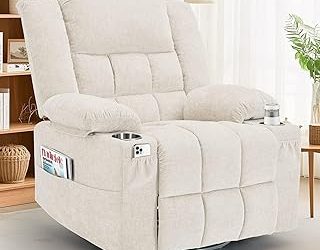
MCombo Power Lift Recliner 7040
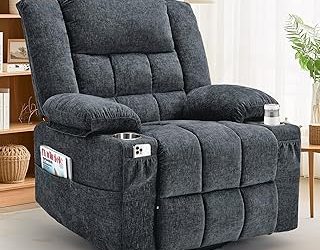
This is the most complete package for anyone whose back pain is compounded by weak legs or arthritic knees, pairing genuine lift assistance with targeted lumbar heat and vibration for pre-sleep muscle release. The sizing options matter more than buyers expect — a seat depth that’s two inches too long will undo any lumbar support the chair offers.
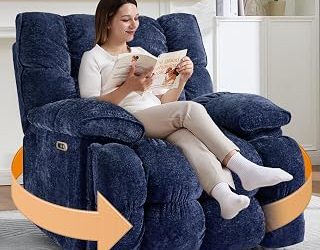
FUNECORP Big Man Lay-Flat Lift Recliner
The 28-inch seat and dual-motor layout let larger users find a genuinely neutral spine position instead of being wedged into a narrow frame that rotates the pelvis. The lay-flat range makes it the strongest option here for people who sleep in the chair several nights a week rather than occasionally.
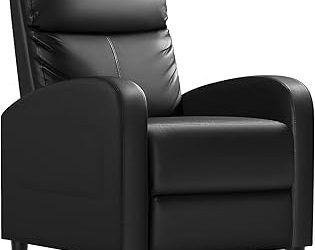
CHITA Wall Hugger Leather Power Recliner
A wall-hugger mechanism reclines forward rather than backward, so you can position the chair near a bedside table or lamp without losing recline range in a small room. The adjustable power headrest is the standout feature for cervical pain, letting you kill the forward head tilt that ruins neck comfort in most recliners.
CHITA Leather Swivel Rocker Recliner
Triple motors give you independent control of headrest, back, and footrest, plus adjustable lumbar support — the closest thing here to dialing in a custom spinal curve. Bear in mind that a rocker base moves slightly underfoot, which some users with vertigo or balance issues find unhelpful when standing.
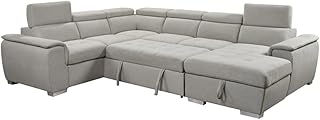
CHITA Braid Accent Chair
Not a recliner, but included deliberately: some backs do far better in a firm, high-seated upright chair than in anything that lets the pelvis sink. It’s a strong evening reading chair for people advised to limit deep sitting, and it keeps you out of the recliner until you actually intend to sleep.
Frequently Asked Questions
Is sleeping in a recliner bad for your back?
Not inherently. Short-term, a reclined position often reduces disc pressure and helps people with stenosis or post-op pain sleep at all. The risks are circulation-related — prolonged nightly use with legs dependent can contribute to swelling and clot risk — so keep the footrest elevated and discuss extended use with your clinician.
What recline angle should I actually use?
Start around 125° between torso and thighs, with the knees slightly above hip level. Adjust in small increments over several nights rather than chasing an immediate fix; your body needs a few sleep cycles to register whether a position genuinely helps.
Is power worth it over a manual recliner?
For back pain, yes. Manual levers require a torso twist and an abdominal brace to operate, which is exactly the movement most flare-ups punish. Power controls also let you make micro-adjustments at 3 a.m. without fully waking.
Should I use the built-in heat all night?
No. Use heat for fifteen to twenty minutes before sleep to loosen paraspinal muscles, then switch it off. Sustained warmth interferes with the drop in core temperature that sleep onset depends on, and it can leave you waking overheated at 4 a.m.
Final Thoughts
For most buyers whose back pain limits mobility, the MCombo Power Lift 7040 offers the best balance of lift assistance, lumbar heat, and sizing flexibility. Larger users and regular chair-sleepers should go straight to the FUNECORP Big Man Lay-Flat model, while anyone in a compact room who wants precise head and neck positioning will get more from the CHITA Wall Hugger.