Key takeaways
- Recline geometry, not just recline: A back that tilts roughly 10–15° past upright supports a latch without slumping your neck forward. Power models that drive the backrest and footrest separately let you find that wedge; single-lever manuals force one fixed compromise.
- Motion quality: A glide runs on a level track and is inherently quieter than a rocker’s arc. Swivel range matters more than buyers expect — being able to pivot toward a bassinet or dresser saves you standing up mid-feed.
- Arm height: The most overlooked spec on the page. Arms set too low make you shrug, and a shrugged trapezius keeps your nervous system switched on. Adjustable or rising armrests are worth paying for.
- Light discipline: Backlit controls, a dim amber nightlight and a USB port within reach mean you never touch the overhead switch. Bright white light after midnight blunts melatonin and delays your return to sleep far longer than the feed itself.
- Materials and cleanability: Look for GREENGUARD Gold certification if the nursery is small or poorly ventilated. Then be honest about laundry: performance linen and faux leather wipe down, bouclé does not.
What's inside
Nursery chairs get chosen at two in the afternoon and judged at two in the morning, and those are very different tests. In daylight you notice the fabric and the price. At 3 a.m. what matters is whether you can feed with your shoulders down, whether the mechanism moves without a creak that stirs a drowsy baby, and whether you can stand up with a sleeping newborn in your arms without a lurch. A chair that fails those tests quietly costs you sleep every night for a year.
I assess nursery seating the way I’d assess a bed: by how fast it returns both of you to sleep. This guide looks at the 2026 crop of power gliders and manual rockers through that lens — motion quality, recline geometry, arm height, light discipline after dark, and the emissions profile of materials sitting in a room where an infant breathes sixteen hours a day.
As an Amazon Associate we earn from qualifying purchases.


How to Choose a Glider Recliner For Nursing (2026)
- Recline geometry, not just recline: A back that tilts roughly 10–15° past upright supports a latch without slumping your neck forward. Power models that drive the backrest and footrest separately let you find that wedge; single-lever manuals force one fixed compromise.
- Motion quality: A glide runs on a level track and is inherently quieter than a rocker’s arc. Swivel range matters more than buyers expect — being able to pivot toward a bassinet or dresser saves you standing up mid-feed.
- Arm height: The most overlooked spec on the page. Arms set too low make you shrug, and a shrugged trapezius keeps your nervous system switched on. Adjustable or rising armrests are worth paying for.
- Light discipline: Backlit controls, a dim amber nightlight and a USB port within reach mean you never touch the overhead switch. Bright white light after midnight blunts melatonin and delays your return to sleep far longer than the feed itself.
- Materials and cleanability: Look for GREENGUARD Gold certification if the nursery is small or poorly ventilated. Then be honest about laundry: performance linen and faux leather wipe down, bouclé does not.
The Best Glider Recliners For Nursing (2026), Reviewed
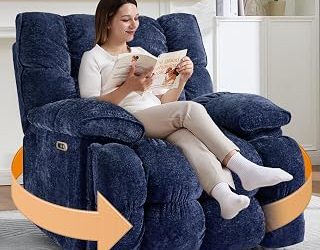
MAMAZING Lullapod Power Nursery Rocking Chair
The HugAssist armrests rise as the chair reclines instead of staying flat, so your elbows stay supported at every angle — the difference between a relaxed feed and forty minutes of low-grade shoulder strain. Triple motors, a 270° swivel and dual charging ports make this the most complete night-shift chair on the list.
CHITA Power Swivel Glider Recliner, Linen
The GREENGUARD Gold certification is the headline here: verified low chemical emissions in the room where your baby sleeps. Its powered headrest and lumbar adjust independently, letting you support your neck without shoving your lower back out of neutral, and the solid wood base stays silent under load.
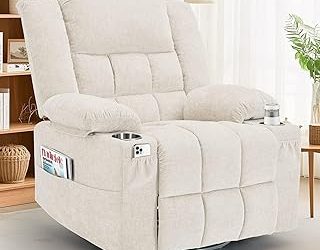
FiveWillowise Power Rocking Nursery Chair
The integrated nightlight and cup holder sound like gimmicks until you’ve tried to hydrate one-handed in the dark; kept on its lowest setting, that light gets you through a whole feed without a lamp. Adjustable armrests and headrest give it fit flexibility rare at this price.
Nurture& The Glider Plus, Bouclé
The most living-room-worthy chair of the group, with dense bouclé and a footprint that reads as furniture rather than baby equipment. Adjustable head and lumbar support plus a hidden USB cover the practical side — just budget for a washable throw.
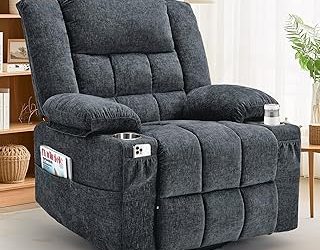
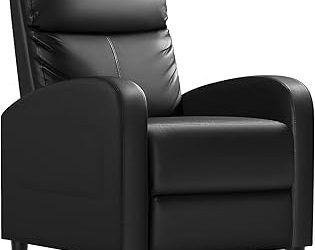
Manual Swivel Rocker Recliner with Massage and Heat
A sound choice when there’s no outlet near your feeding corner. The three-stage backrest is blunt next to a motorised glide, and I’d leave the heat function off during night feeds — a warm chair is a fast route to dozing off while holding your baby.
Frequently Asked Questions
Is it safe to fall asleep in the glider with my baby?
No. Falling asleep with an infant on a recliner, glider or sofa carries a markedly higher suffocation risk than a bare, flat crib mattress. If you feel yourself drifting during a night feed, set a phone timer and return the baby to the crib on their back before you settle.
Is power recline worth the premium over manual?
Usually yes. Motorised recline shifts your position in tiny increments with one hand while the other holds a sleeping newborn; a manual lever needs a shove that often wakes them. Manual chairs still win on price and long-term reliability.
How much clearance does one need?
Allow 18–24 inches behind the chair for a full recline, plus room at the sides to swivel toward a dresser or bassinet. Wall-hugger power models generally need less rear space than manual recliners.
How long will we actually use it?
Three to five years, typically. It transitions from feeding chair to bedtime-story chair, which is a strong argument for choosing upholstery you’d tolerate in a living room later.
Final Thoughts
For a single chair to carry you through every 3 a.m. for the next few years, the MAMAZING Lullapod is the strongest all-rounder, while the CHITA power glider is my pick where nursery air quality and postural support come first. On a tighter budget, the manual swivel rocker recliner still delivers the essentials — quiet motion, a supportive back and somewhere to put your feet up.