Key takeaways
- Recline geometry, not cushion plushness: The useful range opens your hip angle beyond roughly 120 degrees and brings your calves close to heart level. That combination reduces lower-back load and takes pressure off the legs. Overly soft foam that swallows the pelvis undoes both.
- Independent power headrests: A fixed backrest pushes the chin toward the chest as you recline, which narrows the upper airway and invites snoring. An adjustable headrest lets you keep the ear roughly in line with the shoulder — the single most underrated feature on a reclining sofa.
- Upholstery and heat transfer: Falling asleep depends on your core temperature dropping about a degree. Bonded and genuine leather feel cool initially but trap heat under sustained contact; textured fabrics like corduroy vent better. Match the material to how long you actually sit.
- Wall clearance and footprint: Wall-hugger mechanisms glide forward and need only a few inches behind them; traditional mechanisms want a foot or more. Measure the extended footrest length too, not just the closed depth.
- Exit effort and port placement: Deep, unstructured seating is blissful to sink into and awkward to leave, which is a real consideration for older users. And treat built-in USB-C ports as a lamp or white-noise machine outlet — charging a phone at arm’s length is how a nap becomes a scroll.
What's inside
Most recliner shopping happens in a 90-second showroom sit, which tells you almost nothing about how a piece performs at hour three of a Sunday afternoon — or at 2 a.m., when someone in the house has drifted off in front of a paused film. That gap matters more than shoppers realize. A reclining sofa changes your hip-to-torso angle, your head position, your leg elevation, and your skin temperature, and every one of those variables feeds directly into how quickly you drift off, whether you snore, and how you feel when you stand back up.
This guide evaluates the 2026 recliner couch field from a sleep-wellness perspective rather than a purely decorative one: recline geometry, neck and headrest control, breathability of the upholstery, and how much effort it takes to exit the seat. Below you’ll find the shortlist, followed by the criteria I use with clients and short reviews of the standouts — from full three-seat power sofas to single-seat wind-down chairs.
As an Amazon Associate we earn from qualifying purchases.


How to Choose a Recliner Couch (2026)
- Recline geometry, not cushion plushness: The useful range opens your hip angle beyond roughly 120 degrees and brings your calves close to heart level. That combination reduces lower-back load and takes pressure off the legs. Overly soft foam that swallows the pelvis undoes both.
- Independent power headrests: A fixed backrest pushes the chin toward the chest as you recline, which narrows the upper airway and invites snoring. An adjustable headrest lets you keep the ear roughly in line with the shoulder — the single most underrated feature on a reclining sofa.
- Upholstery and heat transfer: Falling asleep depends on your core temperature dropping about a degree. Bonded and genuine leather feel cool initially but trap heat under sustained contact; textured fabrics like corduroy vent better. Match the material to how long you actually sit.
- Wall clearance and footprint: Wall-hugger mechanisms glide forward and need only a few inches behind them; traditional mechanisms want a foot or more. Measure the extended footrest length too, not just the closed depth.
- Exit effort and port placement: Deep, unstructured seating is blissful to sink into and awkward to leave, which is a real consideration for older users. And treat built-in USB-C ports as a lamp or white-noise machine outlet — charging a phone at arm’s length is how a nap becomes a scroll.
The Best Recliner Couches (2026) Reviewed
Genuine Leather Power Recliner Sofa, 3-Seater
Power actuation is the reason to choose this over a manual sofa: you can stop at any angle instead of the two or three fixed detents a lever gives you, which matters if you’re chasing a specific torso elevation for comfort after eating. Hidden cup holders and USB charging keep the side table clear, and full-grain leather across a three-seat frame ages well under daily use.
Watson & Whitely Wall Hugger Power Reclining Sofa, Navy
The adjustable power headrests are the standout here — they let each occupant tune neck position independently, which is the difference between a restorative doze and waking with a stiff trapezius. Wall-hugger travel makes it viable in apartments and RVs where a conventional recliner would need to float in the middle of the room.
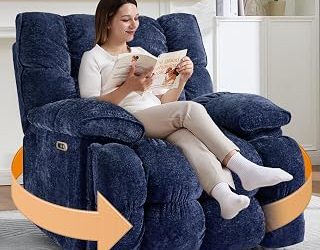
50-Inch Corduroy Chaise Lounge, Dark Grey
This oversized boneless lounger is the most breathable option on the list, and the deep seat suits reading, meditation, or a short afternoon rest better than anything leather-clad. Just be clear-eyed about the tradeoff: unstructured cushioning offers minimal lumbar support, so it’s a rest station rather than a posture-critical seat.
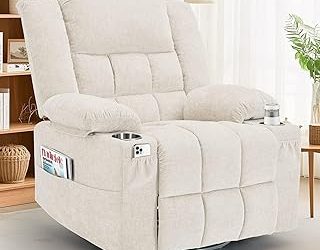
Leather Recliner Chair with Concealed Cup Holders, Nut Brown
A traditional manual recliner with overstuffed arms and no motors, cords, or outlets to plan around — fewer failure points over a decade of use. I often suggest a chair like this for a bedroom corner, because having a dedicated wind-down seat helps preserve the bed-for-sleep-only association that underpins stimulus control therapy.
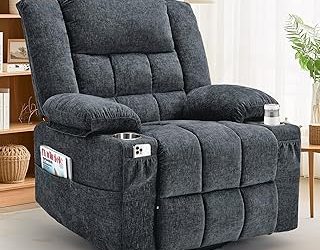
Electric Power Recliner Chair with USB and Hidden Arm Storage, Black
Designed as home theater seating, this single-seat unit earns its place through the hidden arm storage, which is an ideal home for an eye mask, earplugs, and the remote you’d otherwise hunt for at midnight. Breathable leather and one-touch power recline make it the easiest chair here to fine-tune without sitting up.
Frequently Asked Questions
Is sleeping in a recliner actually bad for you?
An occasional nap is harmless. Sleeping upright every night is a genuine tradeoff — some people with reflux or post-surgical shoulder pain rest better that way, but prolonged sitting with the legs down can promote swelling and stiffness. If a recliner is the only place you can sleep, treat that as a symptom worth discussing with a clinician.
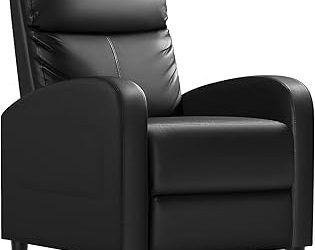
Power or manual — which should I buy?
Power wins on precision and accessibility, since you can adjust in increments without bracing against a lever. Manual options like the Faux Leather Manual Recliner Chair remain excellent value, need no outlet, and have far less to break, provided you have the arm and core strength to trigger the mechanism comfortably.
Will reclining help with snoring or reflux?
Elevating the head and torso roughly 30 degrees does reduce nighttime acid reflux for many people, and a mild upright angle can lessen positional snoring. A recliner is not a treatment for sleep apnea, however, and shouldn’t replace a diagnosis or prescribed therapy.
How much space do I need behind the sofa?
Budget four to six inches for a wall-hugger design and twelve to eighteen for a conventional mechanism. Also measure forward: an extended footrest can add close to two feet of depth, which is what usually collides with a coffee table or door swing.
Final Thoughts
For most living rooms, the Watson & Whitely wall hugger is the smartest all-round buy thanks to its independent power headrests and minimal clearance needs, with the three-seat Genuine Leather Power Recliner Sofa the better pick if you want a broader, more traditional leather footprint. If you’re outfitting a single reading corner instead, the 50-inch corduroy chaise offers the best breathability and the softest landing of anything here.