Key takeaways
- Recline geometry: Aim for a seat back that opens past 130 degrees with the knees lifted near heart level. This “zero gravity” posture reduces lumbar load and lower-leg pooling — far better for rest than a shallow 110-degree lean that leaves your abdomen folded.
- Independent headrest adjustment: A fixed headrest pushes the chin toward the chest, narrowing the airway and encouraging snoring. Power headrests that tilt separately from the backrest are the single biggest upgrade for anyone who dozes off on the couch.
- Upholstery and heat management: Core body temperature has to drop for sleep to consolidate. Woven fabric breathes best for warm sleepers; genuine leather regulates better than bonded or faux leather, which tends to hold heat and moisture against the skin.
- Wall clearance and footprint: Wall-hugger mechanisms recline forward and need only a few inches of clearance, keeping the sofa out of walkways in apartments, dens, and RVs. Measure the fully extended depth, not the closed depth.
- Motor noise and controls: A loud actuator will pull a napping partner straight out of light sleep. Look for smooth, quiet motors, side-mounted buttons you can find in the dark, and USB-C ports so a charging cable isn’t stretched across the floor.
What's inside
Most people buy a reclining sofa for movie nights and end up using it for something else entirely: sleep. Twenty-minute afternoon naps, an hour of half-dozing before bed, an entire night after a bad cold or shoulder surgery. That shift matters, because a sofa built for lounging and a sofa built for genuine rest are not the same object. One holds you in a slouch that compresses the airway and leaves your neck cranked forward; the other supports the spine at an open angle, keeps you thermally neutral, and lets you shift position without a fight. Buyers rarely see this distinction on a spec sheet, which lists motor type and cup holders but says nothing about headrest travel or how much heat a cushion traps at hour three.
This guide evaluates 2026’s top-rated reclining sofas the way a sleep specialist would assess a mattress: recline geometry, cervical support, upholstery breathability, motion noise, and how easily you can reposition without fully waking. Below you’ll find the current standouts, followed by the criteria that actually predict comfortable rest and answers to the questions that come up most often.
As an Amazon Associate we earn from qualifying purchases.


How to Choose a Rated Reclining Sofa (2026)
- Recline geometry: Aim for a seat back that opens past 130 degrees with the knees lifted near heart level. This “zero gravity” posture reduces lumbar load and lower-leg pooling — far better for rest than a shallow 110-degree lean that leaves your abdomen folded.
- Independent headrest adjustment: A fixed headrest pushes the chin toward the chest, narrowing the airway and encouraging snoring. Power headrests that tilt separately from the backrest are the single biggest upgrade for anyone who dozes off on the couch.
- Upholstery and heat management: Core body temperature has to drop for sleep to consolidate. Woven fabric breathes best for warm sleepers; genuine leather regulates better than bonded or faux leather, which tends to hold heat and moisture against the skin.
- Wall clearance and footprint: Wall-hugger mechanisms recline forward and need only a few inches of clearance, keeping the sofa out of walkways in apartments, dens, and RVs. Measure the fully extended depth, not the closed depth.
- Motor noise and controls: A loud actuator will pull a napping partner straight out of light sleep. Look for smooth, quiet motors, side-mounted buttons you can find in the dark, and USB-C ports so a charging cable isn’t stretched across the floor.
The Best Rated Reclining Sofas (2026) Reviewed
Signature Design by Ashley Boyington Power Reclining Sofa
The most complete rest-focused package here: true zero-gravity positioning, heated seats, and air massage in a leather-and-faux-leather build. Gentle warmth followed by cooling is a legitimate pre-sleep cue for the body, and the drop-down table keeps water and a book off the floor.
Watson & Whitely Genuine Leather Wall Hugger Power Sofa
The strongest choice for smaller rooms, with adjustable power headrests that let you fine-tune neck angle rather than accept whatever the frame dictates. Genuine leather and USB/Type-C charging make it a sensible pick for apartments and RVs where every inch counts.
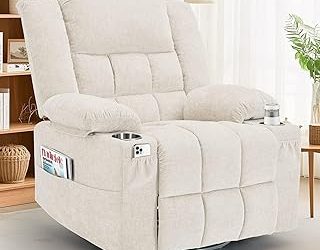
Genuine Leather Power Recliner Sofa with Hidden Cup Holders
A quieter, more restrained design that puts the budget into hide quality and motor smoothness instead of gadgets. Supportive arms and a well-shaped back make it comfortable for long stretches, and leather wipes clean easily if you nap with tea nearby.
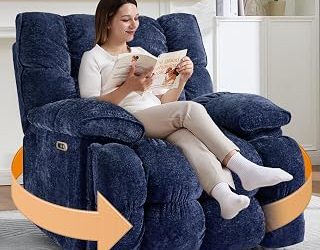
Extra-Wide Overstuffed Manual Reclining Sofa
Breathable fabric and generously padded seats make this the best option for hot sleepers who overheat on leather within twenty minutes. Manual mechanisms are also worth considering if you want a recliner that keeps working during a power outage.
3-Seater Reclining Sofa with Lift Console
Theater-style seating with a lift console that hides an eye mask, remotes, and earplugs where you can reach them half-asleep. Removable armrest, cup holders, and USB power make it a practical centerpiece for a media room.
Frequently Asked Questions
Is it unhealthy to sleep overnight in a recliner?
Occasional nights are fine, and an inclined position can ease reflux or post-surgical discomfort. But if you’re sleeping upright most nights because lying flat leaves you breathless or coughing, that’s a symptom worth discussing with a doctor rather than a furniture problem.
Power or manual — which is better for rest?
Power wins for sleep, because you can make small angle changes without the abrupt body torque a manual lever requires. Manual is more durable, cheaper, and independent of an outlet.
What recline angle is best for napping?
Roughly 40 degrees back from vertical, with the legs raised, tends to feel most restorative. Anything shallower keeps neck muscles engaged; anything close to flat can trigger reflux.
Do heat and massage features genuinely help?
Modestly, yes. Warmth and light vibration downshift the nervous system and encourage the peripheral blood flow that precedes sleep onset — useful as a wind-down ritual, not as a treatment.
Final Thoughts
For most households, the Ashley Boyington offers the widest range of genuine rest features, while the Watson & Whitely wall hugger is the smarter buy for tight floor plans and anyone who needs precise headrest control. Warm sleepers should default to the extra-wide overstuffed fabric model and accept the manual mechanism as a fair trade for breathability.