Key takeaways
- Measure arm-to-arm, not seat length: Stretch covers are sized by the outside span across both arms. Run a soft tape from the far outer edge of one arm to the other, then buy the range that puts your measurement in the middle rather than at the very top — a cover strained to its limit will creep at the seams every time you lie down.
- Match the fabric to your evening thermoregulation: Falling asleep depends on shedding heat, so warm sleepers should favor thinner poly-spandex knits and jacquards, like the textured weave U-NICE HOME uses. If your living room runs cold and you’re forever reaching for a throw, dense velvet plush does the insulating work for you.
- Insist on real anchoring, not just elastic hems: Look for an elasticated bottom paired with foam tuck grips or side straps. Micro-adjustments to rumpled fabric are the sort of low-grade arousal that fragments a nap without you ever registering why you woke up.
- Decide between one-piece and multi-piece up front: One-piece covers install in minutes and suit households that wash frequently. Four-piece sets with separate cushion covers fit far more precisely and let you launder only the section the dog actually slept on.
- Buy for the wash cycle you’ll realistically run: Dust mite populations respond to routine, not intention. Choose a cover you’re willing to strip and machine wash every two to four weeks — cold water, low tumble — and confirm the fabric tolerates that without pilling or losing its recovery.
What's inside
Most people’s sleep doesn’t actually begin in the bedroom. It begins on the sofa, somewhere in the second half of an episode, right as core body temperature starts its nightly descent and the eyelids get heavy. That makes your couch a genuine piece of sleep equipment — and a surprisingly awkward one to maintain. Upholstery turns clammy in July and slick and cold in January, and after a few years of accumulated skin cells, pet dander, and spilled chamomile, it becomes precisely the sort of surface that leaves a sensitive sleeper stuffy by ten o’clock.
A well-chosen slipcover solves more than an aesthetic problem. It gives you a washable barrier against allergens, a fabric hand-feel you can match to how warm you run, and enough grip that you’re not rearranging bunched polyester every time you shift position. Below, I’ve assessed this year’s strongest options the way I’d assess a mattress protector: fit and anchoring, thermal behavior, wash durability, and how they perform under a body that’s actually lying down rather than sitting up.
As an Amazon Associate we earn from qualifying purchases.


How to Choose Sofa Slip Covers (2026)
- Measure arm-to-arm, not seat length: Stretch covers are sized by the outside span across both arms. Run a soft tape from the far outer edge of one arm to the other, then buy the range that puts your measurement in the middle rather than at the very top — a cover strained to its limit will creep at the seams every time you lie down.
- Match the fabric to your evening thermoregulation: Falling asleep depends on shedding heat, so warm sleepers should favor thinner poly-spandex knits and jacquards, like the textured weave U-NICE HOME uses. If your living room runs cold and you’re forever reaching for a throw, dense velvet plush does the insulating work for you.
- Insist on real anchoring, not just elastic hems: Look for an elasticated bottom paired with foam tuck grips or side straps. Micro-adjustments to rumpled fabric are the sort of low-grade arousal that fragments a nap without you ever registering why you woke up.
- Decide between one-piece and multi-piece up front: One-piece covers install in minutes and suit households that wash frequently. Four-piece sets with separate cushion covers fit far more precisely and let you launder only the section the dog actually slept on.
- Buy for the wash cycle you’ll realistically run: Dust mite populations respond to routine, not intention. Choose a cover you’re willing to strip and machine wash every two to four weeks — cold water, low tumble — and confirm the fabric tolerates that without pilling or losing its recovery.
The Best Sofa Slip Covers (2026) Reviewed
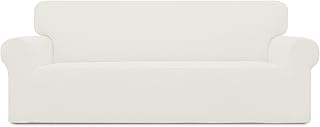
Easy-Going Stretch Couch Cover (Cream, 1-Piece)
The most sensible choice for anyone who naps often and washes accordingly: a single piece, on in under five minutes, off just as fast, with an elasticated skirt that keeps the hem from riding up. The cream colorway is soft enough not to bounce lamplight around a wind-down space, though it demands the frequent laundering the fabric happily tolerates.
H.VERSAILTEX Modern Velvet Plush 4-Piece (Ivory)
The thickest, most cocooning fabric in this group, with genuinely luxurious pile and a four-piece cut that hugs the frame instead of merely draping over it. Best suited to cooler rooms and cool sleepers — if you routinely kick blankets off at night, this one will feel like too much.
WEERRW 4-Piece Velvet High Stretch Cover (Dark Grey)
Comparable plushness to the H.VERSAILTEX at a friendlier entry point, with a non-slip elastic bottom that holds position well under a reclining adult. The dark grey is forgiving with shedding pets and visually recessive, which matters more than people expect in a room meant for evening decompression.
ZNSAYOTX Super Stretch Couch Cover (72″–92″)
The problem-solver for odd frames — a generous stretch range and aggressive elastic that stays put on curved arms, sectional ends, and older sofas nothing else fits. The knit is thinner than the velvets here, which is a genuine advantage for anyone who overheats within twenty minutes of lying down.
Quilted Beige Medallion Slipcover with Pockets
A quilted, water-repellent construction that behaves more like a protective pad than a cover, making it the strongest pick for households with dogs, cats, or bedtime drinks. The side pockets are quietly useful for parking a book or remote so you’re not reaching for a bright phone screen at the exact hour you shouldn’t be.
Frequently Asked Questions
Does napping on the sofa harm my night sleep?
Short naps taken earlier in the day generally don’t. The issue is the long, accidental evening doze, which discharges sleep pressure you need at bedtime. A comfortable sofa doesn’t cause this — but setting an alarm before you settle in is worth the ten seconds.
How often should I wash a slipcover?
Every two to four weeks if anyone regularly sleeps on it, and weekly during high pollen season or if allergy symptoms flare in the evening. Wash cold and tumble low; heat is what destroys spandex recovery and leaves a cover permanently baggy.
Will a stretch cover really stay put overnight?
Only if it’s anchored properly. Elastic bottoms plus tucked foam grips hold well; covers relying on drape alone will migrate within an hour. Re-tuck the seams after every wash, since fabric relaxes slightly each cycle.
Is velvet too warm for a sleeping surface?
For warm sleepers, often yes. Plush pile traps a layer of still air against the body, which is pleasant in a chilly room and stifling in a heated one. Thinner knits or jacquards are the safer default if you’re unsure.
Final Thoughts
For most households, the Easy-Going one-piece cover is the pragmatic winner — easy enough to remove that you’ll actually keep it clean, which matters more to sleep quality than any single fabric spec. Cool sleepers and cold rooms should step up to the H.VERSAILTEX velvet for its depth and precision of fit, while pet owners and anyone eyeing an odd-sized frame will get more mileage from the quilted, water-repellent medallion cover.