Key takeaways
- Measure for your body, not just your wall: A sofa needs roughly 80 inches of clear interior length before an average adult can lie fully extended without curling the spine. Seat depth of 38 inches or more lets you lie on your side with knees stacked, which is the position most people naturally default to when dozing.
- Interrogate the cover, not the claim: “Machine washable” is meaningless without details. Look for multi-panel covers with separately removable seat and back cushion sleeves — they fit in a domestic drum, wash more evenly, and let you launder one soiled section instead of stripping the whole frame.
- Match the fill to how you rest: Down and down-blend cushions distribute pressure beautifully and are excellent for short naps, but they need daily fluffing. High-resilience foam cores hold their loft and suit anyone who wants consistent support without maintenance. Hybrids give you both.
- Treat arm height as pillow height: If you nap on your couch, the arm becomes your cervical support. Low, softly rolled arms tend to leave the neck extended and are best paired with a cushion; taller square arms can over-flex the neck. Test the position before you commit.
- Prioritise breathable, launderable textiles: Linen and linen-textured weaves move air and heat away from the body, which matters because thermoregulation drives sleep onset. Plan on washing covers every six to eight weeks — more often with pets, allergies, or asthma in the household.
What's inside
Most people buy a sofa as furniture. As someone who spends their working life studying rest, I’d argue you’re actually buying the second most important sleep surface in your home. The living room couch is where the 3 p.m. slump gets resolved, where the pre-bed wind-down happens, and where a visiting relative spends the night. Yet sofa shopping is almost always framed around aesthetics and price, with no thought given to whether the thing can support a horizontal human for forty minutes without leaving them stiff — or whether the fabric can be laundered often enough to keep it from becoming a dust-mite reservoir.
Slipcovered designs solve half that equation on their own: a cover you can strip and wash is the single best hygiene feature available in upholstered furniture. The other half — seat geometry, cushion recovery, arm height — varies wildly between models. Below, I’ve assessed the strongest slipcovered sofas available in 2026 through a rest-and-recovery lens: how they behave under a body, how honestly their covers launder, and how well they hold their shape after a year of naps.
As an Amazon Associate we earn from qualifying purchases.


How to Choose a Slipcovered Sofa (2026)
- Measure for your body, not just your wall: A sofa needs roughly 80 inches of clear interior length before an average adult can lie fully extended without curling the spine. Seat depth of 38 inches or more lets you lie on your side with knees stacked, which is the position most people naturally default to when dozing.
- Interrogate the cover, not the claim: “Machine washable” is meaningless without details. Look for multi-panel covers with separately removable seat and back cushion sleeves — they fit in a domestic drum, wash more evenly, and let you launder one soiled section instead of stripping the whole frame.
- Match the fill to how you rest: Down and down-blend cushions distribute pressure beautifully and are excellent for short naps, but they need daily fluffing. High-resilience foam cores hold their loft and suit anyone who wants consistent support without maintenance. Hybrids give you both.
- Treat arm height as pillow height: If you nap on your couch, the arm becomes your cervical support. Low, softly rolled arms tend to leave the neck extended and are best paired with a cushion; taller square arms can over-flex the neck. Test the position before you commit.
- Prioritise breathable, launderable textiles: Linen and linen-textured weaves move air and heat away from the body, which matters because thermoregulation drives sleep onset. Plan on washing covers every six to eight weeks — more often with pets, allergies, or asthma in the household.
The Best Slipcovered Sofas (2026), Reviewed
HULALA HOME 80″ Farmhouse Slipcovered Sofa
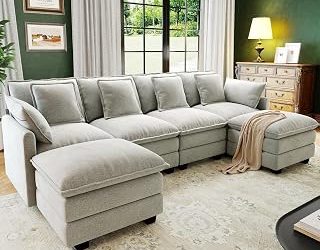
This is the most hygienically sensible sofa on the list: both the back and seat cushions come out entirely, so the whole contact surface goes through the wash rather than just the outer shell. The deep seat is generous enough for side-lying at 80 inches, making it my pick for smaller rooms where a nap-capable couch still has to fit.
HULALA HOME 88″ Down-Filled Slipcovered Sofa
At 88 inches, this gives you a genuinely full-length lying surface, and the down-filled cushions conform to the shoulder and hip in a way that reduces the pressure-point shifting that fragments a short nap. Fluff the seats after each use and the loft holds up well.
HULALA HOME 85″ Chaise Slipcovered Sofa
The chaise section is quietly therapeutic — elevating the legs above hip level helps with the evening ankle swelling many people get after a long day standing, and it encourages a reclined posture rather than a slumped one. Down-filled cushions and a fully washable cover round out a strong recovery-focused package.
89″ Heavy-Duty High-Back Farmhouse Sofa
The tall back is the differentiator here: it supports the head while you’re still upright, which suits anyone who tends to drift off mid-episode rather than deliberately lying down. The reinforced frame and breathable linen-textured weave make it the most durable option for heavy daily use.
AMERLIFE 89″ Slipcovered Sofa
Oversized proportions and a deep seat make this the best choice for households where two people lounge simultaneously, or for anyone who wants to sprawl rather than lie neatly. The grey linen finish is low-glare, which is a small but real advantage in a room used for evening wind-down.
Frequently Asked Questions
Is it healthy to sleep on a sofa every night?
Occasional couch sleeping is harmless, but nightly use isn’t advisable. Sofa backs restrict shoulder rotation and most seats are too short for full spinal extension, which tends to produce morning stiffness and more frequent night-time position changes. Use a slipcovered sofa for naps and guest nights, not as a permanent bed.
How often should I wash the slipcover?
Every six to eight weeks for a typical household, and every three to four if anyone has allergies, eczema, or asthma. Upholstery accumulates skin cells and dust mite allergen exactly like bedding does — regular laundering measurably reduces overnight airway irritation.
Will the cover shrink or slip out of place?
Wash cold on a gentle cycle, tumble on low only until barely damp, then refit the cover while it’s still slightly moist so it dries to the frame’s shape. This prevents almost all shrinkage complaints. Re-tuck the seat seams weekly to stop the slack that causes sliding.
Down-filled or foam cushions for napping?
Down and down-blend fills excel at pressure relief and feel more enveloping, which suits short restorative naps. Foam holds its shape longer and gives better support for those with lower back pain. If you’re undecided, choose down-over-foam hybrid cushions.
Final Thoughts
If you want one sofa that genuinely doubles as a rest surface, the HULALA HOME 88″ down-filled model offers the best combination of length and pressure relief. The 85″ chaise version is the smarter pick if leg elevation and evening recovery matter to you, and the 80″ farmhouse sofa remains the most practical choice for allergy-conscious households thanks to its fully removable, fully washable seat and back cushions.