Key takeaways
- Support core: High-density or memory foam holds a stable spinal line through the night and matters enormously for seniors, large breeds, and any dog with early arthritic change. Loose polyfill feels luxurious in the shop but compresses within weeks, leaving pressure loading directly on the elbows and hips.
- Bolster geometry: Match the walls to your dog’s habitual posture. Curl-and-nest sleepers want tall, plush sides to brace their spine and shield their eyes; sprawlers and belly-flop sleepers do far better with a low backrest and one open edge so limbs can hang freely.
- Elevation and airflow: Legs lift the deck clear of cold floors and draughts while letting air circulate underneath, which helps dogs offload heat during deep sleep. Elevation also means far less effort for stiff joints when your dog wakes and rises several times a night.
- Measure the sprawl, not the dog: Take a tape to your dog while they’re fully extended on their side, then add roughly six inches. A sofa that forces limbs to dangle or heads to prop on a hard armrest produces micro-arousals that never show up as obvious “bad sleep” but leave a dog groggy and irritable.
- Cleanability: Dander, saliva, and skin oils build into the sleeping surface and disturb both your dog’s rest and your own allergy load. Prioritise a zip-off machine-washable cover or a wipe-clean leatherette, and check the core itself is water-resistant.
What's inside
Dogs are polyphasic sleepers. They bank 12 to 16 hours of rest a day in short, repeated bouts, and each of those bouts contains the deep and REM stages that consolidate memory, regulate mood, and repair soft tissue. What most buyers underestimate is how much the sleeping surface governs that architecture. Shop a dog sofa the way you’d shop a throw cushion — on colour and price — and you’ll often watch your dog abandon it within a fortnight for the hallway floor. The usual culprits are a fill that bottoms out under body weight, a deck too short for a full lateral sprawl, or a frame that creaks with every position change and fragments light sleep before it ever deepens.
This roundup evaluates the strongest dog sofas available in 2026 through a sleep-wellness lens: pressure distribution across the shoulder and hip joints, bolster geometry for curled versus stretched sleepers, thermoregulation, frame stability, and how realistically the whole thing can be kept clean. Below are our current picks, followed by a practical buying framework and answers to the questions we field most often.
As an Amazon Associate we earn from qualifying purchases.


How to Choose a Sofa For Dog (2026)
- Support core: High-density or memory foam holds a stable spinal line through the night and matters enormously for seniors, large breeds, and any dog with early arthritic change. Loose polyfill feels luxurious in the shop but compresses within weeks, leaving pressure loading directly on the elbows and hips.
- Bolster geometry: Match the walls to your dog’s habitual posture. Curl-and-nest sleepers want tall, plush sides to brace their spine and shield their eyes; sprawlers and belly-flop sleepers do far better with a low backrest and one open edge so limbs can hang freely.
- Elevation and airflow: Legs lift the deck clear of cold floors and draughts while letting air circulate underneath, which helps dogs offload heat during deep sleep. Elevation also means far less effort for stiff joints when your dog wakes and rises several times a night.
- Measure the sprawl, not the dog: Take a tape to your dog while they’re fully extended on their side, then add roughly six inches. A sofa that forces limbs to dangle or heads to prop on a hard armrest produces micro-arousals that never show up as obvious “bad sleep” but leave a dog groggy and irritable.
- Cleanability: Dander, saliva, and skin oils build into the sleeping surface and disturb both your dog’s rest and your own allergy load. Prioritise a zip-off machine-washable cover or a wipe-clean leatherette, and check the core itself is water-resistant.
The Best Sofas For Dogs (2026) Reviewed
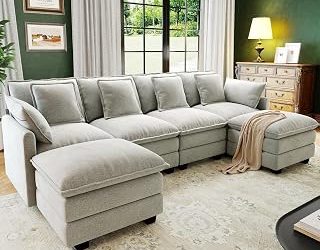
Cute Dog Couch for Medium & Large Dogs (Grey, L)
A genuinely well-shaped nest for dogs who sleep curled, with generously stuffed walls that give the spine something to brace against and block ambient light. The removable washable cover makes it one of the easier options to keep hygienic, though heavy chewers and very large breeds will compress the fill faster than a foam core.
55″ Memory Foam Dog Sofa Couch with Legs (Beige)
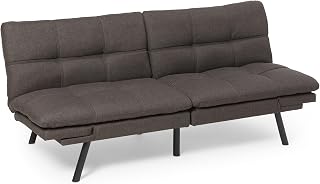
Our pick for big sprawlers: a 55-inch deck with a memory foam cushion that contours to the shoulder and hip rather than resisting them, mounted on legs for airflow and easier rising. The washable fabric and removable cushion make long-term maintenance straightforward, which is exactly what a large dog’s sleeping surface demands.
BingoPaw Large Dog Sofa Couch XL
At roughly 47 by 29 inches, this offers an unusually wide sleeping deck for its footprint, so dogs can shift between curled and extended positions without recalibrating every time. The sofa-style silhouette sits comfortably in a living room, and the supportive base resists the sag that ruins cheaper platforms.
Moots Premium Leatherette Pet Sofa (Espresso)
The strongest hygiene performer here: leatherette wipes clean in seconds, which matters for droolers, seniors with the occasional accident, and households where allergen load is a real concern. It reads as furniture rather than pet gear, and the firm structure stays silent when your dog repositions.
Luxury Elevated Waterproof Dog Sofa with Bedside Step
Designed for small and medium dogs, this pairs an orthopaedic sponge core with a waterproof leather shell and doubles as a step up to your own bed — a smart solution for co-sleeping households and dogs whose joints no longer tolerate jumping. Ideal for keeping an anxious dog near you without surrendering the duvet.
Frequently Asked Questions
Does an elevated sofa really improve a dog’s sleep?
Yes, for two measurable reasons. Air circulating beneath the deck helps dogs dump heat during deep sleep, and lifting the surface off a cold, draughty floor reduces the shivering micro-wakes that break sleep cycles in thin-coated and older dogs.
Memory foam or plush filling?
Choose memory foam for large breeds, seniors, and any dog showing joint stiffness, because it distributes pressure rather than transmitting it. Plush filling suits young, light dogs who prioritise nesting and burrowing over structural support.
My dog ignores the new sofa. What now?
Place it where your dog already chooses to sleep rather than where you’d prefer, then add an unwashed item carrying your scent. Reward voluntary use, never lift your dog onto it, and allow one to two weeks for the surface to become a genuine sleep cue.
How often should the cover be washed?
Every two to three weeks under normal conditions, and weekly for allergy-prone households or dogs who go outdoors frequently. Vacuum the deck between washes to stop dander embedding in the fibres.
Final Thoughts
For most large-breed households, the 55″ Memory Foam Dog Sofa Couch delivers the best combination of pressure relief, deck length, and elevation. Choose the Moots Leatherette Sofa if cleanability and living-room aesthetics lead your priorities, or the BingoPaw XL if you want maximum usable sleeping width without dominating the room.