Key takeaways
- Cooling mechanism: Passive breathability (bamboo-derived rayon, long-staple cotton, 3D spacer knits) removes heat continuously by wicking and airflow. Gel and phase-change panels feel cold at first touch but equalize within about twenty minutes — sustained breathability serves most sleepers better than that initial chill.
- Fill weight versus airflow: Every ounce of loft adds insulation. If you run hot, choose a lighter down-alternative fill and let the cover fabric do the thermal work; save heavyweight pillow tops for sleepers who need cushioning more than cooling.
- Pocket depth and anchoring: Measure your mattress including any existing topper, then buy a skirt that clears it comfortably. Deep pockets of 8–21 inches with a 360-degree elastic band prevent the shifting and bunching that create trapped, warm folds.
- Waterproofing trade-off: Any membrane that blocks liquid also slows vapor. If you need protection for children, pets, or heavy night sweating, look for noiseless air-fabric constructions rather than crinkly laminates, and expect a modest breathability penalty.
- Laundering reality: Skin oils and cells clog fiber channels and blunt wicking within weeks. Confirm the pad is machine washable, tumble-dries on low, and fits your machine’s capacity — a king pad that requires a laundromat trip rarely gets washed.
What's inside
Falling asleep is, in part, a thermal event. Core temperature has to fall roughly a degree Fahrenheit before the brain will hand you deep sleep, and that heat has to exit somewhere — largely through the hands, the feet, and the broad stretch of back pressed into your mattress. Contouring foam beds are superb at pressure relief and poor at releasing heat, which is why so many people surface at 2 a.m. damp and restless, then blame the pillow, the partner, or the thermostat.
A cooling mattress pad is the cheapest meaningful fix for that bottleneck: a thin engineered layer that lifts moisture off the skin, encourages lateral airflow, and stops the sleep surface from behaving like insulation. Below I break down what genuinely drives cooling performance — fiber type, fill weight, weave structure, and waterproof film — then review the 2026 standouts across plush, zoned, bamboo, and spill-proof categories, followed by the questions hot sleepers ask me most.
As an Amazon Associate we earn from qualifying purchases.



🛒 Best Price Today on Amazon
Prime members get fast, free shipping on everything above, plus member-only deals. New members get a 30-day free trial — cancel anytime.
How to Choose a Cooling Mattress Pad (2026)
- Cooling mechanism: Passive breathability (bamboo-derived rayon, long-staple cotton, 3D spacer knits) removes heat continuously by wicking and airflow. Gel and phase-change panels feel cold at first touch but equalize within about twenty minutes — sustained breathability serves most sleepers better than that initial chill.
- Fill weight versus airflow: Every ounce of loft adds insulation. If you run hot, choose a lighter down-alternative fill and let the cover fabric do the thermal work; save heavyweight pillow tops for sleepers who need cushioning more than cooling.
- Pocket depth and anchoring: Measure your mattress including any existing topper, then buy a skirt that clears it comfortably. Deep pockets of 8–21 inches with a 360-degree elastic band prevent the shifting and bunching that create trapped, warm folds.
- Waterproofing trade-off: Any membrane that blocks liquid also slows vapor. If you need protection for children, pets, or heavy night sweating, look for noiseless air-fabric constructions rather than crinkly laminates, and expect a modest breathability penalty.
- Laundering reality: Skin oils and cells clog fiber channels and blunt wicking within weeks. Confirm the pad is machine washable, tumble-dries on low, and fits your machine’s capacity — a king pad that requires a laundromat trip rarely gets washed.
The Best Cooling Mattress Pads (2026) Reviewed
Niagara Sleep Solution Bamboo Cooling Topper
Rayon derived from bamboo has the smoothest hand-feel of the mainstream cooling fibers, and Niagara pairs it with a genuine pillow-top loft, so you get cushioning without the smothered sensation of dense memory foam. The 20-inch pocket handles tall hybrid mattresses, and it’s my usual first recommendation for sleepers managing both overheating and lower-back discomfort.
SLEEP ZONE Zoned Cooling Mattress Topper
The zoned quilting concentrates fill where you need support and thins it across the torso, which is exactly where most adults dump heat overnight. It’s a smart choice for couples with mismatched thermal profiles, since the surface stays even rather than pooling warmth under the heavier sleeper.
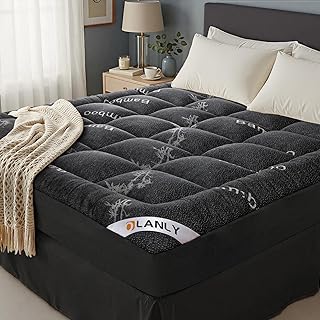
OLANLY Quilted Fitted Mattress Pad
A well-executed everyday pad: down-alternative fill, a breathable quilted face, and a 360-degree elastic skirt that grips mattresses up to 21 inches without creeping loose by morning. Choose this one if you want a modest comfort upgrade and reliable washability rather than aggressive cooling technology.
Hanherry Waterproof 3D Air Fabric Protector
The 3D air-fabric layer is the compromise I point to when someone needs true waterproofing but refuses to sleep on plastic — it holds a ventilated gap above the barrier, so vapor still has somewhere to travel. It’s quiet, thin, and the most sensible pick for kids’ rooms, pets, or anyone whose sweating is severe enough to reach the mattress.
OLANLY King Bamboo Viscose Cooling Topper
Essentially the king-size, upgraded sibling of OLANLY’s quilted pad, with a bamboo viscose face that measurably outperforms polyester on moisture transport. The plush fill keeps it comfortable for side sleepers, and the dark gray finish hides the wear that shows quickly on white pads.
Frequently Asked Questions
Do cooling mattress pads actually lower body temperature?
They don’t refrigerate you. What they do is remove the barrier to your body’s own heat loss — improving evaporation and conduction away from the skin — which lets core temperature complete its natural nightly decline instead of stalling.
What’s the difference between a cooling pad and a topper?
A pad is thin and primarily a surface and protection layer; a topper adds measurable cushioning and can change how your mattress feels. Several products marketed as both, including the Niagara and SLEEP ZONE models, sit in the middle with light pillow-top loft.
Will a waterproof protector make me sleep hotter?
Slightly, yes — physics allows no free lunch. Modern air-fabric designs like the Hanherry, or quilted waterproof pads such as the ELVEN HOME king, narrow the gap enough that most sleepers won’t notice once the surface fabric is dry and breathable.
How often should I wash it?
Every two to three weeks for hot sleepers, monthly otherwise. Wash warm, skip fabric softener entirely — it coats fibers and destroys wicking — and tumble dry low to protect elastic and any membrane layer.
Final Thoughts
For most hot sleepers, the Niagara bamboo topper delivers the best balance of breathability and cushioning, while the SLEEP ZONE zoned pad is the smarter buy for couples who disagree about temperature. If protection is non-negotiable, the Hanherry 3D air-fabric protector keeps your mattress safe without turning the bed into a sauna.