Key takeaways
- Buy the support core, not the surface feel: The top two inches sell the mattress; the bottom eight determine whether it survives. Look for pocketed coils in the 12.5–13.5 gauge range, or a polyfoam base rated at 1.8 lb/ft³ or higher. Anything vaguer than that in the product description is usually vague for a reason.
- Add height, then add firmness: A 12-inch bed is a reasonable floor, but 14 to 16 inches gives the comfort layers room to cushion without bottoming out. Firmness also reads softer as body weight rises, so a sleeper at 280 pounds should generally step up one level from whatever felt right at 160.
- Treat edge support as structural: Reinforced perimeter coils or high-density foam rails let you use the full sleep surface and sit on the side to dress without the mattress collapsing. Beds without them effectively shrink by six inches per side.
- Plan for heat, because you’ll sink deeper: Greater contouring means less air moving around the torso. Coil layers ventilate best; in foam builds, look for copper, graphene, or gel infusion paired with a breathable knit cover rather than a laminated one.
- Read the base requirement and the sag clause: Slats should sit no more than three inches apart, and queens and kings need a center rail with legs to the floor. Then check the warranty: a policy covering impressions over 0.75 inches is meaningfully stronger than one that waits for 1.5 inches.
What's inside
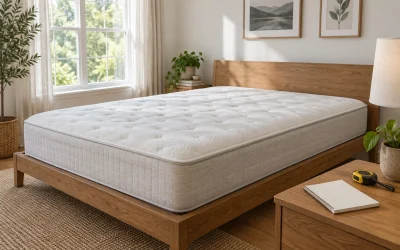
Almost every mattress spec sheet is written around a hypothetical sleeper who weighs 150 to 180 pounds. Firmness ratings, comfort-layer thickness, even the indentation threshold buried in the warranty — all of it assumes a body that applies a modest, evenly distributed load. Past that weight, the physics shift. Foams compress further and recover more slowly, hips and shoulders press through to the support core, and a bed that felt medium-firm in the store starts behaving like a plush one within a year. The result is familiar to anyone who has lived it: lumbar ache on waking, a trench down the middle of the bed, and an edge you can’t sit on without sliding off.
This guide treats the question as a matter of load mechanics rather than marketing. Each pick below was assessed on support-core construction (coil gauge, count, and foam density), total profile, perimeter reinforcement, thermal behavior under deeper contouring, and how specific the manufacturer is willing to be about sagging. Both hybrid and all-foam builds are represented, along with the sizing and base requirements that determine whether any of them last.
As an Amazon Associate we earn from qualifying purchases.


🛒 Best Price Today on Amazon
Prime members get fast, free shipping on everything above, plus member-only deals. New members get a 30-day free trial — cancel anytime.
How to Choose a Mattress for Big People (2026)
- Buy the support core, not the surface feel: The top two inches sell the mattress; the bottom eight determine whether it survives. Look for pocketed coils in the 12.5–13.5 gauge range, or a polyfoam base rated at 1.8 lb/ft³ or higher. Anything vaguer than that in the product description is usually vague for a reason.
- Add height, then add firmness: A 12-inch bed is a reasonable floor, but 14 to 16 inches gives the comfort layers room to cushion without bottoming out. Firmness also reads softer as body weight rises, so a sleeper at 280 pounds should generally step up one level from whatever felt right at 160.
- Treat edge support as structural: Reinforced perimeter coils or high-density foam rails let you use the full sleep surface and sit on the side to dress without the mattress collapsing. Beds without them effectively shrink by six inches per side.
- Plan for heat, because you’ll sink deeper: Greater contouring means less air moving around the torso. Coil layers ventilate best; in foam builds, look for copper, graphene, or gel infusion paired with a breathable knit cover rather than a laminated one.
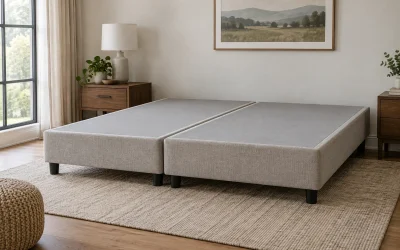
- Read the base requirement and the sag clause: Slats should sit no more than three inches apart, and queens and kings need a center rail with legs to the floor. Then check the warranty: a policy covering impressions over 0.75 inches is meaningfully stronger than one that waits for 1.5 inches.
The Best Mattresses for Big People (2026), Reviewed
BedStory 14 Inch Hybrid
This is the most direct answer to the brief — a pocket-spring core with zoned lumbar reinforcement, engineered specifically around heavier sleepers and backed by a ten-year warranty. The independent coils limit the hammocking effect that sinks all-foam beds under concentrated hip weight, making it my default recommendation for back and combination sleepers.
16 Inch Luxury Hybrid King
The tallest option here, and the one I’d point couples toward when combined load is the real variable, since seven-zone coil mapping keeps two bodies from converging in the middle. The 365-night trial matters more than it sounds: support failures on a taller build tend to surface around month four or five, well past a standard 100-night window.
Sleepmax Queen 14 Inch Hybrid
A well-balanced hybrid that splits the difference between contour and pushback, which is what side sleepers carrying more weight through the shoulder generally need. Fiberglass-free construction and a full year of trial coverage make it a low-risk pick for anyone buying without a showroom visit.
EGOHOME 14 Inch Copper Gel Memory Foam
The strongest all-foam choice for sleepers who want deep pressure relief and near-total motion isolation rather than the buoyancy of coils, with copper-gel infusion and a graphene cover addressing foam’s usual heat penalty. Pair it with a rigid slatted platform — foam telegraphs base flex far more readily than a spring unit does.
Sweetnight CoolNest 14 Inch
Five-zone ergonomic shaping gives the lumbar region firmer resistance while allowing the shoulder to settle, a sensible layout for foam at this profile. Best suited to lighter-end heavy sleepers and hot sleepers who prefer a conforming surface over a springy one.
Frequently Asked Questions
What firmness is right if I weigh over 250 pounds?
Medium-firm to firm, in most cases. Firmness is a perception, not a fixed measurement — the same mattress feels progressively softer as body weight increases. Judge by spinal alignment: lie on your side and have someone check that your hips, shoulders, and head form a straight line.
Is a hybrid always better than memory foam?
Not automatically, though density is the real variable. A dense, well-built foam mattress outperforms a cheap hybrid with thin coils. That said, hybrids generally win on edge support, airflow, and long-term resistance to permanent impressions.
What kind of base or foundation do I need?
A solid platform or slatted frame with gaps under three inches, plus center support legs reaching the floor on queen and king sizes. Traditional box springs are the most common cause of premature sagging under higher loads, and using one often voids the warranty outright.
How long should the mattress realistically last?
Expect six to eight years from a quality build at higher body weights, versus the ten commonly advertised. Rotate head-to-foot every three months, and treat a visible impression deeper than one inch — or lower-back stiffness that fades within an hour of getting up — as the signal to replace it.
Final Thoughts
For most buyers, the BedStory 14 Inch Hybrid offers the cleanest match between construction and requirement, with zoned pocket springs built expressly for heavier sleepers. Couples or anyone above roughly 300 pounds should step up to the 16 Inch Luxury Hybrid King for its deeper profile and seven-zone core, while devoted foam sleepers will be better served by the EGOHOME 14 Inch Copper Gel mattress on a rigid platform base.