
Key takeaways
- Buy pairs in the range you’ll actually fail in. If a 12-pound Bulgarian split squat feels hard at rep eight, you need 12s and 20s, not a token 5-pound pair. Two useful pairs beat five decorative ones.
- Check the coating, not just the number. Neoprene grips when your palms are damp and won’t gouge your floor or your shins. Bare cast iron does neither of those things well in a living room.
- Confirm the shape sits flat. Hexagonal or flat-sided ends let you do push-up rows and elevated split squats without the bell rolling out from under you. Round ends turn every set into a chase.
- Match load to your unilateral work, not your bilateral work. Single-leg training halves the weight requirement. A pair that feels light for double-leg squats is often perfect for split squats and step-ups.
- Think about storage geometry. If the set lives in a closet, small color-coded bells you can identify by sight get used. A bulky rack you have to unpack gets ignored by week three.
What's inside
Most people quit dumbbell leg training because they tried to replicate a barbell workout with a pair of 10-pounders and, unsurprisingly, felt nothing. That is a loading problem, not an equipment problem. A dumbbell held in the goblet position at the sternum shifts your center of mass forward, which forces the quads and upper back to work harder per pound than a bar on your shoulders ever will. Twenty pounds in that position, taken to a paused bottom, is genuinely difficult. The same twenty pounds held at your sides during a Romanian deadlift is a warm-up. Same weight, completely different stimulus — and that difference is the entire strategy behind training legs with modest equipment.
So instead of asking “how heavy do I need,” the better question is “which pattern am I loading, and where does the weight sit.” Legs come down to four jobs: bending at the knee under load (squat), bending at the hip under load (hinge), doing either on one leg (split stance), and moving through space while braced (carry and step-up). Neoprene-coated dumbbells are an unglamorous but effective tool here, largely because they do not roll away on hardwood, they do not chew up your shins during hinges, and they are easy to grab mid-set when you are switching from a Bulgarian split squat into a set of calf raises. Below is how I’d assemble a pattern-by-pattern kit, plus honest notes on where a neoprene set runs out of road.
As an Amazon Associate we earn from qualifying purchases.

#1 Pick
#2 Pick

#3 Pick
#4 Pick

#5 Pick

#6 Pick

#7 Pick

Quick Comparison
| Pattern | Signature Exercise | Where the Weight Sits | Typical Working Load (per hand) | Rep Target |
|---|---|---|---|---|
| Squat | Goblet squat, heels-elevated | Single bell at the sternum | 15–30 lb total | 8–15 |
| Hinge | Romanian deadlift, slow eccentric | Both bells at the thighs | 15–25 lb each | 10–15 |
| Split stance | Bulgarian split squat | Both bells at the sides | 10–20 lb each | 8–12 per leg |
| Step-up / carry | Tempo step-up, suitcase carry | Sides, or one side only | 10–20 lb each | 6–10 per leg / 30–45 sec |
| Calf & foot | Single-leg calf raise off a step | One bell, working side | 8–15 lb | 12–20 |
How to Choose
- Buy pairs in the range you’ll actually fail in. If a 12-pound Bulgarian split squat feels hard at rep eight, you need 12s and 20s, not a token 5-pound pair. Two useful pairs beat five decorative ones.
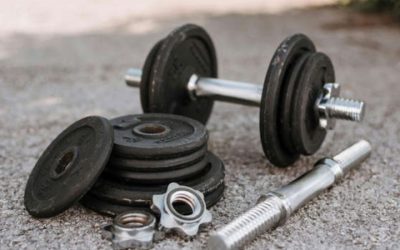
- Check the coating, not just the number. Neoprene grips when your palms are damp and won’t gouge your floor or your shins. Bare cast iron does neither of those things well in a living room.
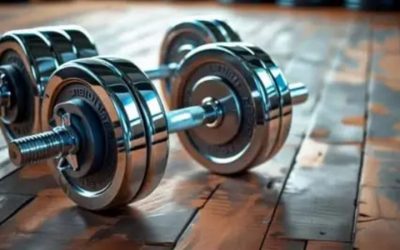
- Confirm the shape sits flat. Hexagonal or flat-sided ends let you do push-up rows and elevated split squats without the bell rolling out from under you. Round ends turn every set into a chase.
- Match load to your unilateral work, not your bilateral work. Single-leg training halves the weight requirement. A pair that feels light for double-leg squats is often perfect for split squats and step-ups.
- Think about storage geometry. If the set lives in a closet, small color-coded bells you can identify by sight get used. A bulky rack you have to unpack gets ignored by week three.
Top Picks Reviewed
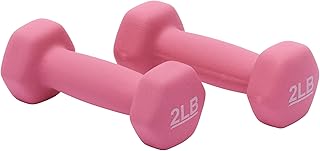
Amazon Basics Neoprene Dumbbell Hand Weights for Exercise and Muscle Toning
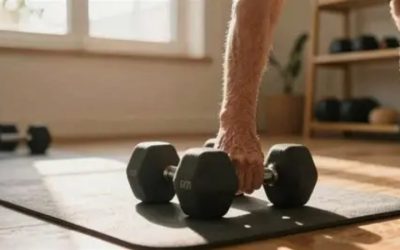
This is the baseline kit — the pair most home lifters should own before anything else, because it covers the three loading positions that matter most for legs. The neoprene shell is the practical star: it’s tacky enough that you can hold a goblet squat at the bottom without the bell sliding down your chest, and soft enough that Romanian deadlifts don’t leave red stripes across your thighs. The flat-sided profile means the bell stays put when you set it down between rounds, which sounds trivial until you’re doing a Bulgarian split squat superset and don’t want to hunt for a runaway weight mid-workout.
Where it earns its keep is unilateral training. Load a single bell for a suitcase-carry step-up and the anti-lateral-flexion demand on your obliques and glute medius scales up fast — most people are surprised how much a 15-pound offset load taxes hip stability on a 12-inch box. Same story with single-leg calf raises: one modest bell in the working-side hand, full range off a stair edge, twenty slow reps, and your soleus will register the complaint. For the squat pattern, elevate your heels an inch and hold one bell at the sternum; the shortened effective lever puts real tension on the quads at loads that look unimpressive on paper.
Be clear-eyed about the ceiling. Fixed-weight neoprene dumbbells top out well below what a trained lifter needs for double-leg squats and deadlifts, so the progression has to come from tempo, range of motion, pauses, and switching to one leg rather than from adding plates. That’s not a flaw so much as a design boundary — and it’s why buying two pairs (a lighter one for single-leg and calf work, a heavier one for hinges and goblet squats) is smarter than buying one middle-of-the-road pair and hoping it stretches. If you plan to eventually chase heavy bilateral strength, treat this as your accessory and travel kit, not your only tool.
Frequently Asked Questions
Can you actually build muscle in your legs with light dumbbells?
Yes, provided sets end close to genuine failure. Research on training to volitional fatigue shows comparable hypertrophy across a wide load range — roughly 30% of maximum and up — as long as effort is high. The catch is that lighter loads require more reps and more discomfort. A set of twenty-rep goblet squats where the last three reps are a grind will build quads; a set of twenty easy reps will not.
Which single exercise gives the most return with one pair?
The Bulgarian split squat, and it isn’t close. It loads the quad and glute through a long range, exposes hip stability deficits, and cuts your weight requirement roughly in half because one leg carries the work. Rear foot on a couch cushion or low bench, torso slightly forward for more glute, upright for more quad.
How do I keep progressing once the heaviest pair feels easy?
Change the variable that isn’t weight. Add a three-second lowering phase, pause two seconds in the bottom, elevate your front foot to deepen range, reduce rest to 45 seconds, or move from two legs to one. Each of these raises difficulty without a single extra pound, and most of them build control that heavier loading tends to skip.
Do I need a bench or step?
Not to start, but a stable elevated surface roughly knee height unlocks split squats, step-ups, and hip thrusts. A sturdy chair braced against a wall or the bottom stair of a staircase works fine. What matters is that it doesn’t slide when you drive through it.
Final Thoughts
Training legs with dumbbells is mostly an exercise in honesty. The equipment is simple and its limits are obvious, so progress comes from how precisely you load each pattern and how willing you are to finish sets that hurt. Pick one squat variation, one hinge, one split-stance movement, and one carry or step-up. Run them twice a week, add a rep or a second of tempo where you can, and reserve the heavier pair for the hinge work. A neoprene set like the Amazon Basics pair won’t build a powerlifting total, but it will absolutely build legs that are stronger, more stable, and considerably harder to fatigue — and it will do it in the corner of a room you already own.
Write Your Review
No reviews yet. Be the first to share your experience!