Key takeaways
- Record foundation package sizes, stair widths, landings and headroom, then resolve delivery turns before placing an order.
What's inside
To check a bed foundation through a narrow stairwell, compare the delivered pieces with the entire route, including landings and overhead space. A foundation that fits between the handrails may still be unable to turn at the top. Collect the measurements for the retailer or delivery team before ordering, and keep mattress size separate from package size.
Identify the largest rigid piece
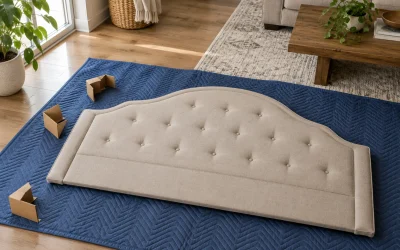
Start with the exact foundation model and size. Ask how many pieces arrive, whether each is boxed and the outside dimensions and weight of every package. For an adjustable base, distinguish its shipping configuration from its assembled dimensions. Do not assume it can fold, bend or be dismantled unless its documentation says so.
A split foundation may reduce the width of individual pieces without solving a length or landing problem. Tempur-Pedic’s split-base ordering guidance explains that its Split King arrangement uses two Twin Long products and that ordering the Split King base provides a two-piece unit. Confirm the actual package dimensions for the chosen product rather than inferring them from that size name.
Record the mattress and bed frame separately. Getting a foundation upstairs does not confirm that a rigid headboard, frame component or mattress will follow the same route. One successful measurement should not stand in for the entire order.
Survey the stairwell in sequence
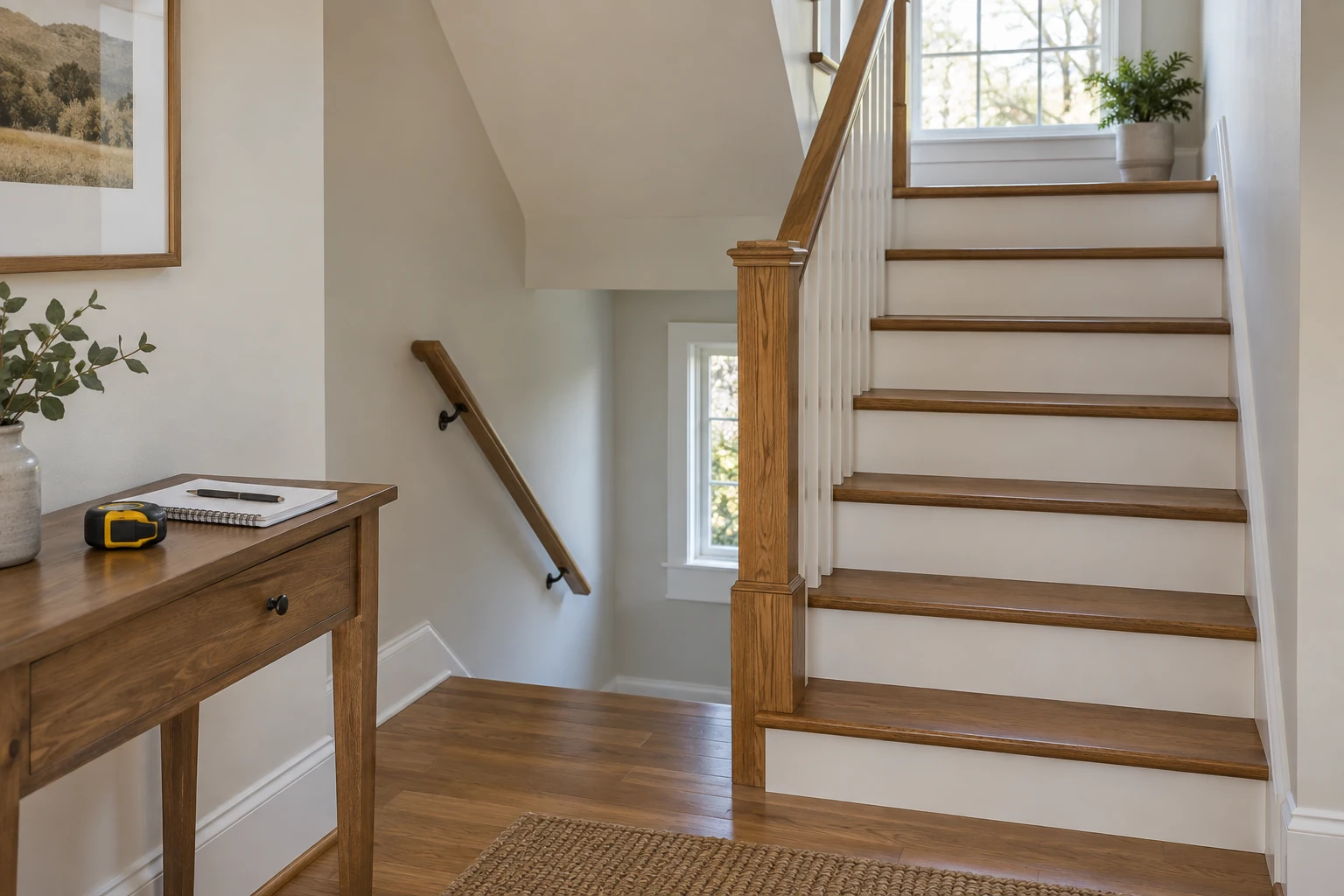
Number the route from the building entrance to the bedroom. Include the bottom approach, each flight, each landing and the top turn. Note the narrowest usable width at handrails and other fixed projections. Measure the landing itself, not just the stair tread immediately before it.
Room & Board’s delivery measuring guide calls for stair width, headroom at the bottom, landings and top, landing width and depth, and the distance to a facing wall. These are useful categories to give your delivery adviser when a long rigid object must turn.
Photograph each transition from both directions and label the photos with the same route numbers. A measurement such as “34 inches” is much more useful when the recipient can see whether it describes a clear opening, a handrail gap or the space before a wall.
| Stage | Measure and photograph | Question for the delivery team |
|---|---|---|
| Largest package | Confirmed outside dimensions and weight | What shipping configuration will arrive? |
| Bottom approach | Door, corridor and space before stairs | Can the piece enter the flight? |
| Flight | Narrowest width and overhead changes | Is the carrying orientation workable? |
| Landing | Width, depth, facing walls and ceiling | Can the turn be completed? |
| Bedroom entrance | Opening and space beyond it | Can the piece reach its assembly position? |
Separate geometry from handling
A scaled drawing can identify an obvious conflict, but it does not prove a heavy item can be carried through a tight turn. People need workable positions, and packaging or protective material may change the practical envelope. Ask the service responsible for delivery to review the uncertain sections.
Do not try to settle an uncertain fit by forcing an existing foundation through the stairwell or carrying a heavy improvised template. A lightweight paper plan is useful for discussion; an actual maneuver belongs with appropriate handling arrangements. Keep handrails and other building features in the measurements unless an authorized professional has confirmed an allowed change.
If the property has shared stairs, note building delivery rules and any required booking. Check that the agreed delivery service includes the stairs and final room, rather than assuming a doorstep service covers the route you measured.
Worked example: a split solves only one dimension
Imagine two illustrative packages, each 40 inches wide, 82 inches long and 12 inches deep. The narrowest stair width is 38 inches. Comparing only 40 with 38 suggests a conflict in one orientation, while turning the package onto a narrower side raises questions about overhead clearance and the landing turn.
Suppose the landing is 42 by 44 inches with a facing wall. The fact that the package has a 12-inch depth does not establish that its 82-inch length can rotate through that landing. Record the dimensions and mark the turn “unconfirmed.” Do not approve it by checking only one narrow cross-section.
A retailer may identify a different shipped configuration, offer an assessment or suggest another product. Each revised option needs its own package data. This example is a reasoning exercise, not a tested delivery path or a formula for rotating foundations.
Resolve uncertainties before paying for delivery
Send the retailer one packet: model and size, package specifications, numbered route worksheet and photographs. Ask for a clear answer on the difficult stages and save it with the order. If they need more measurements, add them to the same record so there is one current version.
Check the retailer’s terms for an item that cannot be delivered to the intended room. Record whether any assessment is advisory and what happens if the delivered package differs from the supplied dimensions. Avoid interpreting a general “white glove” label as a guarantee of fit.
Finally, confirm the foundation’s compatibility with the mattress and bed frame separately. A smaller package is useful only if the assembled product is appropriate for the bed. The finished plan should identify the delivered pieces, the approved route and the final assembly location without relying on a guessed carton size or an untested turn.