Key takeaways
- Ducted units require a water supply line, a drain, a bypass or dedicated duct cut, and a low-voltage connection to your furnace board. Budget for professional installation on steam models in particular — they draw significant amperage.
- Humidistat placement matters more than most installers admit. A sensor mounted in a return duct reads mixed air, not your bedroom.
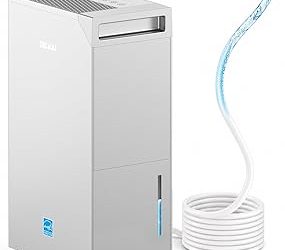
- Freestanding units need clearance and a level surface. Use the extension tube included with the AreShark and Lacidoll models to lift mist output above furniture height and prevent damp patches on nearby wood.
What's inside
Most people meet winter dryness the way they meet a bad mattress — by adapting to it. You wake at 3 a.m. with a throat like sandpaper, reach for water, blame the heating, and go back to sleep. But in sleep medicine, humidity is not a comfort footnote. Nasal passages that dry out shift you toward mouth breathing, which fragments sleep architecture, aggravates snoring, and leaves you groggy despite a full eight hours in bed. When indoor relative humidity slides below roughly 30% — routine in a forced-air home in January — the mucous membranes that filter and warm every breath stop working properly.
A whole-house humidifier fixes the problem at the source rather than one room at a time. This guide walks through the two families of whole-home units, how to size one honestly to your square footage, what installation actually involves, the maintenance most buyers overlook until performance collapses, and how to dial in the settings that matter for sleep. Below are our recommended picks for 2026, followed by everything you need to choose confidently.
As an Amazon Associate we earn from qualifying purchases.


🛒 Best Price Today on Amazon
Prime members get fast, free shipping on everything above, plus member-only deals. New members get a 30-day free trial — cancel anytime.
Ducted vs. Freestanding: Two Different Commitments
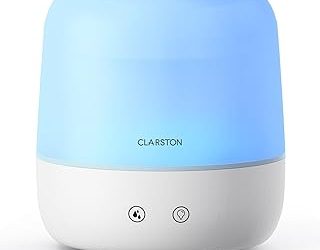
A ducted humidifier is plumbed into your HVAC system and treats every room your furnace serves. The AprilAire 800 Whole-House Steam Humidifier is the high-capacity end of this category, boiling water to produce sterile steam for homes up to about 10,300 square feet, and it runs independently of whether your furnace is calling for heat — a real advantage in shoulder seasons. Freestanding “whole house” units are large-tank evaporative or ultrasonic humidifiers that serve an open floor plan or a bedroom wing. The AreShark 4.2 Gal/16L Humidifier covers roughly 2,000 square feet with a 60-hour runtime, while the Lacidoll 16L Whole House Humidifier targets around 1,500 square feet and adds an aroma box and night light. There’s no plumber involved — you fill a tank, which is either a feature or a chore depending on your temperament.
Sizing: Trust the Hygrometer, Not the Box
Manufacturer coverage figures assume mild starting conditions and closed doors. A leaky 1930s house with high ceilings will behave like a much larger home. Buy a $15 digital hygrometer, place it in your bedroom, and log readings for a week before you commit. Aim for 40–50% relative humidity year-round; that range suppresses dust mites and mold while keeping airways comfortable. If you’re outfitting a single sleeping area rather than a whole floor, a mid-size unit like the 15L/3.96 Gal Cool Mist Humidifier, rated for about 800 square feet with a 350 mL/hour output, is a more sensible match than oversizing and fighting condensation on your windows.
Installation Realities
- Ducted units require a water supply line, a drain, a bypass or dedicated duct cut, and a low-voltage connection to your furnace board. Budget for professional installation on steam models in particular — they draw significant amperage.
- Humidistat placement matters more than most installers admit. A sensor mounted in a return duct reads mixed air, not your bedroom.
- Freestanding units need clearance and a level surface. Use the extension tube included with the AreShark and Lacidoll models to lift mist output above furniture height and prevent damp patches on nearby wood.
Maintenance Is the Whole Ballgame
An unmaintained humidifier stops being a wellness device and starts being a bioaerosol generator. Evaporative ducted units depend on a water panel that mineralizes and stiffens over a season; the AprilAire 4792 Maintenance Kit with the Model 10 water panel is the correct replacement for 500, 500A, and 500M units, and it should go in annually at minimum — twice a year on hard water. Ultrasonic units require a different discipline: they atomize whatever is in the tank, minerals included, so use distilled or filtered water and wipe the reservoir every few days. Choose models with top-fill tanks and wide openings; if you can’t get your hand inside to scrub, you won’t.
Don’t Overshoot — Know Your Summer Baseline
Humidity is a two-sided problem. Homes with finished basements often need moisture added upstairs in winter and removed downstairs in summer. If your hygrometer regularly reads above 55%, pair your winter setup with something like the hOmeLabs 32 Pint Dehumidifier, rated for 4,500 square feet with WiFi humidity control and auto shut-off. Chasing a fixed humidifier setting year-round is how people end up with mold behind their headboard.
Tips
- Drop your target to 35–40% during hard freezes to avoid condensation and frost inside window frames.
- Run the unit continuously rather than in bursts — stable humidity is gentler on airways and on wood floors and instruments.
- Keep any mist-producing humidifier at least three feet from the bed so you’re breathing conditioned room air, not a plume.
- Set a recurring calendar reminder for filter and water-panel changes; performance degrades invisibly before it fails.
Frequently Asked Questions
Will a humidifier stop my snoring?
It can reduce it. Adequate humidity keeps nasal passages patent, encouraging nose breathing over mouth breathing. It won’t resolve obstructive sleep apnea, which needs clinical evaluation.
Cool mist or warm mist for the bedroom?
Cool mist is safer around children and uses less electricity. Warm mist and steam units are quieter in operation and produce sterile output, which suits allergy-sensitive sleepers.
Do ducted humidifiers work when the furnace is off?
Bypass models generally need airflow. Steam units like the AprilAire 800 can operate independently, often by triggering the blower on their own.
Is tap water acceptable?
In evaporative ducted units, yes — minerals stay on the water panel. In ultrasonic units, tap water produces fine white dust throughout the room; use distilled.
Conclusion
The right whole-house humidifier is the one matched to your actual home, your water quality, and your willingness to maintain it — a plumbed steam unit for whole-home coverage and set-and-forget operation, or a large-tank freestanding model if you want results this week without cutting into ductwork. Measure first, size honestly, hold 40–50%, and change the filter. Your airways will register the difference within a few nights.