Key takeaways
- Gel-infused memory foam gives the deepest, most precise pressure relief and the best shoulder cradling, at the cost of some warmth. Gel and ventilation help, but foam is still foam.
- Quilted fiberfill pillow-tops breathe far better and add plush cushioning, though they don’t contour as deeply. The Niagara Sleep Solution and BEDLORE bamboo-viscose pillow-top pads both live here, with silky covers that move heat away from skin.
- Cotton-topped quilted pads like the EASELAND Cotton Pillow Top are the most breathable and the easiest to launder, best suited to sleepers who want softness and protection rather than deep pressure relief.
- Latex is responsive and cool but pushes back more than most side sleepers want at the shoulder.
Sleeping on your side is the most common position in the world, and also the one that puts the most uneven load on a mattress. Your shoulder and hip carry the bulk of your body weight into a surface that was probably engineered for an “average” sleeper, while your waist and knees hang in the air with nothing to lean into. When the surface underneath is too firm, those two pressure points become circulation choke points — the familiar dead arm at 3 a.m., the aching hip that only shows up in bed. When the surface is too soft, your midsection sinks and your lumbar spine bends sideways all night. A topper is the cheapest, fastest way to correct either problem without replacing a mattress that’s otherwise fine.
Below, I’ll walk you through how side-sleeping mechanics actually work, what thickness and material do for your shoulders and hips, how to judge cooling claims honestly, and how to match a topper to the mattress you already own. I’ve included the picks I’d point a client toward first, along with practical tips for getting the most out of whatever you choose.
Our top picks



As an Amazon Associate we earn from qualifying purchases at no extra cost to you. Ratings are shown as listed on Amazon.
🛒 Best Price Today on Amazon
Prime members get fast, free shipping on everything above, plus member-only deals. New members get a 30-day free trial — cancel anytime.
Understand What Your Shoulder And Hip Actually Need
Spinal alignment on your side means one thing: your shoulder and hip need to sink in while your ribs and waist are held up. That’s a contouring job, not a firmness job. A good side-sleeper topper compresses generously under a concentrated load and stays supportive under a distributed one. The quick diagnostic: lie on your side in your usual position and have someone photograph your back. If the line from the base of your skull to your tailbone curves, you need more give at the shoulder and hip. If your waist looks pinched and your hip is swallowed, you need less. Firmness ratings on a box won’t tell you which situation you’re in — your own spine will.
Get The Thickness Right Before Anything Else
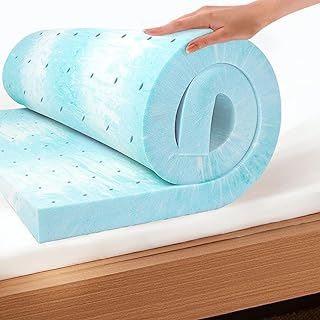
Thickness determines whether a topper can do the job at all. Under about two inches, you’re changing surface feel rather than pressure distribution — useful if your mattress is nearly right and you just want to take the edge off. Two to three inches is the workhorse range for most side sleepers, giving real shoulder relief without disconnecting you from the support core beneath. Four inches and up is for genuinely too-firm mattresses, heavier sleepers, or people with diagnosed hip and shoulder pain, and it comes with tradeoffs: more heat retention, harder edge transitions, and a real chance your fitted sheets stop reaching. The Linenspa 2 Inch Gel Memory Foam topper sits at the light end of this scale, the EGO 3 Inch Gel Memory Foam topper covers the middle, and the WhatsBedding 5 Inch topper is the option for a mattress that’s clearly punishing you.
Choose Your Material Based On How You Sleep Hot
- Gel-infused memory foam gives the deepest, most precise pressure relief and the best shoulder cradling, at the cost of some warmth. Gel and ventilation help, but foam is still foam.
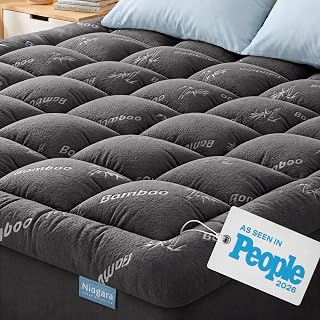
- Quilted fiberfill pillow-tops breathe far better and add plush cushioning, though they don’t contour as deeply. The Niagara Sleep Solution and BEDLORE bamboo-viscose pillow-top pads both live here, with silky covers that move heat away from skin.
- Cotton-topped quilted pads like the EASELAND Cotton Pillow Top are the most breathable and the easiest to launder, best suited to sleepers who want softness and protection rather than deep pressure relief.
- Latex is responsive and cool but pushes back more than most side sleepers want at the shoulder.
Check The Fit Against Your Mattress Depth
Skirted toppers fail more often over fit than over comfort. Measure your mattress from the seam at the base to the highest point of its own pillow-top, then add any protector you already use. Deep-pocket designs — the Niagara’s 20-inch skirt, the EASELAND’s 8-to-21-inch range, the BEDLORE’s stretch pockets for 6-to-18-inch beds — exist precisely because modern mattresses run tall. Foam toppers without skirts need either a strap kit or a generous fitted sheet to stay put, and a topper that slides all night will undo whatever alignment benefit it provided.
Don’t Let The Topper Outperform Your Pillow
Lower your shoulder into a new topper and your head is now closer to the mattress, which means the pillow that felt right last week is suddenly too tall. Side sleepers who add cushioning underneath almost always need to remove some above. Expect to swap to a lower-loft pillow or thin an adjustable one, and give yourself a few nights to judge the pair together rather than the topper alone.
Tips
- Unbox foam toppers and let them air out 24 to 48 hours in a ventilated room before sleeping on them; the initial odor is normal and dissipates.
- Rotate the topper 180 degrees every couple of months so your hip and shoulder don’t wear a permanent trench in one spot.
- Layer a thin, breathable protector over foam rather than a waterproof vinyl one, which traps every degree of heat the gel was meant to release.
- Give any new sleep surface at least two weeks before judging it — your body needs time to adapt, and early stiffness often resolves on its own.
Frequently Asked Questions
Is soft or firm better for side sleepers?
Neither label is reliable. What side sleepers need is a surface that yields at the shoulder and hip while supporting the waist, which usually feels medium-soft to medium on a store floor. Very firm surfaces create pressure points; very soft ones let the midsection collapse.
Can a topper fix hip pain from a too-firm mattress?
Often, yes. If your hip aches specifically in bed and eases within an hour of getting up, that’s a pressure-distribution problem a two-to-three-inch topper frequently resolves. Pain that persists all day warrants a clinician’s opinion instead.
Will a memory foam topper make me overheat?
Foam retains more heat than fiberfill, though gel infusion and ventilated construction narrow the gap considerably. If you wake up damp most nights, a breathable quilted pillow-top pad is the safer starting point.
How long should a mattress topper last?
Expect three to five years from quality foam and two to four from quilted fiberfill, which flattens gradually with washing. Persistent body impressions that don’t recover overnight mean it’s done.
Conclusion
The best topper for a side sleeper is the one that lets your shoulder and hip drop while keeping your spine in a straight line — so start by diagnosing which way your current setup is failing you, then choose thickness and material to correct it. A two-inch gel foam layer is enough to soften a mattress that’s nearly right; three inches handles most genuine pressure complaints; five inches rescues a bed that’s far too firm. If heat is your primary enemy, a breathable bamboo-viscose or cotton pillow-top pad will serve you better than any foam. Match the skirt to your mattress depth, drop your pillow loft accordingly, and give the combination two weeks to prove itself.