Key takeaways
- Track: an S-track follows the curve of the spine; an SL-track continues the roller path under the seat to work the glutes and hamstrings. SL-tracks typically run 47 to 53 inches of travel.
- Zero-gravity recline: tilts the seat so your knees sit above your heart, spreading weight and letting rollers press with your body weight.
- Air compression: airbags in the arms, shoulders, hips, calves and feet squeeze in cycles.
- Foot rollers: rollers under the soles for reflexology-style pressure.
- Heat: usually lumbar and sometimes calf heat pads, warm rather than hot.
- Body scan: sensors map shoulder height and spine length to position the rollers.
- Extras: Bluetooth speakers, a remote or tablet-style controller, and auto programs.
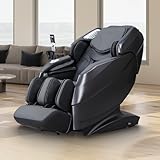
The Titan Pro Acro 3D is a full-body massage chair from Titan, a US brand that sells mid-priced home massage chairs, and its main draw is 3D roller movement, meaning the rollers push forward into your back for adjustable depth instead of only moving up, down and side to side. It is a reasonable fit for average-height users who want deeper back work and zero-gravity recline without paying flagship prices; taller or heavier buyers should compare it with the Titan Pro Jupiter XL, whose XL name signals a larger body fit. Below is what 3D actually changes, how this chair compares with other Titan models, and the measurements to check before buying.
Our top picks


As an Amazon Associate we earn from qualifying purchases at no extra cost to you. Ratings are shown as listed on Amazon.
What “3D” Means in a Massage Chair
Massage chair rollers are described by how many directions they move:
| Roller type | Movement | What you feel | Typical market price range |
|---|---|---|---|
| 2D | Up/down and side to side | Even, fixed pressure; intensity changed mostly by airbags or recline | $800–$2,000 |
| 3D | Adds forward/back (depth) movement | Adjustable intensity; rollers can press deeper into knots | $1,500–$4,500 |
| 4D | 3D plus variable speed and rhythm within a stroke | Closer imitation of human hand rhythm | $3,500–$10,000+ |
For most people, the jump from 2D to 3D is more noticeable than the jump from 3D to 4D. Depth control lets you dial the rollers softer if you are sensitive, or deeper if you carry tension in the upper back and shoulders. If you have osteoporosis, spinal implants or a recent injury, ask your doctor before using deep roller settings on any chair.
Features to Expect in This Class
Titan’s Pro models, like most chairs in the 3D tier, combine several systems. Exact counts and program lists differ by model year, so read the current product sheet for the model in front of you, but expect this general package:
- Track: an S-track follows the curve of the spine; an SL-track continues the roller path under the seat to work the glutes and hamstrings. SL-tracks typically run 47 to 53 inches of travel.
- Zero-gravity recline: tilts the seat so your knees sit above your heart, spreading weight and letting rollers press with your body weight.
- Air compression: airbags in the arms, shoulders, hips, calves and feet squeeze in cycles.
- Foot rollers: rollers under the soles for reflexology-style pressure.
- Heat: usually lumbar and sometimes calf heat pads, warm rather than hot.
- Body scan: sensors map shoulder height and spine length to position the rollers.
- Extras: Bluetooth speakers, a remote or tablet-style controller, and auto programs.
Acro 3D vs Jupiter XL vs 8500
Buyers often weigh these three Titan names together. Rather than relying on marketing claims, compare them on the factors that actually change daily use:
| Factor | Titan Pro Acro 3D | Titan Pro Jupiter XL | Titan Pro 8500 |
|---|---|---|---|
| Positioning | 3D roller depth control at mid-range price | Larger body fit, aimed at taller or broader users | Longer-running model in the lineup, usually priced lower |
| Best for | Average heights wanting adjustable back intensity | Users near or above 6 ft, or with broad shoulders | Budget-focused buyers wanting full-body features |
| What to check | Roller depth range, track length, height range | Leg extension range, seat width, weight capacity | Roller type (2D vs 3D), track type, warranty terms |
If your height sits at either end of the typical range (under about 5 feet 1 inch, or over about 6 feet 1 inch), the published height range matters more than the roller label. A chair that cannot place the shoulder rollers correctly or whose footrest cannot extend enough will feel wrong regardless of how many airbags it has.
Space and Delivery Realities
Full-body massage chairs are large and heavy. The figures below are typical for this class of chair:
| Measurement | Typical range | Why it matters |
|---|---|---|
| Upright footprint | About 55–65 in long x 30–33 in wide | Floor space when not in use |
| Fully reclined length | About 70–80 in | Clearance needed in front |
| Wall clearance | 2–6 in (space-saving designs) to 12+ in | Space-saving chairs slide forward as they recline |
| Chair weight | 200–280 lb | Floor protection; moving between rooms |
| Shipping weight | 250–330 lb, often 2–3 boxes | Stairs and doorway access |
| Doorway needed | At least 30 in clear, more for tight turns | Delivery path into the room |
Most chairs arrive in a main box plus a separate box for the arm sections, which bolt on in 20 to 40 minutes. Moving the main body requires two strong people or an appliance dolly. Place the chair near a grounded outlet; massage chairs typically draw 100 to 250 watts and should not share an outlet strip with space heaters.
Who Should Consider It
| Your situation | Fit |
|---|---|
| Upper back and shoulder tension, average height | Good match; 3D depth helps here |
| Over 6 ft 2 in or over 260 lb | Compare with XL-size models first |
| Apartment with limited floor space | Check the space-saving recline and reclined length |
| Main goal is calf and foot relief | Check foot roller and calf airbag design; roller type matters less |
| Under 5 ft 1 in | Check minimum height; small frames often get shoulder airbags too high |
Ownership Points to Weigh
- Warranty: mid-range brands commonly offer one to three years on parts, with shorter coverage on labor and upholstery. In-home service is not always included; read what the warranty actually covers before buying.
- What wears first: synthetic leather on the seat edge and armrests can crack after a few years of daily use; airbags and calf covers are the next most common replacements.
- Noise: roller motors and air pumps produce a steady hum, so a chair in a bedroom will be heard by a sleeping partner.
- Use time: most programs run 15 to 30 minutes. Many manufacturers recommend not using deep programs for long sessions back to back.
Bottom Line
The Titan Pro Acro 3D makes sense for buyers who want adjustable-depth back massage and zero-gravity recline in the mid-price tier, and who fit an average height range. Taller, broader users should look first at Titan’s XL-size option, while budget buyers can weigh an older model against the Acro by checking whether it offers 3D rollers and an SL-track. In all cases, the height range, reclined length and delivery path are the numbers to confirm before you order.