Key takeaways
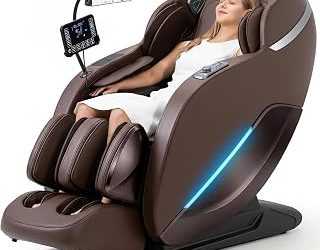
- Best overall: Osaki OS-4D Pro Maestro — the most complete feature set per dollar in the mid-premium tier
- Best value and best cheap stretch: Kahuna LM-6800 — L-track and a legit yoga stretch under roughly $2,500
- Best for small rooms and petite users: Synca CirC+ — a compact SL-track chair around 150 lb
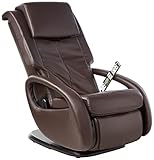
- Best for sciatica and deep-tissue comfort: Human Touch Super Novo — exceptionally smooth neck-to-glutes massage
- Best massage chair that stretches you: Daiwa Supreme Hybrid — an inversion-style stretch no other chair matches
- Top of the line: Luraco i9 Max — the flagship pick for tall, heavy, or hard-to-fit users
- Tight budget: a Real Relax-type chair under $1,500 — airbags and basic rollers, fine for relaxation
What's inside
- How to judge a massage chair: four things that actually matter
- The top picks, side by side
- Will it fit? Footprint, clearance and doorway numbers
- Massage chairs that stretch you — what that actually means
- Leg massage and head massage: where chairs overpromise
- Best massage chair for sciatica
- What “top of the line” buys — and the “best massage chair in the world” debate
- Durability, moving and ownership realities
- Price vs. value: what each budget tier gets you
- FAQ
For most people, the best massage chair on the market in 2026 is the Osaki OS-4D Pro Maestro — a heated 4D roller on an L-track that reaches the hamstrings, real calf-kneading rollers, and a Thai-style stretch program, usually in the $4,000–$6,000 range. But “best” shifts with your body, room, and budget, so here are the picks by situation.
- How to judge a massage chair: four things that actually matter
- The top picks, side by side
- Will it fit? Footprint, clearance and doorway numbers
- Massage chairs that stretch you — what that actually means
- Leg massage and head massage: where chairs overpromise
- Best massage chair for sciatica
- What “top of the line” buys — and the “best massage chair in the world” debate
- Durability, moving and ownership realities
- Price vs. value: what each budget tier gets you
- FAQ
- Best overall: Osaki OS-4D Pro Maestro — the most complete feature set per dollar in the mid-premium tier
- Best value and best cheap stretch: Kahuna LM-6800 — L-track and a legit yoga stretch under roughly $2,500
- Best for small rooms and petite users: Synca CirC+ — a compact SL-track chair around 150 lb
- Best for sciatica and deep-tissue comfort: Human Touch Super Novo — exceptionally smooth neck-to-glutes massage
- Best massage chair that stretches you: Daiwa Supreme Hybrid — an inversion-style stretch no other chair matches
- Top of the line: Luraco i9 Max — the flagship pick for tall, heavy, or hard-to-fit users
- Tight budget: a Real Relax-type chair under $1,500 — airbags and basic rollers, fine for relaxation
How to judge a massage chair: four things that actually matter
Listings bury you in feature counts. Ignore most of them and compare these:
- Roller track. S-track chairs massage the back only (roughly 30 inches). L-track chairs continue under the seat to the glutes and hamstrings (tracks around 47–53 inches) — essential if you want glute, hip, or sciatica-area work. A few chairs add flexing or split tracks that bend for deeper stretch positions.
- Roller depth. 2D rollers move up/down and side to side. 3D rollers push in and out for depth control. 4D adds variable speed and rhythm. For sensitive users, 3D/4D matters less for intensity and more because you can dial depth down.
- Legs and feet. Budget chairs use airbag squeezing only. Mid-tier adds foot rollers. True calf-kneading rollers are rare and worth hunting for if you stand all day.
- Fit range. Every chair has a height window and a weight rating — check both before anything else.
The top picks, side by side
| Chair | Why it wins | Track and rollers | Stretch | Fits users (approx.) | Chair weight | Typical price |
|---|---|---|---|---|---|---|
| Osaki OS-4D Pro Maestro | Best overall | 4D heated rollers, ~52 in L-track | Thai-style | ~5’0″–6’3″, ~265 lb limit | ~300 lb | $4,000–$6,000 |
| Kahuna LM-6800 | Best value | 2D rollers, L-track | Yoga stretch | Up to ~6’2″, ~230 lb limit | ~250 lb | $1,800–$2,500 |
| Synca CirC+ | Best compact | Compact SL-track | Light stretch | Petite to average, ~250 lb | ~150 lb | $1,800–$2,500 |
| Human Touch Super Novo | Best for sciatica | 3D unibody track to glutes | Full-body | Up to ~285 lb | ~300 lb | $7,500–$10,000 |
| Daiwa Supreme Hybrid | Deepest stretch | Dual flex track, 4D | Inversion-style bend | Up to ~300 lb | ~300 lb | $7,500–$9,500 |
| Luraco i9 Max | Top of the line | Dual butterfly rollers | Yes | ~4’7″–6’7″, ~300 lb limit | ~330 lb | $12,000–$15,000 |
Will it fit? Footprint, clearance and doorway numbers
A full-size chair takes about 30–35 inches of width and 55–60 inches of depth when upright — roughly a large recliner — but reclined length stretches to around 70–75 inches, which is the dimension people forget. Older designs needed 15–20 inches of clearance behind the chair to recline; most current picks above slide forward as they recline and need only about 2–6 inches off the wall. Leave another 4–6 inches per side so the arm airbags can inflate freely.
In a 10 x 12 ft room, even the largest chair fits comfortably with recline clearance. In a 10 x 10 room or a tight corner, go compact — the CirC+ is about 150 lb and appreciably narrower than flagship chairs.
Delivery is the real trap. These chairs ship in boxes roughly 30 inches wide, and chair weight runs 150–330 lb. Measure your doorway: you want at least a 30–32 inch clear opening. On most models the side arm panels unbolt, which buys you a couple of inches, and many have small rear wheels for repositioning — but plan on two adults and a furniture dolly for anything over 200 lb.
Massage chairs that stretch you — what that actually means
A stretch program works by pinning your shoulders, arms, and legs with airbags, then arching the chair backward so your spine and hips extend. It feels like assisted yoga, not spinal decompression therapy. The intensity scales with body size — larger users feel a stronger pull; very petite users may barely feel it.
By tier: the Kahuna LM-6800 has a surprisingly effective yoga stretch for under $2,500. The Osaki Maestro does a solid Thai-style stretch. If the stretch itself is the point, the Daiwa Supreme Hybrid is the one — its flex track lets the whole chair bend into an inversion-like arc, closer to a real stretch than any flat L-track chair manages.
Leg massage and head massage: where chairs overpromise
For legs, know the three tiers. Airbag compression alone (all budget chairs) squeezes calves rhythmically — pleasant, not therapeutic. Foot rollers plus calf airbags (mid-tier and up) handle feet well. True calf rollers that knead rather than squeeze are rare; the Maestro line is one of the few in its price class to include them, and a few flagships add warming knee pads on top.
For the head, be skeptical. Almost no chair performs a real scalp or head massage. The best you get is rollers that work the occipital muscles where the skull meets the neck — Panasonic’s MAJ7 is renowned for precisely this neck work — plus, on a handful of flagships, airbags built into the headrest. If a listing promises “head massage,” it almost always means neck.
Best massage chair for sciatica
Sciatica responds to a specific feature set: an L-track long enough to reach the piriformis and hamstrings, lumbar heat, a genuinely gentle low-depth mode, and zero-gravity recline to unload the spine. The Human Touch Super Novo is the comfortable pick — its massage is famously smooth rather than poky — with the Osaki Maestro as the cheaper alternative, since its heated rollers travel all the way under the seat. One honest caution: during an acute flare, deep 4D pressure on an inflamed nerve can make things worse; start on the lowest intensity or airbags-only, and treat the chair as a complement to care, not a substitute for it.
What “top of the line” buys — and the “best massage chair in the world” debate
There is no single best massage chair in the world, but the candidates cluster predictably. The Luraco i9 Max (Royal Edition) is the most common answer: built in the US, genuine leather option, the widest fit range on the market (about 4’7″–6’7″), and a warranty stretching toward five years. Japan counters with the Family Inada Robo, whose AI dual-sensing body scan is the most sophisticated available, and Fujiiryoki’s JP-3000, from the company that invented the category. The OHCO M.8 NEO adds design theatrics — doors that swing open so you don’t climb in.
The honest take: past roughly $8,000 you’re paying for refinement — quieter mechanisms, better materials, longer warranties — not a twice-as-good massage.
Durability, moving and ownership realities
- Upholstery wears before mechanics. Most chairs use PU synthetic leather that starts flaking at 3–5 years, faster with heat, sun, or body oils. Genuine leather (a Luraco option) lasts longer; keep any chair away from windows and heating vents.
- First failures are small parts: airbag bladders, foot-roller sleeves, remote cables — usually inside the warranty window. Roller mechanisms typically outlast the upholstery.
- Warranties scale with price: about one year on budget chairs, two to three mid-tier, up to five on flagships.
- Power draw is modest — roughly 150–300 watts — so a 20-minute session costs pennies.
- Plan to keep it. These are heavy, awkward to move, and have poor resale value.
Price vs. value: what each budget tier gets you
Under about $1,500 (Real Relax-type chairs): basic 2D rollers, airbag compression, zero-gravity recline. Fine for relaxation; not therapeutic. Around $2,000–$3,500 is the sweet spot — L-track coverage, real stretch programs, foot rollers (Kahuna, Synca, mid-line Osaki). At $4,000–$6,000 you get 4D heated rollers and calf massage — the best value for daily users. Above $7,500 is flagship territory: refinement, materials, and warranty rather than new capability.
FAQ
How long does a massage chair last?
Mechanically, 7–10+ years is common; the PU upholstery typically gives out first at 3–5 years. Leather and careful placement extend it.
Can you use a massage chair every day?
Yes — 15–30 minute sessions are the norm. Start gentle and increase intensity over a week or two. Check with a doctor first if you’re pregnant, have osteoporosis, a recent surgery, or a pacemaker.
Is a massage chair worth it compared to a massage therapist?
Purely on cost, a $4,000 chair equals roughly 50–70 professional sessions. Daily users break even in a year or two; occasional users won’t.