The best robot vacuum and mop combos for most homes are the ECOVACS DEEBOT T90 PRO Omni for a mixed-floor house that wants a fully hands-off dock, and the roborock Q7 M5+ for anyone who mainly wants a reliable self-emptying vacuum that also wipes hard floors. The runner-up for pet households is the DREAME L40 Ultra Gen 2, which pairs very strong rated suction with a dock that washes and dries its mops. The rest of this guide sorts seven robots and a few alternatives by the thing that actually decides daily satisfaction: what the dock does for you, and what kind of floors you own.
A note on angle before the picks. Shoppers searching for robot vacuum and mop combos usually compare suction numbers, but suction is only one of four things that matter. The other three are how the mop is wetted and cleaned, what the base station handles without you, and how the robot handles carpet once the mop is attached. We organize the picks around those three, and we add a wet-dry stick vacuum for homes where a robot alone will never be enough. This guide is research-based: we compared manufacturer spec sheets, retailer listings and independent reviews, and we did not personally use these products.
Our top picks
 roborock Q7 L5 Robot Vacuum and Mop
- 𝗨𝗹𝘁𝗿𝗮-𝗣𝗼𝘄𝗲𝗿𝗳𝘂𝗹 𝗗𝗲𝗲𝗽 𝗦𝘂𝗰𝘁𝗶𝗼𝗻: HyperForce 8,000 Pa lifts dust,…
- 𝗗𝘂𝗮𝗹 𝗔𝗻𝘁𝗶-𝗧𝗮𝗻𝗴𝗹𝗲 𝗕𝗿𝘂𝘀𝗵𝗲𝘀: A specially designed main brush…
- 𝗣𝗿𝗲𝗰𝗶𝘀𝗶𝗼𝗻 𝗟𝗶𝗗𝗔𝗥 𝗡𝗮𝘃𝗶𝗴𝗮𝘁𝗶𝗼𝗻: 360° laser mapping scans your…

As an Amazon Associate we earn from qualifying purchases at no extra cost to you.
Top Picks at a Glance
- Best Overall: ECOVACS DEEBOT T90 PRO Omni, a full-feature dock with a self-washing roller mop.
- Best for Pet Hair and Carpet Edges: DREAME L40 Ultra Gen 2, with an extendable side brush and extendable mop.
- Best Hot-Water Dock in the Middle Tier: roborock Qrevo S Pro, strong mopping with a heated wash dock.
- Best Value: roborock Q7 M5+, a self-emptying vacuum with a simple, fixed mop pad.
- Best for Simple Setups: iRobot Roomba 115X Combo with AutoEmpty, built to avoid mopping carpet.
- Best Wet-Dry Stick for Hard Floors: DREAME H12 PRO, for sticky spills a robot will not chase.
- Best Budget: Tikom Robot Vacuum and Mop Combo (5000Pa), a no-dock starter for small hard-floor homes.
Robot Vacuum and Mop Combos Compared
| Product | Best for | Key specs (per listing / maker) | Watch for | Price tier |
|---|---|---|---|---|
| ECOVACS DEEBOT T90 PRO Omni | Mixed floors, hands-off use | 30,000Pa; OZMO Roller 3.0 self-washing mop; 4 L clean tank, 2.5 L dust bag | Large dock footprint; runtime figures differ by source | Premium |
| DREAME L40 Ultra Gen 2 | Pet hair, edges | 25,000Pa; 5,200 mAh; hot-air mop drying; 3.2 L dust bag | 10.5 mm mop lift; no auto mop-pad removal on carpet | Premium |
| roborock Qrevo S Pro | Mopping-first homes | 18,500Pa; 75 C mop wash; 45 C air drying; 2.7 L bag | Single rubber brush; weaker edge reach per reviewers | Mid-range to premium |
| roborock Q7 M5+ | Everyday value | 10,000Pa; LiDAR; 2.7 L bag, about 7 weeks of debris | No mop washing or lifting; no obstacle camera | Mid-range |
| iRobot Roomba 115X Combo | Simple routines | 15,000Pa; 2.5 L AutoEmpty bag; up to 90 days per maker | Pad filled and cleaned by hand; no obstacle camera | Mid-range |
| DREAME H12 PRO | Sticky and wet messes | Up to 35 min runtime; 900 mL clean / 700 mL dirty tank; 4.9 kg | Hard floors only; you push it | Mid-range |
| Tikom Robot Vacuum and Mop Combo | Small flats, light use | 5000Pa; up to 150 min; app and remote | No self-emptying; other specs not listed | Budget |
How to Pick a Robot Vacuum and Mop Combo by Dock Type
The dock is the biggest practical split in this category, so it is worth deciding before you look at any brand. There are three tiers. A charging-only base simply recharges the robot; you empty a small bin by hand and wash a mop pad in the sink. A self-emptying base moves the dust into a bag, so you handle debris every several weeks instead of every run, but the mop pad is still yours to rinse. A full wash-and-dry base refills the water tank, washes the mop (some with hot water), dries it, and empties the bin. Each step up removes a chore and adds footprint, parts to replace and cost.
Pick the charging-only tier if your floors are mostly hard, your home is small, and you do not mind a two-minute chore after a mop run. Pick self-emptying if dust and pet hair are the main problem and you mop occasionally. Pick the full dock if you want to run the mop weekly or more without touching it, because a wet pad left sitting in a robot is the usual source of odor complaints.
1. ECOVACS DEEBOT T90 PRO Omni: Best Overall
- Suction: 30,000Pa with the maker’s BLAST airflow system.
- Mop: OZMO Roller 3.0, a roller that self-washes while it works, with an edge extension of about 1.5 cm.
- Station: auto-emptying with a 2.5 L dust bag, 4 L clean-water tank, automatic detergent dosing, hot-water roller washing and warm-air drying.
- Navigation: AI camera, 3D structured light and LiDAR built into the body; Matter and voice assistant support.
- Size: roughly 353 x 351 x 95 mm and 5.3 kg for the robot.
Best for: households with a mix of hardwood, tile and low rugs that want the dock to handle nearly everything. Skip if: you have limited floor space beside the base, or you need very low clearance under furniture; at about 95 mm tall it is a standard-height robot.
The roller design is the main reason this robot sits on top. A roller mop is wetted from the inside and cleaned continuously against a scraper, so it is not dragging dirty water across the next room the way a pad can. The maker claims the roller lifts about 15 mm over carpet and clears thresholds of up to roughly 4 cm, which are useful numbers if your home has raised door tracks. Navigation relies on a camera plus structured light, so cords and socks are the sort of obstacle it is built to see; still, no obstacle system is perfect, and clearing the floor before the first run is sensible.
Runtime is where sources disagree. The maker’s page quotes 350 minutes for sweep-and-mop in standard mode on hard floor, while reviewers cite far lower numbers, and one independent site estimates around 1,370 square feet per charge. Treat the manufacturer figure as a best case and plan on the lower one. In practice the robot recharges mid-job and resumes, and the PowerBoost feature restores a small amount of battery during roller-washing stops.
Pros: hands-off dock with hot-water washing and drying; strong rated suction; self-cleaning roller; smart-home support. Cons: large base; premium price tier; battery-life claims vary widely across sources.
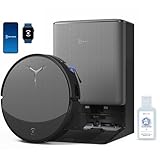
2. DREAME L40 Ultra Gen 2: Best for Pet Hair and Edges
- Suction: 25,000Pa from a sixth-generation motor, a large step up from the original L40 Ultra.
- Mop: DuoScrub dual rotating pads with an extendable mop and an extendable side brush for edges.
- Station: self-empties into a 3.2 L bag rated by the maker for up to 100 days, washes pads with 65 C hot water, dries with hot air and refills solution.
- Battery: 5,200 mAh; the maker claims up to 231 minutes in vacuum-only mode.
- Obstacle avoidance: 3D structured light.
Best for: homes with shedding pets and baseboards that collect hair and dust. Skip if: you own deep carpets, because the mop lifts only 10.5 mm and the Gen 2 does not remove its pads automatically when it climbs on carpet, according to reviewers.
The extendable side brush and mop are the features worth paying attention to. Most robots leave a strip of dust along walls because the round body cannot reach into a square corner; extensions swing out to cover that strip. For a pet owner, that strip is where fur gathers, so a robot that reaches it can mean fewer touch-ups with a handheld. The 25,000Pa rating is a manufacturer number, and rated suction does not translate one-to-one into pickup, but it does indicate the motor has headroom for pet hair on rugs.
The trade-off is carpet handling. If your home is mostly hard floor with a few thin rugs, the 10.5 mm lift is workable. If you have medium-pile carpets, use the app to mark them as no-mop zones, or choose a robot that removes its pad. One reviewer also found obstacle avoidance a step back from the previous model, which is another reason to pick up cables and pet toys before a run.
Pros: very high rated suction; extendable brush and mop; hot-air drying; long-interval dust bag. Cons: limited mop lift; obstacle avoidance reported as weaker than its predecessor; premium price tier.
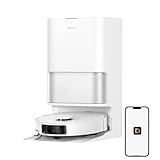
3. roborock Qrevo S Pro: Best Hot-Water Dock in the Middle Tier
- Suction: 18,500Pa with an anti-tangle side brush.
- Mop: two spinning modules at up to 200 RPM, lifting 10 mm over carpet.
- Station: 75 C (167 F) hot-water mop washing, 45 C (113 F) hot-air drying, automatic dust collection and water refilling; 2.7 L bag rated for roughly 7 to 9 weeks.
- Battery: 5,200 mAh; navigation by LiDAR plus structured-light obstacle detection.
Best for: households that mop often and care more about floor finish than raw suction. Skip if: your main problem is long pet hair or tight corners.
Reviewers describe this model as a mid-tier robot with strong mopping and a well-featured dock, with weaker pet-hair pickup, hair tangling around the single rubber brush, and limited edge reach because there is no extending arm. That profile is useful to know up front. If you live with hard floors and want the mop to do its work, the heated wash is the part that matters, because hot water breaks down oily footprints and kitchen grease better than a cold rinse. If you live with a long-haired dog, the extendable-brush models above will make you happier.
The dock footprint is roughly 340 x 487 x 519 mm, so measure the spot you plan to use, including the clearance needed for the robot to drive in and out. Wi-Fi is 2.4 GHz only, which can be a nuisance on mesh networks that merge bands.
Pros: hot-water mop wash and drying; strong stain performance reported by reviewers; automatic refilling. Cons: single brush struggles with hair; no side-brush reach; 2.4 GHz Wi-Fi only.
4. roborock Q7 M5+: Best Value
- Suction: 10,000Pa HyperForce, with a dual anti-tangle brush system.
- Navigation: spinning LiDAR with multi-floor maps and no-go zones; no camera obstacle avoidance.
- Dock: empties the 400 mL onboard bin into a 2.7 L disposable bag good for up to about seven weeks.
- Mop: a single fixed pad with an electronically controlled water tank and three water levels; it does not scrub or lift.
- Threshold climb: up to 20 mm.
Best for: anyone who wants a dependable self-emptying robot and treats mopping as a light wipe between proper floor cleans. Skip if: you expect the mop to remove dried spills.
The Q7 M5+ is the value pick because it gets the parts that save time every week (LiDAR mapping and a self-emptying bag) and leaves out the parts that raise the price (mop washing, hot drying, camera avoidance). Independent coverage has described it as one of the better combo robots at its tier, and a national review outlet named it a top pick in late 2025. A more skeptical rating site calls 10,000Pa modest next to a category median that is higher, which is a fair reminder that the number is a ceiling, not a promise.
The honest caveat is mopping. Because the pad is fixed and not washed by the dock, a damp pad left on the robot will smell if you forget it. Remove and rinse it after each mop run, and use the app to keep the mop away from carpets. For a household that mops weekly, this is a manageable habit. For a household that wants never to think about it, step up to a washing dock.
Pros: LiDAR mapping; self-emptying; confirmed strong suction for its tier in independent review; sensible mid-range price tier. Cons: no mop washing or lifting; no obstacle avoidance; battery runtime stated differently by different sources.
5. iRobot Roomba 115X Combo with AutoEmpty: Best for Simple Setups
- Suction: 15,000Pa; mops in the same pass; up to about 83 m2 (roughly 900 sq ft) per charge per the listing.
- Navigation: ClearView LiDAR that maps up to three floors, with Keep Out and No Mop zones in the app.
- Dock: AutoEmpty with a 2.5 L Allergen Lock bag rated for up to 90 days.
- Mop: a washable microfiber pad that is filled and cleaned by hand; the robot is designed to avoid mopping carpet.
- Size: about 24.5 x 24.5 x 9.2 cm and 2.16 kg.
Best for: people who value a familiar brand, a simple app and a bag that seals on removal. Skip if: you want smart-home standards support; the listing notes no Matter, HomeKit or SmartThings integration.
Roomba’s selling point here is restraint. The extended mop pad and edge-sweeping brush reach along baseboards, the dock is compact compared with wash-and-dry stations, and the robot is designed to leave carpet unmopped, which removes one of the most common user errors with combo robots. The cost of that simplicity is manual pad care, so treat this like the Q7 M5+: rinse the pad after use.
Battery claims conflict. One retailer listing says 173 minutes while another says up to 120, so a safer way to plan is by area: the maker’s 900 sq ft per charge figure suggests a typical two-bedroom apartment is one run, a larger home may need a recharge-and-resume. Filters and brushes should be replaced every three to six months according to the maker.
Pros: compact AutoEmpty dock; avoids mopping carpet; LiDAR mapping with no-mop zones; sealed allergen bag. Cons: hand-washed mop pad; no obstacle camera; no Matter support.
6. DREAME H12 PRO: Best Wet-Dry Stick for Hard Floors
- Type: cordless wet-dry vacuum that vacuums and mops in the same pass.
- Runtime: up to 35 minutes on a 6 x 4,000 mAh battery pack, per the maker’s lab figure.
- Tanks: 900 mL clean water and 700 mL dirty water.
- Weight: 4.9 kg; charges in about three hours; self-cleaning and hot-air drying cycle.
- Suction: 16 kPa on the retailer listing; mess detection and edge-to-edge cleaning.
Best for: kitchens, entryways and homes with kids where spills are sticky and frequent. Skip if: you have mostly carpet; this is a hard-floor tool.
A wet-dry stick belongs in a robot guide because it fills the gaps robots leave. A robot will not chase a dried juice spill across the kitchen or cope with a cracked egg. A stick vacuum with a rotating roller does, and it empties dirty water into a tank you can see. The 900 mL clean tank is claimed by one retailer to cover about 2,150 sq ft before refilling, which is more than most homes need in a single session.
It is a push tool, so the comparison is effort versus result. Most households that own both use the robot for the daily dust and the stick for weekly deep cleans and accidents. The hot-air drying step is worth running, since a roller left wet is where odor begins. Charge time of about three hours means you should not plan two back-to-back deep cleans.
Pros: handles wet and dry messes in one pass; large clean tank; self-cleaning with hot-air drying; useful backup to a robot. Cons: manual effort; hard floors only; runtime is a maker lab figure and shorter in the strongest mode.

7. Tikom Robot Vacuum and Mop Combo (5000Pa): Best Budget
- Suction: 5000Pa.
- Runtime: up to 150 minutes on a charge, per the listing.
- Control: app and remote; sold for hard floors.
- Dock: no self-emptying base; other specs, including tank size and navigation type, are not listed in the title.
Best for: small apartments, studios and dorm-sized spaces where floors are hard and budget is the main concern. Skip if: you have pets that shed heavily or more than two rooms to cover.
A budget combo is a different product from the models above. It will vacuum and drag a damp cloth, but it will not wash its own mop, empty its own bin, or climb over thick rugs. That is acceptable if you set expectations: a short run each day keeps dust from building, and a weekly mop pass keeps the floor from looking tired. The listing does not state navigation type or tank capacity, so check the product page for those before you decide, and read about the return window.
Pros: lowest price tier; simple app and remote; long listed runtime. Cons: no dock features; limited suction; several specs not listed.
Also Consider
SwitchBot K11+
A self-emptying robot vacuum and mop with 6000Pa suction, Matter support, a 90-day hands-free bag and LDS navigation per the listing. A fit if smart-home standards matter more than headline suction.
Tineco Floor ONE i5 Stretch
A cordless wet-dry vacuum with 20 kPa suction and a 180-degree lay-flat design, useful for reaching under low furniture. A direct alternative to the DREAME H12 PRO.
Shark VACMOP VM252
A lightweight cordless vacuum and spray mop with an LED headlight. A lower-effort option for small hard-floor areas where a full wet-dry stick would be overkill.
Bissell CrossWave Edge
A cordless wet-dry vacuum with edge cleaning and a tangle-free brush roll aimed at pet hair. Worth a look if you want a wet-dry stick built around pets.
How We Chose
This guide is research-based. We compared manufacturer spec sheets, retailer listings, and independent reviews from robot-vacuum publications, and we cross-checked claims where sources disagreed. We did not personally use these products, and we do not report our own measurements. Where sources conflict, such as battery runtime, we say so and recommend planning around the lower figure. Where a spec was not available, we wrote “not listed” rather than guessing. We excluded robots that vacuum only, models without a mop, and anything we could not identify as a current, purchasable product. We also limited picks to two per brand.
We weighted five factors: dock capability (what you stop doing by hand), mop design (pad, spinning pads or roller), carpet handling, navigation and obstacle avoidance, and the cost of keeping it running (bags, filters, brushes, pads). Rated suction was used as a rough guide only, because maker numbers are not directly comparable between brands.
Buying Guide
Suction ratings: what the numbers can and cannot tell you
Pascal (Pa) ratings are the headline on every box, but they are maker-defined and measured differently across brands. One independent site that recorded suction found a 10,000Pa robot delivering well above average for its class, which shows the number can be meaningful within a tier. Between tiers, use it as a rough order: under 6,000Pa suits light dust on hard floors, 8,000 to 15,000Pa suits mixed floors and a little pet hair, and 18,000Pa and above suits shedding pets and rugs. Brush design usually matters more than the last 5,000Pa, so look for anti-tangle rollers if anyone in the house has long hair.
Mop systems: pad, dual spinning pads or roller
A single fixed pad wipes and is the cheapest. Dual spinning pads press and scrub, which helps with dried spots. A roller keeps feeding clean fabric against the floor. Hot-water washing at about 65 to 75 C, as on the DREAME L40 Ultra Gen 2 and roborock Qrevo S Pro, helps the pad release grease. If you only mop occasionally, a fixed pad is enough; if you mop three times a week, a washing dock saves real time.
Carpet rules
Choose a robot that lifts or removes its mop on carpet. Lifts in this guide range from 10 mm to about 15 mm, and the Roomba avoids mopping carpet by design. If you have rugs thicker than about 12 mm, set no-mop zones in the app or put the robot in vacuum-only mode in those rooms. Never rely on lift alone for long-pile rugs.
Navigation and obstacle avoidance
LiDAR draws a map and lets you set zones and room-by-room schedules. Cameras and structured light add the ability to see cables, socks and pet waste. If you have toddlers, pets that have accidents, or loose charging cables, camera-based avoidance is worth the upgrade. If your floors are tidy, LiDAR alone, as on the roborock Q7 M5+ and Roomba 115X Combo, works well.
Running costs and a worked example
Plan on replacing the dust bag every 7 to 12 weeks, filters and side brushes every three to six months, and mop pads or rollers as the maker advises. As a worked example, a robot with a 2.7 L bag rated for about seven weeks needs roughly seven bags a year if you run it daily; a model rated for about 100 days needs about four. A home that runs a robot every day will reach those limits sooner than the rating suggests, especially with pets.
Common Mistakes and a Quick Decision Matrix
- Buying for suction alone. A robot with huge suction but no carpet lift will frustrate a rug-heavy home.
- Ignoring base size. Wash-and-dry bases are large; measure the wall space and the approach path.
- Leaving a damp pad on. Wash and dry it after every mop run if the dock does not.
- Skipping the pre-run tidy. Cables, socks and small toys cause most stuck-robot alerts even on camera models.
| Your situation | Choose |
|---|---|
| Mixed floors, want minimal chores | ECOVACS DEEBOT T90 PRO Omni |
| Shedding dog, baseboard dust | DREAME L40 Ultra Gen 2 |
| Mostly hard floors, frequent mopping | roborock Qrevo S Pro |
| Want self-emptying on a tighter budget | roborock Q7 M5+ |
| Prefer simple app and compact dock | iRobot Roomba 115X Combo |
| Sticky kitchen spills | DREAME H12 PRO (add to any robot) |
| Studio or dorm, small budget | Tikom Robot Vacuum and Mop Combo |
Frequently Asked Questions
Are robot vacuum and mop combos good enough to replace a regular vacuum?
For daily upkeep on hard floors and low rugs, yes, but not for deep cleaning. Most homes keep a stick or handheld vacuum for stairs, upholstery and the occasional heavy mess, and a wet-dry stick for dried spills.
What is the best robot vacuum for pet hair?
Look for an anti-tangle brush, a strong motor and edge reach. Among the picks here, the DREAME L40 Ultra Gen 2 pairs 25,000Pa rated suction with an extendable side brush, while the roborock Q7 M5+ offers a dual anti-tangle system at a lower price tier.
Do these robots work on carpet?
They vacuum carpet, but the mop should not touch it. Choose a model with mop lift or carpet detection and set no-mop zones for thick rugs.
How often should I empty and clean the station?
Bags are rated from about seven weeks to 100 days, but check them earlier if you have pets. Wash-and-dry stations also need the dirty-water tank and cleaning tray rinsed regularly, so that is a weekly chore even on the most automated models.
Are wet dry vacuums for hard floors better than robot mops?
They solve different problems. A wet-dry stick like the DREAME H12 PRO removes stuck-on spills a robot will not reach, while a robot keeps routine dust and light film under control between deep cleans.
Is more suction always better?
No. After about 10,000Pa the difference you feel depends on brush design, floor type and how often the robot runs. A well-designed brush and daily runs beat a higher number on a robot that is used once a week.
Can robot vacuums with mops handle wood floors safely?
Most makers support sealed hardwood with the lowest water setting. Check your floor maker’s guidance, avoid unsealed wood and waxed surfaces, and use the app to limit mop time in those rooms.
Which One Should You Buy?
If you want the most automated setup and have the space for the base, the ECOVACS DEEBOT T90 PRO Omni is the all-round choice. If shedding is your biggest battle, pick the DREAME L40 Ultra Gen 2 and set no-mop zones for any thick carpet. If your floors are mostly hard and you mop often, the roborock Qrevo S Pro’s heated wash is the feature to buy for. If you want the best balance of price and capability, the roborock Q7 M5+ is hard to beat, as long as you remember to rinse its pad. The Roomba 115X Combo suits people who want a simple routine, and the Tikom is a sensible starter for a small hard-floor space. Add the DREAME H12 PRO if sticky spills are part of your life.
Sources
- ECOVACS US product and specification pages for the DEEBOT T90 PRO Omni
- DREAME product pages for the L40 Ultra Gen 2 and H12 PRO
- roborock US product pages for the Qrevo S Pro and Q7 M5+
- iRobot Roomba 115X Combo product information
- Vacuum Wars independent robot vacuum reviews
- Smart Home Compared robot vacuum specification database
Last updated: October 2026