Our Top Picks
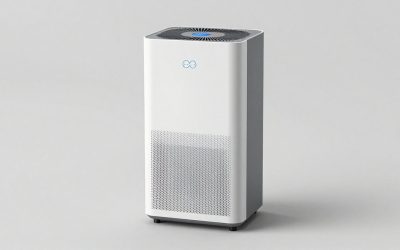
 50 Pint PUMP DEH DFL WHT WiFi50 Pint with pump10.55 x 15.35 x 24.1 inches40.48 PoundsCheck on Amazon
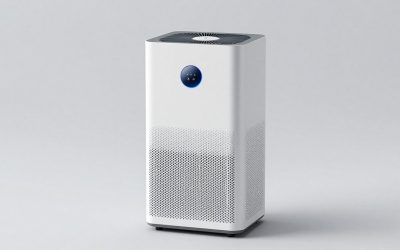
 TCL 4500 Sq. Ft. 50-Pint Smart Dehumidifier50 Pint with pump10.55 x 15.35 x 24.1 Inches40.48 poundsCheck on Amazon
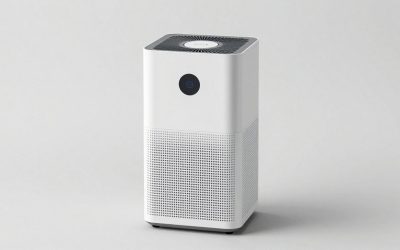
 TCL 50-Pint Smart Dehumidifier with Wi-Fi50 Pint without pump10.6 x 15.4 x 24 inches41.8 poundsCheck on Amazon
Six TCL listings, three capacity classes, and only two titles that actually say “TCL.” That is the first thing to untangle when shopping this brand. The other four are named things like “50 Pint DEH DFL WHT,” which reads like an internal product code and tells you nothing until you decode it. This guide does that decoding for every listing supplied, and it recommends the TCL 4500 Sq. Ft. 50-Pint Smart Dehumidifier as the best starting point on paper: it is the model whose title packs in the most checkable details, including an Energy Star mention, whole-house positioning and Alexa and Google Assistant compatibility.
The rest of the page is built to help you choose between listings that look alike. You will find a feature matrix showing what each title does and does not say, a square-feet-per-pint method for sizing, a monthly electricity table with stated assumptions, and a short list of things to confirm on any listing before you click buy. We have deliberately avoided inventing details the titles omit, such as sound levels, dimensions or warranty terms.
The six listings, summarized

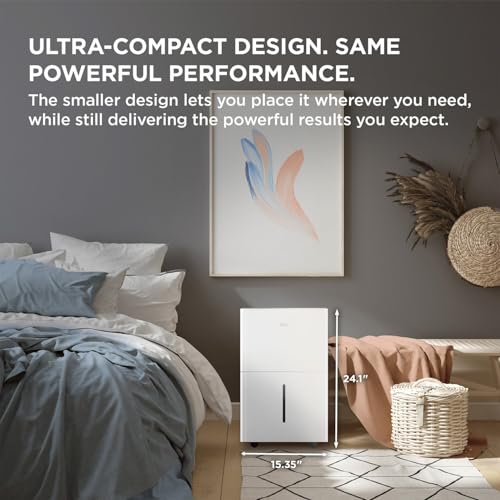
25 Pint DEH DFL WHT | Bucket or Continuous Drain, Precise Humidity Control, Quiet Operation, for Home, Attic, Garage, Rooms up to 2000 Sq.Ft.




As an Amazon Associate we earn from qualifying purchases. Product prices and availability are accurate as of the date/time indicated.
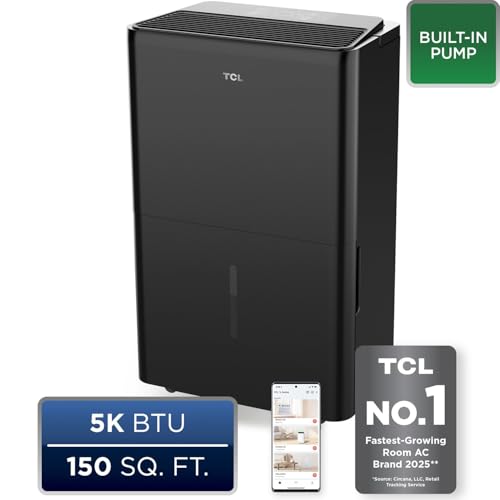
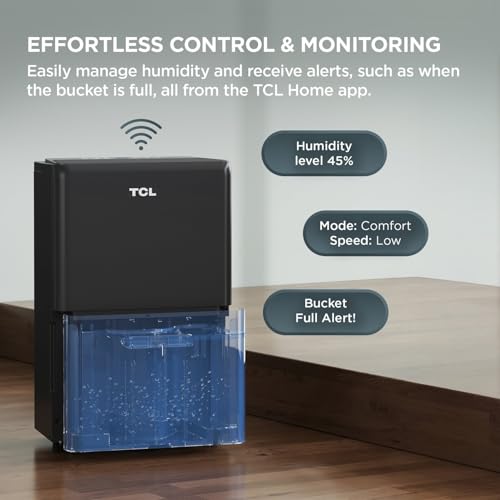
50 Pint PUMP DEH DFL WHT WiFi | Built-In Pump, Smart Home Compatible, Bucket or Continuous Drain, Humidity Control, Rooms up to 4500 Sq.Ft.


As an Amazon Associate we earn from qualifying purchases. Product prices and availability are accurate as of the date/time indicated.

32 Pint DEH DFL WHT | Bucket or Continuous Drain, Precise Humidity Control, Quiet Operation, for Home, Attic, Garage, Rooms up to 3000 Sq.Ft.


As an Amazon Associate we earn from qualifying purchases. Product prices and availability are accurate as of the date/time indicated.
TCL 4500 Sq. Ft. 50-Pint Smart Dehumidifier, Energy Star 2024, Ideal for Whole House, Including Basements, Bedrooms, Bathrooms, Attics & Garages, Compatible with Alexa/Google Assistant


As an Amazon Associate we earn from qualifying purchases. Product prices and availability are accurate as of the date/time indicated.
TCL 50-Pint Smart Dehumidifier with Wi-Fi, 4,500 Sq. Ft.


As an Amazon Associate we earn from qualifying purchases. Product prices and availability are accurate as of the date/time indicated.

50 Pint DEH DFL WHT | Bucket or Continuous Drain, Precise Humidity Control, Quiet Operation, for Home, Attic, Garage, Rooms up to 4500 Sq.Ft.


As an Amazon Associate we earn from qualifying purchases. Product prices and availability are accurate as of the date/time indicated.
Price tiers below are relative to this set of six: the three lowest-priced listings are labeled Budget, the next two Mid-range, and the highest-priced Premium. Specs come only from listing titles.
| Model | Key spec (from title) | Price tier | Best for |
|---|---|---|---|
| TCL 50-Pint Smart Dehumidifier with Wi-Fi, 4,500 Sq. Ft. | 50 pints, Wi-Fi, 4,500 sq ft | Budget | Large spaces on the tightest budget |
| 25 Pint DEH DFL WHT | 25 pints, bucket or continuous drain, quiet operation, up to 2,000 sq ft | Budget | Small rooms, attics and garages |
| 32 Pint DEH DFL WHT | 32 pints, bucket or continuous drain, quiet operation, up to 3,000 sq ft | Budget | Medium basements and living areas |
| TCL 4500 Sq. Ft. 50-Pint Smart Dehumidifier (Energy Star) | 50 pints, Energy Star, Alexa and Google Assistant, whole-house positioning | Mid-range | Whole-home use with voice control |
| 50 Pint DEH DFL WHT | 50 pints, bucket or continuous drain, precise humidity control, quiet operation, 4,500 sq ft | Mid-range | Large spaces without smart features |
| 50 Pint PUMP DEH DFL WHT WiFi | 50 pints, built-in pump, smart home compatible, Wi-Fi, 4,500 sq ft | Premium | Spaces where water must be lifted out |
What each title says, and what it leaves out
A quick matrix helps because the titles are inconsistent. A dash means the title does not say, which is not the same as “no.” It means check the listing.
| Listing | Capacity | Stated area | Drain option in title | Wi-Fi or smart | Energy Star |
|---|---|---|---|---|---|
| 25 Pint DEH DFL WHT | 25 | 2,000 sq ft | Bucket or continuous | – | – |
| 32 Pint DEH DFL WHT | 32 | 3,000 sq ft | Bucket or continuous | – | – |
| 50 Pint DEH DFL WHT | 50 | 4,500 sq ft | Bucket or continuous | – | – |
| 50 Pint PUMP DEH DFL WHT WiFi | 50 | 4,500 sq ft | Built-in pump, bucket or continuous | Wi-Fi, smart home | – |
| TCL 4500 Sq. Ft. 50-Pint Smart | 50 | 4,500 sq ft | – | Alexa, Google Assistant | Mentioned |
| TCL 50-Pint Smart with Wi-Fi | 50 | 4,500 sq ft | – | Wi-Fi | – |
Two things jump out. First, the 50-pint class has four different listings, and what separates them is drain type, smart features and the Energy Star mention, not capacity. Second, none of the six titles states whether the technology is compressor-based or desiccant-based, nor gives a sound level, so any claim about “quiet” is a seller’s word. The listing and manual are where you confirm refrigerant type, operating temperature, dimensions and warranty.
The six listings in detail
TCL 4500 Sq. Ft. 50-Pint Smart Dehumidifier: the best-documented title in the group
This is the listing that tells you the most. It names 50 pints, a 4,500 sq ft rating, an Energy Star mention, whole-house positioning (basements, bedrooms, bathrooms, attics and garages) and Alexa and Google Assistant compatibility. It sits in the Mid-range tier, above the two cheapest 50-pint listings and below the pump model.
Estimate, not a measurement: 50 pints a day is about 6.25 gallons of rated removal. For a 1,500 sq ft damp basement, that is enough that the unit should spend part of the day idle rather than running flat out. For the whole-house language in the title, treat it as a ceiling that applies to open floor plans and mild dampness, not as a promise that one unit will dry a three-level home.
What the title does not say matters too. It does not mention a drain type or built-in pump, a bucket size or a sound level. Check the listing for whether continuous drainage is supported, because a basement without a floor drain will need either a pump or regular bucket emptying. The Energy Star line is a plus, but verify certification details on the listing and in the Energy Star database before treating it as certain.
If you are comparing this to portable 50-pint alternatives from other brands, our roundup of the best 50 pint dehumidifier models gives a broader view of what else sits in this class.
One caution on the voice-assistant feature: compatibility in a title usually means the unit can be linked through a skill or a smart-home hub, not that every function can be spoken aloud. Look at the listing for which commands are supported, and whether you need the maker’s app as an intermediary.
Pros
- Energy Star mention and voice-assistant support in the title
- 50-pint rating for up to 4,500 sq ft
- Explicit use cases from basements to garages
Cons
- Drain options not stated in the title
- Costs more than the cheapest 50-pint Wi-Fi listing
- Whole-house wording may overstate real coverage in multi-level homes
Who it’s for: homeowners who want one large unit with voice control and an efficiency mention.
TCL 50-Pint Smart Dehumidifier with Wi-Fi: the lowest-priced route to 4,500 sq ft
The shortest title in the set and the lowest price: 50 pints, Wi-Fi and 4,500 sq ft, nothing else. That leaves a lot unsaid. It does not state Energy Star status, voice-assistant support, drain options, a pump, or whether the Wi-Fi feature runs through an app that needs an account.
Estimate, not a measurement: the capacity and stated area match the other 50-pint listings, so the water-removal class is the same on paper. The price gap is most likely about features and bundle, so look for the differences in the bullet points, and do not assume it lacks anything the titles of others mention.
The risk with a bare-bones title is that you end up discovering missing details after purchase. Before ordering, find out how water leaves the unit: bucket only, continuous drain by hose, or both. Find the minimum operating temperature, the cord length, and the dimensions. If the answers fit your space, this is the cheapest way to get a 50-pint, Wi-Fi unit into the house. If the answers are vague, the extra spending on a fuller listing buys clarity.
It is worth comparing this listing directly with the Energy Star one above. Both state the same capacity and area, yet the price gap is noticeable. If the gap buys you only a title that talks more, take the cheaper unit. If the extra buys a verified Energy Star label and drain flexibility, the higher price may repay itself over several humid seasons.
Pros
- Lowest price of all six listings
- 50 pints and 4,500 sq ft stated
- Wi-Fi mentioned in the title
Cons
- Drain type, Energy Star and voice-assistant support are not stated
- Title is the thinnest of the group
- Smart features rely on app details the title does not cover
Who it’s for: budget buyers who have already confirmed the details on the listing and want the lowest cost per pint.
50 Pint PUMP DEH DFL WHT WiFi: the pump model for spaces with no drain
This is the only listing that names a built-in pump. The title also lists smart home compatibility, bucket or continuous drain, humidity control and rooms up to 4,500 sq ft, and the “WiFi” at the end. It is the highest-priced listing in this guide, and the pump is the main reason to pay it.
Estimate, not a measurement: a pump turns “continuous drain” from a hose that must slope downhill into a hose that can run up and over, within whatever lift height the manual specifies. The title does not give a lift height or a hose length, so confirm both. If your basement has a sump pit across the room or a drain on the other side of a wall, the lift could be the whole reason to buy this model instead of the cheaper ones.
A pump is also a part that can clog, run dry or fail. Check what the listing says about cleaning, and think about what happens during a power cut. Since the unit is smart, check how it behaves when the Wi-Fi drops, because a good unit should still run its humidity setting locally. The title does not tell you, so look for it.
For help deciding where a unit should sit in relation to a drain, our guide to the best place to place a dehumidifier covers airflow and hose routing.
For a rough sense of fit: a 1,600 sq ft lower level with a laundry room on the far side from the drain is the kind of layout this model suits. Without a pump you would route a long hose along the wall or empty the bucket every day. With one, the hose can follow a shorter path, as long as you stay within the manual’s stated lift limits.
Pros
- Built-in pump named in the title
- Bucket or continuous drain, plus Wi-Fi and smart home compatibility
- 50 pints for up to 4,500 sq ft
Cons
- Highest price of the six
- Lift height and hose length not stated in the title
- A pump adds a component that needs cleaning
Who it’s for: owners whose space has no floor drain below the unit.
50 Pint DEH DFL WHT: the straightforward large unit with gravity drain
No Wi-Fi, no pump, no Energy Star mention: this listing’s title offers 50 pints, bucket or continuous drain, precise humidity control, quiet operation and a rated area up to 4,500 sq ft for home, attic and garage use. It sits in the Mid-range tier, which is a puzzle, because it costs more than the Wi-Fi-equipped budget listing. Prices change, so check the current price, but the pattern suggests you are not paying for smart features here.
Estimate, not a measurement: with a bucket or hose drain, this unit works well where the hose can reach a floor drain or sloped exit. In a typical 1,800 sq ft basement with a floor drain, a 50-pint unit should have headroom, and the humidistat should let it cycle off once it reaches the target. “Precise humidity control” is a title phrase and not a specification, so find the control range and increments on the listing.
Think about the trade-off between this and the 25-pint and 32-pint listings that share its naming pattern. They look identical except for capacity and area, so if you need less than 50 pints, you could save money and electricity by choosing the smaller model. If you want the extra margin for a wet space, this one is the plain, no-app version.
If you shop this one, treat it as the control case for the 50-pint group. Whatever the Wi-Fi, pump and Energy Star models add should be weighed against it. A buyer who will never open an app and has a clear drain path loses nothing by choosing the plain unit, provided the listing confirms the controls and operating range.
Pros
- 50 pints and 4,500 sq ft
- Bucket or continuous drain named in the title
- Usable in homes, attics and garages per the title
Cons
- No Wi-Fi or Energy Star mention in the title
- Priced above a listing that includes Wi-Fi
- No pump, so water cannot be lifted
Who it’s for: buyers who want a simple, app-free 50-pint unit and have a drain path.
32 Pint DEH DFL WHT: the middle-sized option for 3,000 sq ft
At 32 pints and up to 3,000 sq ft, this listing is the sensible middle between the 25-pint and the 50-pint classes. The title shows the same family traits as its siblings: bucket or continuous drain, precise humidity control, quiet operation, and use in a home, attic or garage.
Estimate, not a measurement: dividing the stated area by pints gives about 94 sq ft per pint, which is a more generous claim than the 25-pint’s 80 sq ft per pint. In practice, for a damp space we would plan more conservatively, as the sizing section below explains. A 1,400 sq ft basement with mild dampness sits comfortably in this class; a 2,800 sq ft basement with visible dampness probably belongs in a 50-pint unit.
It sits in the Budget tier, which makes it attractive if you want some margin without paying for 50 pints. The same cautions apply as for its siblings: no Wi-Fi, no pump, no Energy Star mention, and no sound level or dimensions in the title. Look at the bucket size on the listing, because a smaller bucket means more frequent emptying if you do not use the hose.
If your home has more than one level, our piece on the best place to put a dehumidifier in a 2-story house explains where a mid-size unit does the most good.
Also consider whether you plan to move the unit. A mid-size model is easier to carry between rooms than a 50-pint, but the title gives no weight or handle information, so look at the dimensions and weight on the listing if you expect to carry it up stairs.
Pros
- Middle capacity at a Budget-tier price
- Bucket or continuous drain per the title
- Stated suitability for home, attic and garage
Cons
- No smart features or Energy Star mention
- Rated area is generous per pint
- No pump, so gravity drainage only
Who it’s for: owners of medium, moderately damp spaces who want a plain unit with some spare capacity.
25 Pint DEH DFL WHT: the compact unit for rooms up to 2,000 sq ft
The smallest listing: 25 pints, bucket or continuous drain, precise humidity control, quiet operation, and use in a home, attic or garage up to 2,000 sq ft. It is in the Budget tier, and it is the one most likely to be right for a single damp room, a laundry area or a modest garage.
Estimate, not a measurement: 25 pints is about 3 gallons per day in rated removal. For a 700 sq ft basement room with moderate dampness, it should be adequate. For anything with serious moisture intrusion, it will run nearly constantly. At 80 sq ft per pint, this listing makes the most conservative area claim in the group, though the title does not state the conditions behind the rating.
The smaller capacity makes it a good fit where you want to leave a unit running quietly in a bedroom or office, but check the listing for a decibel level before assuming that. In an attic or garage, check the minimum operating temperature on the listing, since a small unit in a cold space may collect much less than its rating. In all cases, make sure the cord reaches an outlet without an extension.
It also makes a sensible second unit. A household with a main 50-pint unit in the basement might add this one in a damp bathroom or laundry area on another level, where a large machine would be overkill. Two right-sized units usually beat a single oversized one that sits in the wrong place.
Pros
- Lowest capacity makes it economical to run in small spaces
- Bucket or continuous drain in the title
- Conservative area rating of 80 sq ft per pint
Cons
- Not enough for large or very damp basements
- No smart features, pump or Energy Star mention
- Sound level and dimensions not given
Who it’s for: renters and owners with one small, damp room, laundry nook or garage bay.
How we picked these
This guide was prepared by the Editorial team using published specifications, manufacturer documentation and buyer reviews as the information base. Nobody on the team used or measured these units. Every number labeled as an estimate is arithmetic from the capacity and area stated in a listing title, and every claim about features is limited to what the title says.
All six listings supplied for this page are included. We ordered them by how much a buyer can verify from the title, then by price tier, and we noted where two listings of the same capacity differ. We deliberately avoided statements about the maker’s history, reliability, service network or warranty, since none appears in the titles, and we recommend you read the current manufacturer documentation on those points. Where a title is silent, such as on noise, dimensions or refrigerant type, we say so and point you to the listing.
The order of the model sections follows usefulness for the typical reader, not price. We start with the listing whose title can be checked most thoroughly, then the budget and pump variants, then the plain 50-pint, and finish with the two smaller units. If you have a small space, jump to the 25-pint and 32-pint sections first.
We do not quote prices in this article. They change often, and the tiers in the tables are only relative to this set of six.
A square-feet-per-pint sizing method with two examples
The titles let you compute a sq-ft-per-pint figure: 25 pints for 2,000 sq ft is 80; 32 pints for 3,000 sq ft is about 94; 50 pints for 4,500 sq ft is 90. Those are the sellers’ maximum claims for ordinary conditions, so they are best read as ceilings for mild dampness in an open space.
For a space that is actually damp, plan on a lower number. A planning heuristic we use in this guide, not a manufacturer rule, is about 55 sq ft per pint for a basement with a musty smell or visible dampness, and about 90 for a mildly humid living area. Divide your area by the factor to get the pints you need.
Example one: a 1,100 sq ft basement, damp, with a laundry corner. 1,100 divided by 55 is 20 pints. The 25-pint listing, rated up to 2,000 sq ft, fits with a little margin. The 32-pint listing is a reasonable step up if the laundry adds humidity.
Example two: a 2,400 sq ft open lower level, damp after rain. 2,400 divided by 55 is about 44 pints. That points to a 50-pint listing, any of the four. The 32-pint would be stretched. Here, choose among the 50-pint listings by drain type and features instead of by capacity.
Remember that closed doors cut the effective area. A unit placed in a hallway does little for a closed bedroom, and a single-floor unit does not dry another level. Keep interior doors open or use more than one unit.
Bucket, continuous drain or pump?
Three listings say “bucket or continuous drain.” That means the unit collects water in a bucket, but you can attach a hose so water flows out continuously by gravity. The hose must slope down the whole way and end below the unit’s outlet. In a basement with a floor drain, that is the easiest setup, and it avoids emptying the bucket every day or two.
If the drain is higher than the unit, or there is no drain at all, you either empty the bucket on a schedule or use a pump. Only the 50 Pint PUMP listing names a built-in pump. The two smart 50-pint listings state nothing about drainage in their titles, which means you need to read the product page before assuming they support a hose.
Bucket-only use is fine in a small room when you are willing to empty it, but it can be a nuisance in a basement that needs 3 to 6 gallons of removal per day. Unless you plan to empty the bucket daily, aim for a drain path before you buy. If the unit shuts off when the bucket is full, it will look like it has stopped working; the cause is a full bucket.
Whatever you choose, check hose length and routing so nobody trips on it, and make sure the hose does not kink. Check the connection by running a small amount of water through the hose before you leave the unit unattended for the first time.
What Wi-Fi and voice control add
Three of the six listings mention Wi-Fi or smart features: the pump model, the Energy Star model and the lowest-priced 50-pint. The titles name Alexa and Google Assistant on one, “smart home compatible” on another, and just “Wi-Fi” on the third. In practice, an app can show current humidity, let you change the target from another room, and send an alert if the bucket is full or the unit stops.
That is useful for a basement or garage you do not visit every day, and less useful in a room where you see the display often. Voice control tends to be a convenience feature more than a core one. If you rely on a hygrometer on your phone anyway, an app-connected dehumidifier adds a bit of convenience but not a different result.
Before paying for the smart tier, consider the practical issues: does Wi-Fi reach the unit location, does the app require an account, and does the unit keep running its humidity setting if the network goes down? The titles do not answer these questions. Also think about long-term support: if the app is discontinued or changes, can you still operate the unit from its own control panel?
If you place the unit in a far corner of a basement, check your phone’s signal there first. A weak signal turns a smart feature into a source of annoying offline alerts.
Garages and attics: a temperature warning
Four titles mention attic and garage use. These are the spaces where a dehumidifier’s rated pints are least reliable, because temperature swings are large. Many dehumidifiers list a minimum and maximum operating temperature in the manual, and in a cold garage the coil can ice up or the unit may shut down. In a hot attic, high temperatures can push a unit past its limit.
None of the titles states a temperature range, so look for it on the listing and in the manual. If your garage drops near freezing in winter, plan to use the unit only in milder months, or ask the manufacturer what the unit does at low temperatures. Do not assume the rated pints apply at all temperatures.
Also consider power and drainage. Garage outlets are often shared with tools and can be on a GFCI circuit that trips; attics may have limited access to power and no drain. A pump model or a bucket you can reach safely matters more here than anywhere else in the home.
Running cost: a monthly table with assumptions
The titles give no wattage, so this table is an illustration. Assume an average draw of 480 watts while the unit is running. Multiply by hours of operation per day, 30 days, and your electricity rate to get monthly cost.
| Running hours per day | At 12 cents per kWh | At 17 cents per kWh | At 25 cents per kWh |
|---|---|---|---|
| 6 hours | about $10 | about $15 | about $22 |
| 10 hours | about $17 | about $24 | about $36 |
| 14 hours | about $24 | about $34 | about $50 |
Use the wattage on your own unit’s nameplate to replace the 480 W assumption. A smaller unit that runs more hours may cost the same as a larger unit that cycles off sooner, so do not choose by running cost alone. Energy Star status, where the title mentions it, is one more point to consider, but check the certification details.
Mistakes buyers make with TCL listings
Assuming matching names mean matching features. “50 Pint DEH DFL WHT” and “50 Pint PUMP DEH DFL WHT WiFi” are not the same unit. Read the full title and the bullet points.
Buying by pints without checking drainage. A 50-pint unit with a full bucket every day is no help. Plan the drain first.
Trusting “whole house” literally. A single unit does not dry other floors or closed rooms. Use the area figure for open spaces only.
Ignoring the temperature range. Garages and attics are the main reason people see poor results. Check the manual.
Paying for smart features without a signal. If Wi-Fi does not reach the install spot, the feature is wasted.
Skipping the filter. Clean or replace filters per the manual; a clogged filter cuts airflow and reduces water removal.
Verdict
The TCL 4500 Sq. Ft. 50-Pint Smart Dehumidifier is the top pick on paper because its title offers the most verifiable detail for a mid-range price. The TCL 50-Pint Smart Dehumidifier with Wi-Fi is the budget pick, as long as the listing confirms what the title omits. The 50 Pint PUMP DEH DFL WHT WiFi is the premium choice for spaces without a drain. For small rooms and modest budgets, the 25-pint and 32-pint listings are the practical alternatives.
Whichever you choose, confirm drain options, operating temperature and dimensions on the current listing before ordering.
Frequently asked questions
Which TCL dehumidifier is best for a basement?
On paper, a 50-pint listing rated up to 4,500 sq ft is the safest starting point for a large or damp basement, and the Energy Star smart model is the one with the fullest title. For a small, mildly damp basement of around 1,000 sq ft, the 25-pint or 32-pint listing may be enough. Check each listing for drain options, since the Wi-Fi-only title does not state them.
Do all of these TCL listings have a pump?
No. Only the 50 Pint PUMP listing names a built-in pump in its title. The 25-pint, 32-pint and plain 50-pint listings mention a bucket or continuous drain, which means gravity drainage through a hose, and the two smart 50-pint listings do not state their drain options in the title. If you need to lift water, choose the pump model or confirm the details on the listing.
Are these dehumidifiers quiet enough for a bedroom?
Three titles say “quiet operation,” but none gives a decibel figure, so the claim cannot be compared. Check the listing for a stated sound level and read buyer comments about night use. Placing the unit away from the bed, on a hard, level surface and with clean filters usually reduces perceived noise. If sleep matters, look for a stated low-speed or sleep setting on the listing.
Can I use a TCL dehumidifier in a garage or attic?
Four titles mention garage or attic use, but none states the minimum operating temperature. Dehumidifiers generally have a temperature range in the manual, and cold garages or very hot attics can fall outside it. Before buying for those spaces, check the operating range on the listing or in the manufacturer’s documentation, and think about drainage and power access, since garage outlets are often shared and attics may lack both a drain and convenient power.
What is the difference between the two TCL-named 50-pint smart listings?
Both say 50 pints and 4,500 sq ft with smart features. The more expensive of the two says Energy Star in the title, mentions whole-house use and names Alexa and Google Assistant compatibility. The lower-priced one is shorter on detail, so confirm drain options, Energy Star status and voice-assistant support on its listing before assuming they match, and compare the current price against what each title actually promises.