Key takeaways
- Enclosure volume over raw suction: A hood works by giving chips somewhere to lose their momentum before your vacuum ever sees them. Deep, tall shrouds that wrap the back and sides of the blade path outperform shallow ones no matter how much CFM you throw at them.
- Port size and adapter chain: A 4″ port paired with a 4″-to-2.5″ step-down covers both shop vacs and dust extractors. Check that the included adapter matches your hose’s actual outside diameter — “2.5 inch” is a loose category, not a standard.
- Sliding clearance: Sliding compound saws need rear travel room. Confirm the hood accommodates full carriage extension on a 12″ slider before buying, or you’ll cut the hood on your first bevel.
- Fabric and frame quality: Heavy oxford shells with sewn seams and rigid rod frames hold their shape under a vacuum’s negative pressure. Thin, unsupported panels collapse inward and choke airflow exactly when you need it.
- Integrated lighting and accessory holes: Enclosing the blade area costs you visibility on your cut line. Built-in LED lighting and grommeted pass-throughs for clamps or stop blocks keep the hood from becoming a workflow tax.
What's inside
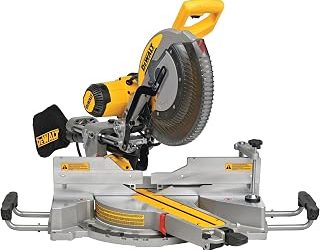
Anyone who has cut a stack of trim in a closed garage knows the aftermath: a fine grey film on the workbench, on the car, on the shelf of finished parts you were saving from exactly this. A miter saw is the messiest tool most furniture builders own, because the blade throws a rooster tail of chips backward at speed while the finest particles — the ones small enough to stay airborne for hours and follow you into the house — drift quietly out into the room. The stock dust bag catches a token fraction. The 2.5″ port on the back of the saw does slightly better, and only if the geometry cooperates.
That airborne fraction is the part worth caring about. Wood dust in the respirable range doesn’t settle out politely at the end of the day; it lingers in the shop air you keep breathing, and if your shop shares a wall or an HVAC return with your living space, it travels. Capturing dust at the saw is cheaper, quieter and far more effective than filtering it back out of the air later. This guide covers the current crop of miter saw dust hoods and port adapters — the ones that actually enclose the discharge zone — with notes on fitment, vacuum compatibility, and where each design earns its keep.
As an Amazon Associate we earn from qualifying purchases.



🛒 Best Price Today on Amazon
Prime members get fast, free shipping on everything above, plus member-only deals. New members get a 30-day free trial — cancel anytime.
How to Choose a Miter Saw Best Dust Collection (2026)
- Enclosure volume over raw suction: A hood works by giving chips somewhere to lose their momentum before your vacuum ever sees them. Deep, tall shrouds that wrap the back and sides of the blade path outperform shallow ones no matter how much CFM you throw at them.
- Port size and adapter chain: A 4″ port paired with a 4″-to-2.5″ step-down covers both shop vacs and dust extractors. Check that the included adapter matches your hose’s actual outside diameter — “2.5 inch” is a loose category, not a standard.
- Sliding clearance: Sliding compound saws need rear travel room. Confirm the hood accommodates full carriage extension on a 12″ slider before buying, or you’ll cut the hood on your first bevel.
- Fabric and frame quality: Heavy oxford shells with sewn seams and rigid rod frames hold their shape under a vacuum’s negative pressure. Thin, unsupported panels collapse inward and choke airflow exactly when you need it.
- Integrated lighting and accessory holes: Enclosing the blade area costs you visibility on your cut line. Built-in LED lighting and grommeted pass-throughs for clamps or stop blocks keep the hood from becoming a workflow tax.
The Best Miter Saw Best Dust Collection (2026)s Reviewed
Tredre Miter Saw Dust Collection Hood with Light
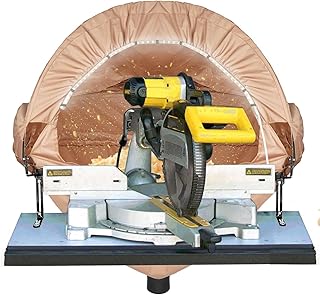
The most complete package here: a generously sized shroud that fits both 10″ and 12″ saws, plus a 4″-to-2.5″ adapter so it drops onto a household shop vac without a trip to the fittings aisle. The integrated light solves the visibility problem that makes people abandon hoods after a week.
Heavy-Duty Oxford Miter Saw Dust Hood, Grey
A no-frills, well-built option with a single 4″ vacuum port and a notably tough oxford shell that resists the abrasion of hot chips. Best suited to shops already running a proper dust extractor rather than a small vac, since there’s no step-down included.
Universal Miter Saw Dust Hood with Light, Khaki
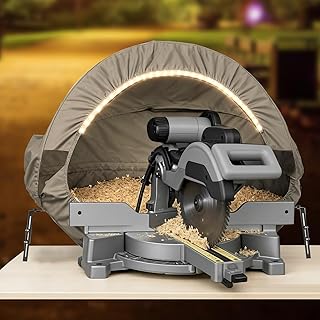
The universal-fit pattern and accessory holes make this the pragmatic pick if you own an oddball saw or swap between machines. Fit is good rather than tailored, so expect a few minutes with the supplied straps to tune the seal.
GARVIN Miter Saw Dust Collection Hood with Light
GARVIN’s version is dimensionally conservative — sized around standard 10″ saws — which pays off in a tighter, better-sealed enclosure and noticeably less blowback at the operator’s face. Sliding 12″ owners should look elsewhere.
Miter Saw Dust Hood with 4-Inch Port and Storage Bag
A straightforward bench-saw solution with a properly supported 4″ port and a light for cut-line visibility. The included storage bag matters more than it sounds if your saw shares a bench with other work and the hood comes off weekly.
Frequently Asked Questions
Do dust hoods actually capture the fine particles?
They capture far more than a stock bag, but no hood is a filter. Pair one with a vacuum that has genuine HEPA or fine-dust filtration, or you’ll simply relocate the smallest particles from the saw to the vacuum’s exhaust.
Will a hood fit my sliding compound saw?
Often, but verify travel clearance. Hoods advertised for both 10″ and 12″ saws are the safer bet; models sized specifically for standard 10″ machines frequently interfere with full carriage extension.
Can I use a regular shop vac instead of a dust extractor?
Yes. Shop vacs deliver high static pressure, which suits the small ports on miter saws well. What they lack is filtration surface area — expect frequent filter cleaning and consider a cyclone separator upstream.
What about the adapter-only option for DeWalt saws?
The five-in-one adapter designed around the DWS779 and DWS780 is a good low-cost first step, improving on the factory port and solving hose-fit headaches. It won’t contain rear blowback the way an enclosure does, so treat it as a complement to a hood rather than a substitute.
Final Thoughts
For most home furniture shops, the Tredre hood with light is the best all-around buy — the dual 10″/12″ fitment and included 4″-to-2.5″ adapter mean it works with the vacuum you already own. If your saw is a standard 10″ and you want the tightest possible seal, the GARVIN hood is the better-executed enclosure, and DeWalt DWS779/DWS780 owners should add the five-in-one adapter regardless of which hood they choose.